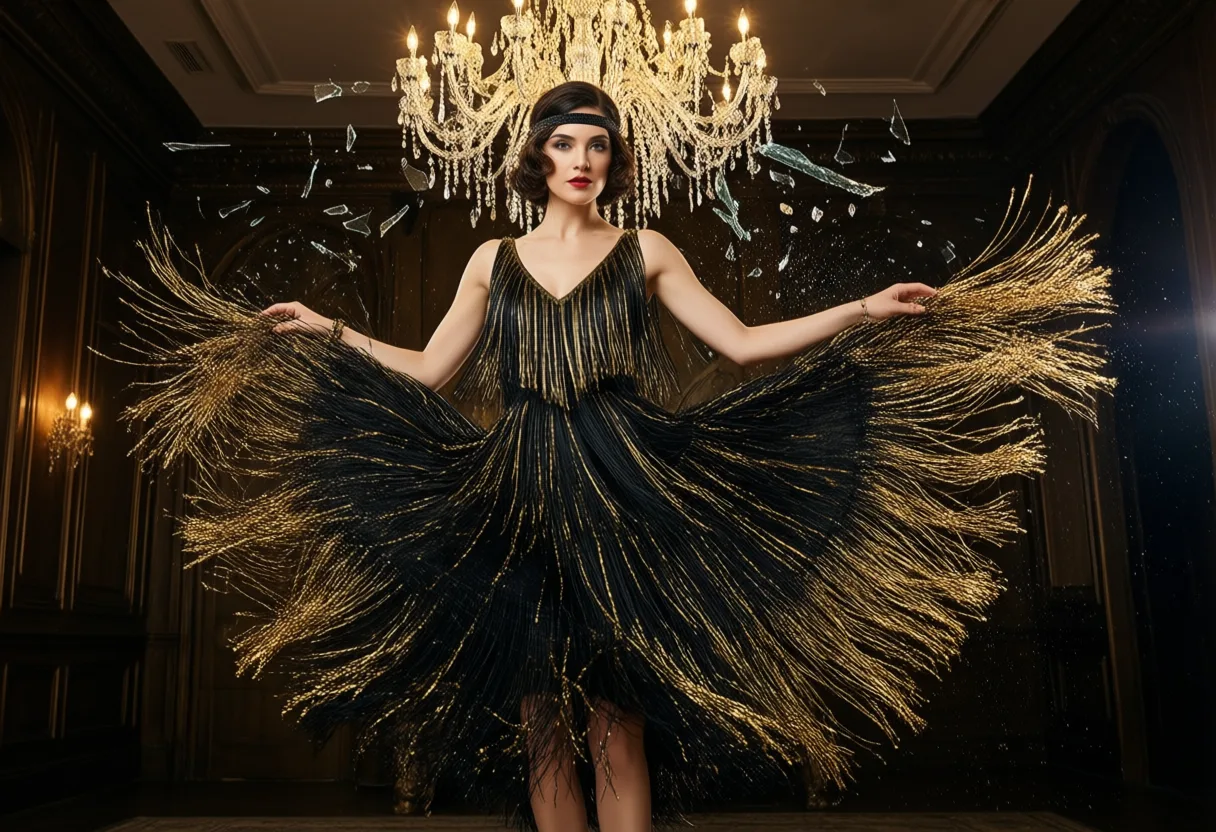
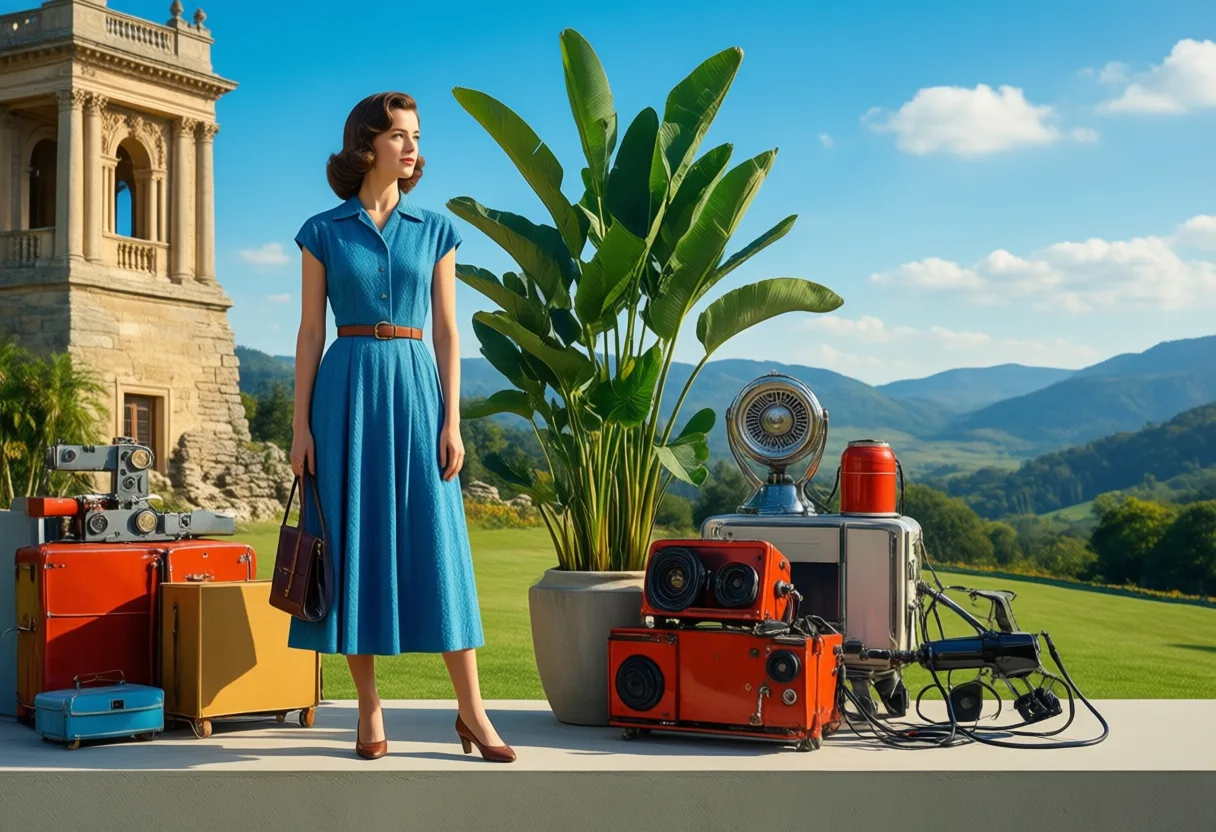
There is a certain kind of magic in the silhouette of a full tulle skirt catching the breeze, the whisper of a silk glove pulled taut over the wrist, the way a perfectly tailored jacket could hold a woman’s confidence as firmly as it held its shape-this was the alchemy of 1950s fashion, where every stitch seemed spun from hope, discipline, and a quiet rebellion against the austerity that came before. In the wake of war’s gray shadows, the world hungered for color, for structure, for beauty that was deliberate and unapologetic, and the decade answered with a symphony of cinched waists, poised hemlines, and an almost architectural reverence for the feminine form.
It was not merely clothing; it was ceremony. The fashion of this era didn’t just dress women-it anointed them.
The Architecture of Elegance: Silhouettes That Shaped a Generation
The hourglass ruled supreme, sculpted not by whimsy but by the exacting hand of designers who believed that grace was a discipline. Corsets returned not as relics of oppression but as instruments of transformation, reshaping the body into a living illustration of balance and proportion, where the waist became a punctuation mark between the flourish of the bust and the grand finale of the skirt. Dresses Bloomed outward like gardenias in full petal, supported by layers of crinoline that rustled with each step, turning the simple act of walking into a performance of poise. This was fashion as theater, and every woman its leading lady.
Tailoring, too, was elevated to an art form-suits with nipped jackets and pencil skirts moved through boardrooms and suburban driveways with equal authority, their wearers radiating a new kind of power wrapped in refinement. The peplum jacket, perched atop the hips like a flourish of lace on a cake, gave the illusion of motion even in stillness, while shirtwaist dresses-deceptively simple-became the uniform of the modern homemaker, crisp and capable, adorned with delicate prints that hinted at dreams beyond the kitchen.
And yet, beneath the polish was a quiet revolution: women were no longer dressing merely to please, but to declare.
The silhouette was not just a trend-it was a statement of reclaimed identity.
In a world rebuilding itself, fashion became one of the first languages of renewal.
Icons in Satin: The Women Who Embodied 1950s Glamour
Grace Kelly didn’t walk-she glided, a cool blonde comet trailing Dior gowns and Hermès scarves, her elegance so precise it seemed governed by celestial laws. She was the aristocrat of aura, her every public appearance a masterclass in restraint and radiance, proving that true style needed no shout, only a whisper in the right tone. Then there was Marilyn Monroe, whose breathy vulnerability and flame-red lips turned halter necks and bias-cut dresses into weapons of soft power, her curves celebrated, not concealed, in fabrics that clung like second skin.
Audrey Hepburn, with her gamine frame and elfin grace, rewrote the rules entirely-her collaboration with Hubert de Givenchy introduced a new kind of sophistication, one rooted in simplicity, where a little black dress and a string of pearls could eclipse acres of sequins. She was the paradox of the age: delicate yet defiant, demure yet modern, her look favoring clean lines and ballet flats over towering heels and opulence, proving that elegance could be understated and still stop time.
These women were not just dressed-they were Authored, each ensemble a sentence in a larger story about femininity, ambition, and the right to be seen.
They became templates, not just for fashion, but for aspiration.
And today, their influence echoes in red carpets and street style alike, where a cinched waist or a pillbox hat still carries the ghost of their glamour.

From Runway to Revival: How the 1950s Influence Modern Style
Step into any contemporary bridal boutique and you’ll find the shadow of Christian Dior’s New Look lingering in the voluminous skirts and structured bodices, a testament to how deeply the 1950s embedded itself into our cultural imagination of romance and refinement. Designers from Alexander McQueen to Rodarte have revisited the era’s dramatic proportions, reinterpreting crinolines and lace gloves through a modern lens-one that balances nostalgia with subversion, honoring the past while refusing to be bound by it.
Even in casual wear, the echoes persist: high-waisted trousers that elongate the leg, full midi skirts that spin with motion, and the resurgence of polished details like peter pan collars and pearl buttons speak to a longing for intentionality in dressing. The 1950s taught us that looking put-together isn’t about excess-it’s about attention, about the care taken in every fold and seam.
And as today’s fashion cycles speed toward reinvention, we find ourselves circling back-not just to the 2000S Fashion: Y2K Trends Resurfaced of butterfly clips and low-rise denim, but to the poised drama of an earlier century, where style was armor and beauty was a craft.
The 1950s didn’t just define an era-they built a vocabulary.
And we’re still speaking it, one nipped waist at a time.
| Fashion Element | Description | Modern Influence |
|---|---|---|
| Hourglass Silhouette | Cinched waist, full skirt, tailored fit | Seen in contemporary bridal and red carpet styles |
| Christian Dior’s New Look | Full skirts, soft shoulders, nipped waist | Inspires designers like Alexander McQueen and Rodarte |
| Youth Denim Culture | Jeans as rebellion, paired with tees and jackets | Foundation for casual youth fashion today |
| Audrey Hepburn’s Style | Simple lines, ballet flats, little black dress | Enduring symbol of understated elegance |
| Crinolines and Girdles | Structured undergarments for shape | Referenced in modern voluminous skirt designs |
Style in the Spotlight: The 1950s Reinvented Glamour
The 1950s weren’t just about poodle skirts and saddle shoes-they marked a full-on fashion revival after wartime rationing. With economies recovering and households enjoying newfound prosperity, clothing became a canvas for optimism and individuality. Women embraced hourglass silhouettes like never before, thanks to structured undergarments and couture-inspired designs trickling down to ready-to-wear lines. It was an era where getting dressed felt like an event, and looking polished was practically a civic duty.
Dior’s New Look and the Rise of the Silhouette
Christian Dior’s 1947 “New Look” set the tone for the decade, even though it launched just before the '50s began. Full skirts, nipped-in waists, and soft shoulders defined feminine elegance, rejecting the boxy, fabric-saving styles of the war years. Many women wore girdles and crinolines not just for shape, but as a symbol of sophistication-these underpinnings could take up to 20 yards of fabric for one skirt alone. The look wasn’t just for the wealthy; department stores across America offered affordable versions, making high style accessible to suburban housewives and office workers alike.
Youth Culture and the Denim Rebellion
While adults chased refinement, teenagers sparked a quiet fashion revolt. Blue jeans, once seen as workwear or even rebellious, became a staple for young people inspired by icons like James Dean and Marilyn Monroe. Paired with white tees, leather jackets, or letterman sweaters, denim signaled a break from tradition. At the same time, casual separates like capri pants and pedal pushers gained popularity, especially among women seeking comfort without sacrificing style. This growing youth market laid the groundwork for fashion as a form of identity, not just conformity. Explore more stories, videos, and creators on Loaded.
Frequently Asked Questions
What defined 1950s fashion silhouettes?
The hourglass figure ruled 1950s fashion, with cinched waists, full skirts supported by crinolines, and tailored suits emphasizing balance and proportion. Silhouettes were structured and deliberate, often enhanced by corsets and girdles.
Who were the key fashion icons of the 1950s?
Grace Kelly, Marilyn Monroe, and Audrey Hepburn were leading fashion icons. Each embodied a distinct style-Grace with polished elegance, Marilyn with sensual glamour, and Audrey with understated sophistication.
How did Christian Dior influence 1950s fashion?
Christian Dior’s 1947 'New Look' set the tone for the decade with full skirts, nipped-in waists, and soft shoulders. It rejected wartime austerity and made high fashion accessible through affordable versions in department stores.
What role did youth culture play in 1950s fashion?
Teenagers embraced denim, leather jackets, and casual separates as a form of rebellion. Inspired by figures like James Dean and Marilyn Monroe, youth fashion became a statement of identity and independence.
This article was produced with AI assistance. How Paradox Magazine uses AI.
Maeve explores avant-garde fashion through the lens of cultural evolution, blending runway analysis with street-level trends. She investigates how identity and innovation collide in fabric, silhouette, and statement, making high fashion accessible without diluting its daring.