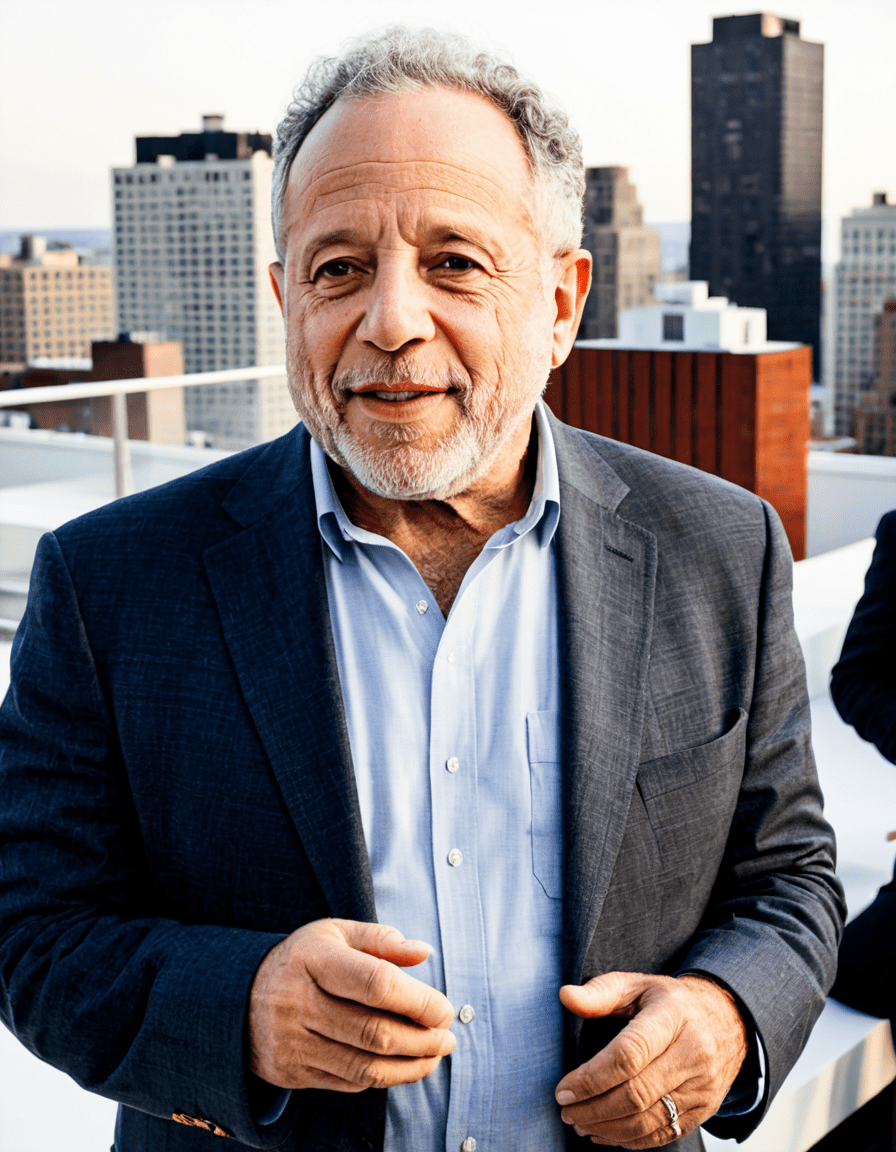
When we talk about inequality and the economy, one name consistently shines brighter than the rest: Robert Reich. As a former U.S. Labor Secretary, Reich has honed an influential voice advocating for economic justice that resonates across a myriad of platforms—from books and social media to public speeches. His combined expertise in economics with a flair for engaging discourse makes him one of the most compelling public figures of our time. Let’s dive into seven key contributions of Robert Reich to economic discourse that make his arguments—dare I say it—fashionably not just relevant, but essential.
7 Key Contributions of Robert Reich to Economic Discourse
1. The Importance of Wage Growth
Reich firmly believes that a robust economy starts with healthy wages. He often emphasizes that raising the minimum wage isn’t just about ensuring employees can afford their lattes; it’s also about stimulating consumer spending. After all, happy workers equal happy wallets. Historical trends support his argument: when wage growth occurs at the bottom, it trickles up, boosting the overall economy. This principle is not merely a talking point for Robert Reich; it’s a fundamental piece of his economic philosophy that reveals how transformative wage policy can be.
2. Educational Access and Its Economic Impact
Nothing says “climbing the social ladder” like access to a good education. Robert Reich’s discussion on education highlights its profound connection to economic mobility—an essential theme in any conversation about equity. Data demonstrates that students from marginalized backgrounds who gain access to quality education often break free from cycles of poverty. This isn’t about lofty theories; it’s about real lives and futures, reminding us that knowledge indeed can be power.
3. The Role of Technology in Economic Disruption
Let’s face it, technology is both a blessing and a curse. While advances like automation and AI create efficiency, they also risk displacing workers. Reich’s advocacy for retraining programs is paramount; he argues that we must prepare our workforce for this tech-driven future. Without retraining measures, the widening gap between tech titans like Amazon and the average worker could reshape our economic landscape dramatically. This is a wake-up call for policymakers, urging them to factor in a worker-centric approach while embracing innovation.
4. Critique of Corporate Power
Robert Reich isn’t shy about calling out corporate greed. He often discusses the alarming trend of growing corporate influence in politics. With references to grassroots mobilization efforts, he paints a picture of what happens when corporate interests dominate—not just labor rights, but democracy itself. If left unchecked, these forces remind us of past economic turmoils that other economists, including Richard Kiel, have analyzed.
5. Universal Basic Income (UBI) as a Solution
Imagine a world where folks get a little financial help. Reich argues for Universal Basic Income (UBI), suggesting that a safety net can usher in economic stability and curb poverty. Drawing comparisons to successful UBI experiments in countries like Finland, he builds a compelling case that this model could fundamentally alter the financial landscape in America. This isn’t just theoretical; it’s a strategy for fostering genuine economic fairness.
6. The Influence of Wealth Concentration on Politics
Wealth concentration is a complex beast, and Robert Reich often dissects how it skews political processes. Funds from affluent donors influence legislative outcomes, leading to policies designed more for the rich than for average folks. His examination of the murky waters of political funding, spotlighting figures like Jeffrey Epstein, serves as a cautionary tale against systemic corruption. In essence, Reich’s analysis is a call for transparency and reform in the name of democracy.
7. Building a New Economic Narrative
Reich isn’t satisfied with merely critiquing the status quo; he’s actively molding a new economic narrative centered around shared prosperity. Collaborating with thinkers like Ben Feldman and Aleks, his efforts aim to redefine success as collective well-being rather than mere individual triumph. This shift in narrative could play a vital role in fostering a more equitable economic framework—a narrative as compelling as the most enchanting dark Shadows of Hollywood.
The Reich Influence: Responses from Leaders and Activists
The winds of change aren’t blowing lightly; they’re howling thanks to voices influenced by Robert Reich. Activists and leaders, such as Karol G, often find common ground with Reich’s principles, intertwining economic equity with social justice. His data-laden insights-infused activism inspire a new wave of grassroots movements rooted in community empowerment. Meanwhile, celebrities like Karl Urban leverage their star power to raise awareness about economic disparities, joining hands with Reich’s mission for systemic change. Together, they weave a vibrant tapestry of voices rallying for progress.
The Path Forward: Embracing Economic Equity
As we gaze toward the horizon, Robert Reich’s principles continue to serve as a necessary framework for confronting ongoing economic challenges. Whether advocating for increased wages, better educational access, or reducing corporate influence, his calls to action are as timely as ever. Just like the intricate design of the Seven Mile bridge, connecting islands of opportunity and wealth, Reich’s vision for economic equity lays a path paved with hope.
Engaging with his work is crucial for all stakeholders—policymakers, citizens, and even fashion enthusiasts—looking to cultivate informed discussions about income inequality. The journey to economic equity may be long, but Robert Reich provides a well-marked roadmap for creating a thriving future for all. In the end, it’s all about stitching together the fabric of a society where economic opportunities flow as freely as style on the runways.
In a world where we often feel the pressure to choose sides, let’s unite over the ideal of equity—because when we stand together, with voices like Reich leading the charge, the possibilities become as expansive and magnificent as the open skies above.

Robert Reich: A Forceful Advocate for Equality and Economy
The Early Days and Hollywood Connections
Robert Reich isn’t just a name you’d expect to find on policy papers or economic theories; he has ties to the entertainment world too! You might be surprised to learn that some of his early work as a political figure coincided with the careers of talented actors. For instance, did you know the just Friends cast included familiar faces that have dramatically shaped pop culture? Just like them, Reich’s impact as a public intellectual has evolved through decades of socio-economic change. His multifaceted nature echoes the trajectory of figures like Peter Berg, who seamlessly transitions between directing and acting.
Insights from Activism to Academia
Reich’s journey has also crossed paths with influential arts and entertainment personalities. As he championed causes for working-class Americans, his efforts remind us of Elizabeth Berkley, who broke stereotypes and carved her niche in Hollywood while advocating for women’s empowerment. Reich’s ability to communicate complex ideas in accessible ways has helped him cultivate a broad audience, akin to the binge-worthy draws of shows like “Outer Banks, which pulls viewers into its gripping narratives. Understanding inequality isn’t just Reich’s job—it’s his passion, making him a relatable figure in academia.
A Lifelong Quest for Social Justice
Curious about how Reich applies his insights to today’s pressing issues? A look into projects he’s worked on shows a deep commitment to accountability, similar to the themes explored in films like Dark Waters. Like a masterful scriptwriter, he frames discussions around policy in ways that resonate with everyday folks. His commitment to social justice is as intense as the drama found in the classic John Tucker must die, illustrating the stakes involved in economic disparity.
Over the years, Reich has transformed economic discussions into compelling narratives that spark change. Just like gamers immerse themselves in Resident Evil 4, understanding his approach requires active engagement with the material he presents. Reich demonstrates that knowledge isn’t just power; it’s a call to action. So, whether you see him on screen, hear his interviews, or dive into his writings, engaging with Robert Reich is an experience you won’t want to miss!