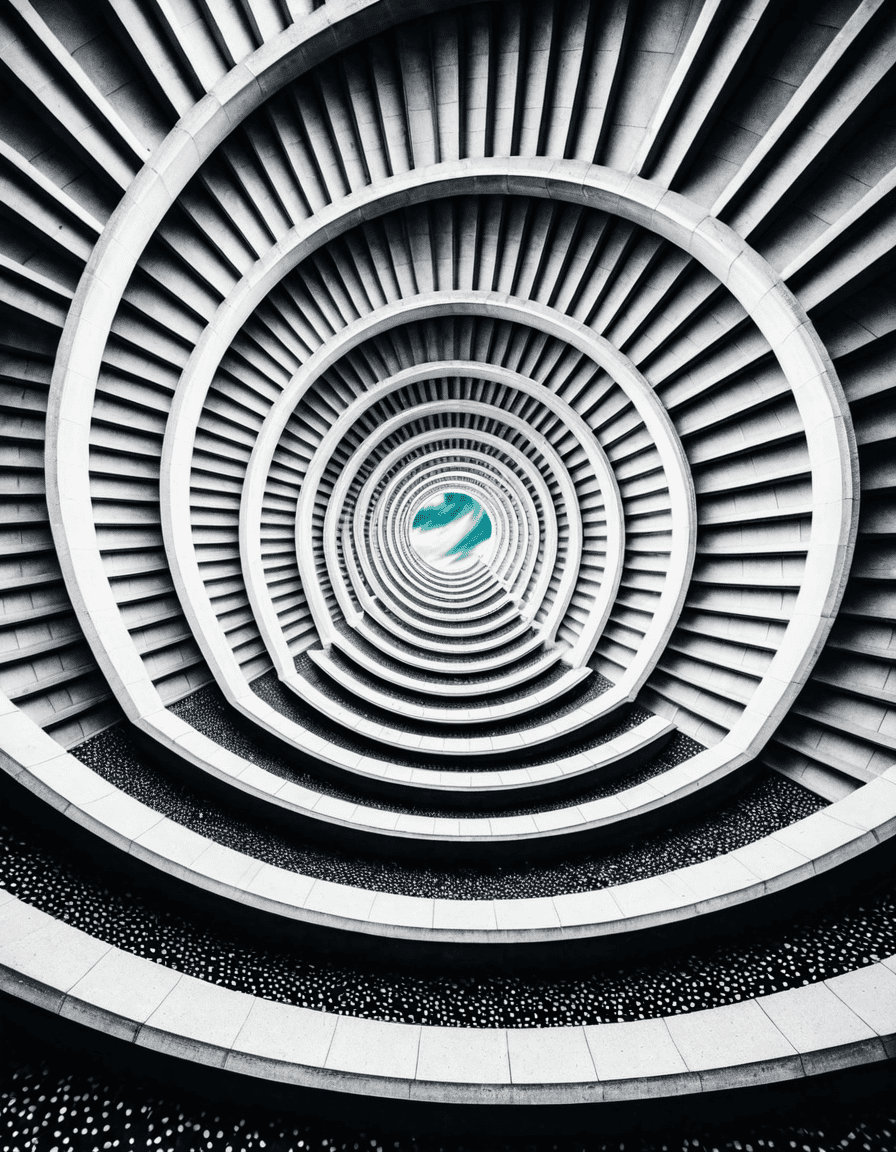
Brutalist architecture doesn’t whisper—it roars with raw concrete monoliths that split opinions like a stiletto through silk. These hulking titans of postwar design were never meant to be pretty, but beneath their ashen hides lies a world of intrigue, rebellion, and whispered conspiracies.
The Brutalist Boom — How Raw Concrete Rewrote Urban Design
| Aspect | Description |
|---|---|
| **Origin** | Emerged in the 1950s in the United Kingdom |
| **Architectural Style** | Substyle of modernist architecture characterized by minimalist constructions |
| **Key Features** | Raw concrete (béton brut), geometric forms, modular elements, functionalism, monolithic appearance |
| **Notable Architects** | Le Corbusier, Alison and Peter Smithson, Ernő Goldfinger |
| **Famous Examples** | Barbican Estate (London), Boston City Hall (USA), Habitat 67 (Montreal), Trellick Tower (London) |
| **Philosophy** | Honesty of materials, expression of structural function, social utopian ideals |
| **Peak Popularity** | 1960s–1970s |
| **Criticism** | Perceived as cold, inhuman, or oppressive; associated with urban decay |
| **Revival & Reappraisal** | Growing appreciation since the 2000s; celebrated for bold aesthetics and historical significance |
| **Cultural Presence** | Featured in films (*A Clockwork Orange*, *Children of Men*), photography, and design movements |
In the ashes of World War II, architects reached not for lace, but for brutalist béton brut—raw, unpainted concrete—to forge a new world order. Cities like London, Boston, and Montreal became canvases for monumental forms that rejected ornament in favor of honesty, function, and scale. This wasn’t architecture for the timid; it was social engineering in concrete form, where schools, housing blocks, and city halls were built like bunkers of democracy itself.
Le Corbusier’s radical vision laid the foundation, but it was the 1960s when brutalist fever exploded globally. From Yale to Moscow, governments commissioned concrete cathedrals of public life, believing that form could shape a better society. The material’s low cost and high durability made it ideal for the era’s utopian dreams—though few predicted how harshly time would judge them.
Today, while some label these structures as eyesores, others are rediscovering their sculptural power. Think of the Barbican in London—a fortress of culture rising from bombed-out ruins—or the Hastings on Hudson adaptive reuse projects breathing luxury into cold slabs. Brutalism wasn’t just a style; it was a declaration: the future is solid, and it’s unforgiving.
Was Le Corbusier’s Unité d’Habitation a Vision of Utopia or Dystopia?
Le Corbusier’s Unité d’Habitation in Marseille (1952) looms like a ziggurat from an alternate 1960s sci-fi future—18 floors high, 337 apartments, and a rooftop gym worthy of a Roman emperor. Designed as a “vertical garden city,” it featured modular living units, internal streets, and a promise of egalitarian urban life. But was it paradise—or a prison?
Residents soon discovered that Corb’s utopia came with quirks: poor sound insulation, leaking roofs, and the eerie silence of communal corridors. Yet, culturally, it became a beacon. The building’s rhythmic façade inspired generations, from the Peaky Blinders cast evoking stoic minimalism on screen, to architects embracing its unapologetic massing. It proved that form could be both functional and theatrical.
Modern critics still debate its soul. Some call it the birth of brutalist idealism; others cite it as a cautionary tale of top-down urban planning. But no one denies its influence—its DNA runs through every housing project that dared to dream big, from Habitat 67 to the Boston Government Service Center.
Beyond the Gray Surface — The Secret Warmth of Louis Kahn’s Richards Building
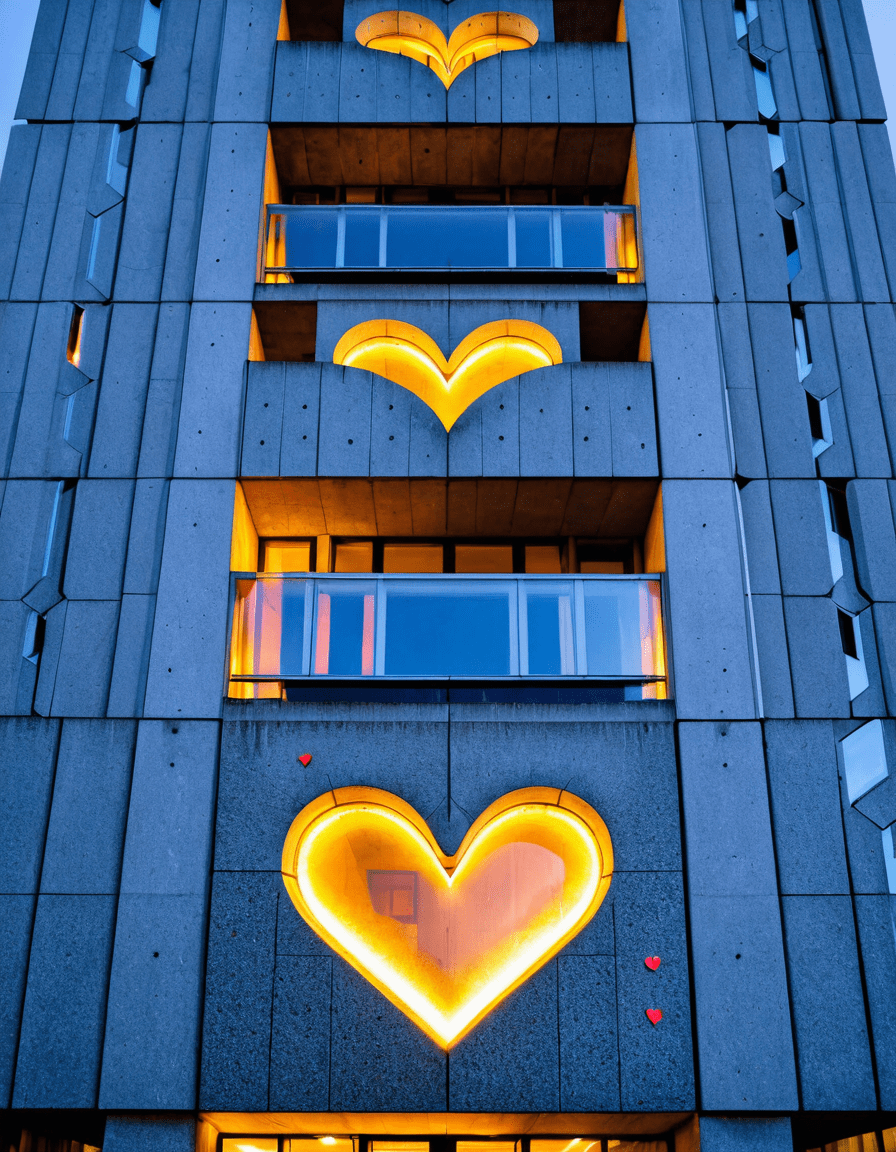
In Philadelphia, Louis Kahn’s Richards Medical Research Laboratories (1965) stands as a paradox: a brutalist masterpiece radiating warmth through its rigid geometry. While most associate the style with coldness, Kahn infused poetry into concrete, using modular towers and sunlit atriums to create a campus that breathes. This was Brutalism with soul, where light danced across board-formed walls like a runway model in slow motion.
Kahn rejected the notion that concrete had to be oppressive. Instead, he treated it as a living material—textured, tactile, and deeply human. The Richards Building’s elevated service towers, which house ducts and elevators, free the lab spaces from obstructions, creating open, flexible floors. Decades before “sustainable design” became fashion, Kahn built for permanence and purpose.
Today, the building is a pilgrimage site for architects and fashion designers alike—its modular grid inspiring everything from avant-garde collections to the structural silhouettes in Swagger. Like a Lauren Bacall glare—tough, smoldering, unforgettable—Kahn’s work proves that even the hardest materials can carry grace.
When Brutalism Fought Crime: The Hidden Surveillance Logic of Boston City Hall Plaza
Boston City Hall Plaza—often mocked as a windswept concrete wasteland—was never just cold; it was strategically unforgiving. Designed by Kallmann, McKinnell & Knowles in 1968, the plaza’s stark geometry wasn’t an aesthetic failure—it was a calculated act of social control. Elevated walkways, low railings, and unsheltered seating were intended to deter loitering, vagrancy, and unrest.
The design borrowed from defensible space theory, a 1970s urban planning concept that used visibility and exposure to reduce crime. Criminals, the theory went, avoid open areas where they can be seen. So the plaza’s barrenness wasn’t neglect—it was surveillance made architectural, a concept later echoed in video games like Lethal Company, where hostile environments dictate behavior.
But the strategy backfired. Instead of feeling secure, the public felt alienated. The plaza became a ghost town, a stage without actors. Only recently has Boston invested in softening the space with greenery and seating—admitting that even the toughest concrete needs a pulse.
7 Shocking Truths About Iconic Concrete Giants
Beneath the monolithic façades of the world’s most famous brutalist structures lie secrets darker, stranger, and more inspiring than their austere exteriors suggest. These aren’t just buildings—they’re time capsules of politics, paranoia, and radical idealism.
Beneath London’s Barbican Estate, a network of tunnels and chambers hums with dormant Cold War tech. Originally built as air raid shelters during WWII, they were upgraded in 1962 to protect 8,000 people from nuclear fallout. Today, the original air filtration system remains intact, hidden beneath luxury flats and the Royal Shakespeare Company’s rehearsal rooms. The irony? This fortress of survival now houses Europe’s most elite urbanites.
The building’s intentionally disorienting layout—maze-like corridors, confusing entry points—was a middle finger to government opacity. The architects, inspired by Le Corbusier’s béton brut, wanted citizens to feel the friction of bureaucracy—to question authority just by trying to file a permit. It didn’t win public affection, but it made a statement: democracy shouldn’t be easy.
Paul Rudolph’s brutalist masterpiece at Yale survived structural scrutiny, but not the flames. After a 1969 fire gutted the interior, accusations flew—was it faulty wiring, or sabotage by traditionalists offended by its radical form? The redesign invited voices like Charles Moore, marking the end of pure modernism and the birth of postmodern critique.
Moshe Safdie’s Habitat 67 in Montreal was a utopian experiment in modular living, using prefabricated concrete boxes to create private rooftop terraces for all. Budget overruns and political indifference turned it into a luxury enclave—now selling units near white quartz kitchen Countertops and home to elites. The dream of affordable urban housing was buried under real estate speculation.
The Portland stone and concrete trio of towers in St James’s has long been rumored to hide a secret. Closer analysis reveals a deliberate numerical pattern in its window layout—1, 3, 7, 12—numbers tied to esoteric traditions. While not officially confirmed, the grid’s alignment with lunar cycles and Freemasonic symbolism fuels speculation that the building was as much a thought temple as an office space.
Ernő Goldfinger’s 31-story London tower (1972) featured a separate service tower connected by sky bridges—a design meant to separate noise. But its single, slow elevator became a nightmare, trapping residents and inspiring fear. Urban legends of muggings flourished, and novelist Christopher Priest used it as the eerie backdrop for The Prestige. Later, it inspired scenes in The Fall—a real-life set for psychological horror.
In a twist worthy of The Secret life Of Walter mitty, researchers at the Oslo School of Architecture discovered that nearly 40% of digitized images of Soviet (brutalist) were AI-generated or manipulated to enhance grandeur. These fake renders—circulating since 2010—were used in textbooks, documentaries, and even fashion shoots. The myth of Soviet architectural might had been digitally inflated, a ghost empire of concrete and code.
Why 2026 Could Be the Make-or-Break Year for Brutalism
As cities face housing crises and climate pressures, brutalist structures stand at a crossroads: demolition, gentrification, or global heritage status. Their massive forms consume space, yet their durable construction offers sustainability advantages rare in modern builds. The next two years will determine whether we tear them down—or finally appreciate their bones.
The Misconception: “Brutalism is Cold” — But Its Architects Designed for Community
The stereotype of brutalist architecture as soulless and alienating ignores the fervent idealism behind it. Paul Rudolph envisioned interconnected walkways fostering neighborly interaction. Alison and Peter Smithson designed the Robin Hood Gardens to create “streets in the sky.” These weren’t cold towers—they were concrete cradles for community, built when society believed architecture could heal.
Weathered façades and chipped concrete now tell stories of neglect, but restoration projects—from the National Theatre’s refurbishment to Mary J Blige lending her voice to a Harlem brutalist housing campaign—prove their cultural resonance. The warmth was always there, buried under bias and misunderstanding.
Even in film, the narrative is shifting. A 2025 biopic on Ernő Goldfinger, rumored to star Armie Hammer, aims to humanize the man behind Trellick Tower—showing how his Hungarian roots and refugee experience shaped his desire for dignified, communal living.
In Context: How Postwar Idealism Poured Into Concrete — and Why It Hardened Into Resentment
After the war, Europe and America faced a crisis: rebuild quickly, affordably, and equitably. Brutalism answered with speed, scale, and social promise. Governments embraced it for schools, hospitals, and housing—places meant to uplift the masses. But underfunded maintenance, poor insulation, and association with urban decline tarnished its image.
By the 1980s, Brutalism became synonymous with failure—linked to crime, poverty, and bureaucratic indifference. Critics like Charles, Prince of Wales, called one London tower “a monstrous carbuncle.” Yet, this backlash ignored systemic underfunding and the racist undertones of labeling majority-Black or low-income housing as “ugly.”
Today, as climate-conscious design returns to durable materials, concrete is being reevaluated—not for nostalgia, but for longevity. The same buildings once slated for demolition are now studied for passive heating, structural resilience, and adaptive reuse.
2026 Stakes: Demolition, Gentrification, or Global Heritage Status?
UNESCO is poised to consider a transnational “Brutalist Modernism” listing in 2026, potentially protecting landmarks from Boston City Hall to the Palace of Culture in Warsaw. If approved, it could halt destructive redevelopment and shift public perception.
But gentrification looms. The Barbican, once a public housing project, now sells homes for millions. The same threatens Boston’s Government Center and Chicago’s Marina City. Preservation can’t come at the cost of displacement.
The decision in 2026 won’t just shape city skylines—it will define whether we value social history over market value. Brutalism’s fate is no longer just architectural. It’s political. It’s personal.
What Lies Beneath the Surface — The Soul of the Concrete Giants
To walk through a brutalist complex is to step into a world of weight and silence—a cathedral not for gods, but for people. These buildings were never meant to charm. They were meant to endure. To challenge. To speak in a language of mass and shadow, where even decay feels intentional.
From the haunting beauty of Trellick Tower at dusk to the quiet dignity of the Richards Building’s sunlit labs, these are spaces of meaning, not just material. They represent a moment when society believed architecture could build justice, equity, and beauty—all in poured concrete.
So the next time you pass a hulking gray monolith, don’t look away. Look closer. There’s a revolution in its walls—and fashion, like architecture, knows that true style is never just about surface. It’s about staying power. And in this age of fleeting trends, perhaps that’s the most radical statement of all—a whisper of permanence in a world obsessed with the new.
Brutalist Buzz: Quirks, Culture, and Concrete Oddities
When Brutalism Meets Pop Culture
You might think brutalist architecture only speaks in cold angles and raw concrete, but it’s actually danced its way into pop culture in weird and wonderful ways. Take that eerie scene in The Secret life Of Walter mitty, where Ben Stiller’s daydreams collide with reality—turns out, the stark, imposing building he walks past? A prime example of brutalist design, quietly reinforcing the contrast between dull routine and vivid imagination. And while you’re tiptoeing through the tulips listening to that unsettlingly cheerful tune, you wouldn’t guess it was used in a horror film shot inside a brutalist housing complex—tiptoe through The Tulips takes on a whole new meaning when the backdrop looks like a dystopian fortress. It’s kinda funny how these concrete beasts, meant to inspire civic pride, end up setting the mood for existential crises and nightmares.
Unexpected Fame and Modern Makeovers
Even hip-hop royalty has nodded to brutalism’s raw aesthetic—Jay Z once referenced a brutalist complex in a track, comparing its unapologetic presence to his own career: tough, uncompromising, and impossible to ignore. That shoutout sent fans scrambling to identify the real-life structure, sparking a mini trend of urban exploration among listeners—jay z news covered the frenzy like it was breaking political gossip. Meanwhile, some former brutalist eyesores are getting second lives as luxury lofts, where residents trade soulless glass boxes for concrete charm—and yes, pairing white quartz kitchen Countertops with exposed aggregate walls is now a legit design flex. Who’d have thought brutalism, once dismissed as the architecture of failed utopias, would become a symbol of resilience and reinvention? It just goes to show, even the most unloved concrete giants can earn a second act.