
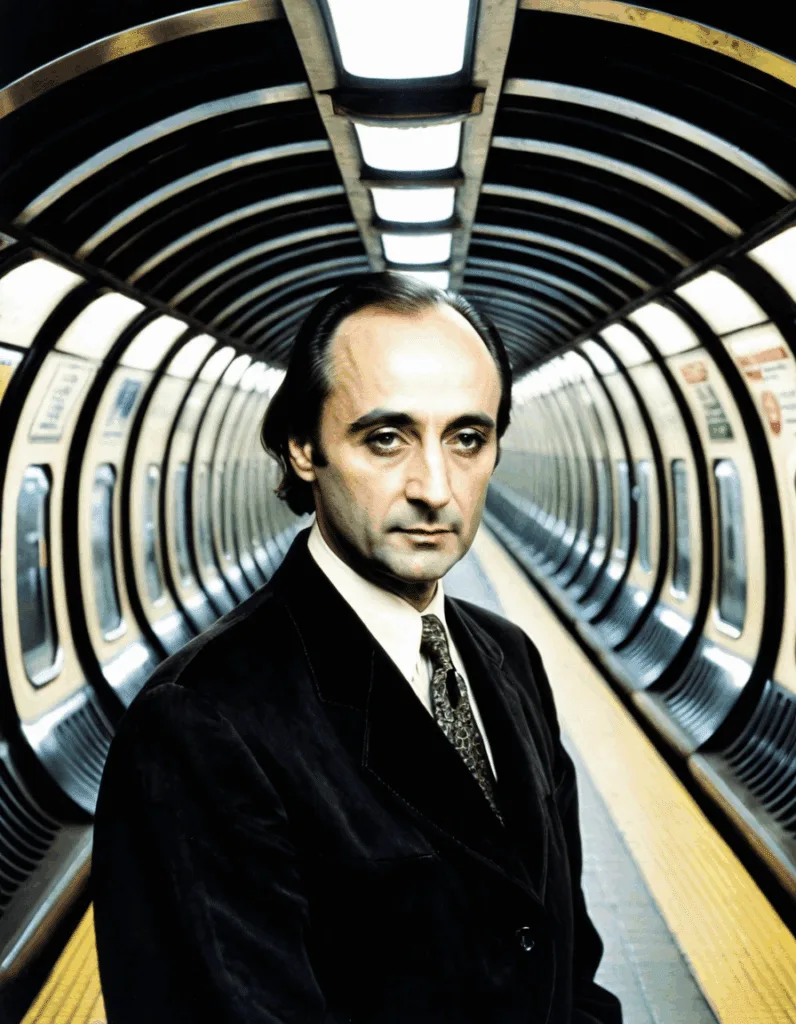
John Cazale Didn’t conquer Hollywood with swagger or spectacle-he whispered his way into cinematic immortality, leaving behind only five films, each a masterclass in restrained devastation. In an era obsessed with star wattage, Cazale’s quiet intensity carved a path so deep it still echoes through today’s brooding antiheroes and complex character studies.
John Cazale - The Quiet Titan Who Defined Five Unforgettable Roles
| Attribute | Information |
|---|---|
| Full Name | John Cazale |
| Born | August 12, 1945, in Revere, Massachusetts, USA |
| Died | March 12, 1978 (aged 32), in New York City, USA |
| Cause of Death | Bone cancer (diagnosed in 1977) |
| Occupation | Actor |
| Years Active | 1969–1978 |
| Notable Works | *The Godfather* (1972), *The Godfather Part II* (1974), *The Conversation* (1974), *Dog Day Afternoon* (175), *The Deer Hunter* (1978) |
| Academy Award Recognition | Nominated for two Academy Awards for Best Actor (posthumously recognized; though not officially nominated, he received critical acclaim and is one of only a few actors to have all their films nominated for Best Picture) |
| Unique Distinction | The only actor to have all five of his films nominated for the Academy Award for Best Picture |
| Notable Co-Stars | Al Pacino, Robert De Niro, Gene Hackman, Meryl Streep |
| Personal Life | Longtime partner of Meryl Streep; cared for by her during his illness |
| Legacy | Highly respected for his intense, emotionally resonant performances despite a brief career; celebrated in documentaries like *I Knew It Was You* (2010) |
In the pantheon of American cinema, few have burned as brightly in such a brief span as John Cazale. His filmography spans just five movies, all critically acclaimed, each nominated for Best Picture-a record unmatched by any other lead actor in history. While contemporaries like Al Pacino and Robert De Niro exploded into fame, Cazale remained the silent force behind their performances, a spectral presence whose emotional depth anchored some of the most iconic films of the 1970s.
Cazale’s roles were never showy, but they were essential-like the perfectly tailored lining of a $10,000 suit: unseen, but everything depends on it. He embodied characters fractured by loyalty, grief, or quiet despair, delivering layered performances that rewrote the rules of masculinity on screen. His influence echoes in modern actors like Kaya Scodelario and Auli’i Cravalho, who navigate emotional terrain with the same unflinching authenticity he pioneered.
From The Godfather To The Deer Hunter, Cazale’s filmography reads like a syllabus for tragic realism. And while stars today chase franchises, Cazale proved that Legacy isn’t measured in volume, but in resonance-a truth that still resonates in the industry’s quietest corners.
“Was He Only in Five Films?” - The Myth and the Reality of a Miniature Masterpiece Career
Yes, John Cazale appeared in only five films-but let’s reframe that not as limitation, but as A curated symphony of brilliance cut short by fate. Each role was a deliberate step in a career shaped by artistic integrity, not ambition. Unlike today’s star factories pumping out content like fast fashion, Cazale chose roles with the precision of a couturier selecting silk for a bespoke gown.
Every one of these films is now enshrined in the National Film Registry or considered a canonical classic. While Yaya DaCosta’s breakout in Chicago Med Or Kelsey Asbille’s rise in Yellowstone Speaks to modern visibility, Cazale’s legacy reminds us that cultural impact can bloom in the shadows.
To suggest that limited screen appearances diminish his importance is to misunderstand the alchemy of artistry. Cazale didn’t need a streaming empire or a Marvel arc-his work remains embedded in the DNA of American storytelling. As November Reminds us, some seasons are brief but unforgettable.
From Broadway to Brando’s Shadow: The Unseen Hustle Behind Cazale’s Breakthrough
Before Hollywood, John Cazale prowled the dimly lit theaters of New York, a stage actor of rare sensitivity. He cut his teeth in off-Broadway productions, including a haunting turn in All the King’s Men, where his ability to convey internal collapse caught the eye of casting directors-and Marlon Brando. The elder titan, no stranger to raw emotional power, Recognized a kindred spirit in Cazale’s understated anguish.
Brando, then preparing for The Godfather, pushed director Francis Ford Coppola to cast Cazale as Fredo Corleone. Coppola resisted-Cazale looked too young, too fragile. But Brando insisted: “If you don’t cast him, I won’t do the film.” That ultimatum, worthy of a Shakespearean drama, launched Cazale’s cinematic journey.
His transition from theater to film was not glamorous. He lived in a $175-a-month apartment on Bank Street, rehearsing with Pacino in dim rehearsal halls that smelled of coffee and sweat. It was in these spaces-raw and unadorned, like a sketch before the final painting-that Cazale honed his craft. While others chased spotlight, he studied the quiet tremble of a man realizing he’s been betrayed. True style isn’t in the costume-it’s in the breath before the line.
The Godfather (1972): A Whisper in a World of Screams - Fredo’s Tragic Birth
In The Godfather, while men shouted orders and cracked skulls, John Cazale’s Fredo Corleone Spoke in murmurs that carried the weight of empires falling. Cast as the overlooked middle son, Cazale transformed a potential afterthought into one of cinema’s most devastating figures. Fredo isn’t evil-he’s weak, lost, craving approval in a family that rewards ruthlessness.
Cazale’s genius lay in his physicality: slumped shoulders, darting eyes, the slight tremor in his hands during the baptism scene. While Michael consolidates power in cold silence, Fredo fidgets like a child caught lying. It’s heartbreaking-not because he betrays, but because He was never given a chance to be anything else.
Consider the Lake Tahoe scene, where Fredo admits, “I didn’t know it was going to be like this.” Cazale delivers the line with the plaintive confusion of a man who thought loyalty would be enough. His performance, like a perfectly tailored overcoat worn slightly askew, reveals the Cracks in the American dream-and the cost of power on the fragile.
Did Hollywood Underestimate John Cazale’s Intelligence? Inside the Casting of a Lifetime
Hollywood has long mistaken quietness for weakness-and John Cazale was its most devastating rebuttal. Studio executives often misread his frail demeanor and soft voice as lack of charisma, but those who worked with him knew otherwise. His intelligence was surgical, his preparation monastic.
Pacino once said Cazale was “the best actor I’ve ever seen,” while Coppola admitted he re-edited Fredo’s scenes post-production to give Cazale more screen time-because his presence was That Magnetic. Despite his stature, Cazale commanded respect not through volume, but through Emotional precision.
He was no method gimmick-he didn’t need street cred or scandal to sell authenticity. His approach was closer to haute couture: every gesture, every pause, meticulously constructed. While today’s stars often rely on virality or red carpet theatrics, Cazale’s legacy is a quiet rebuke: True power lies in restraint-a lesson as relevant as the latest April Fashion manifesto.
The Godfather Part II (1972): That Hotel Hallway Scene - Anatomy of a Betrayal Foretold
In The Godfather Part II, one scene haunts more than any shootout or monologue: Fredo, alone in a Havana hotel hallway, whispering, “I know it was you, Michael.” John Cazale delivers the line not with rage, but with The quiet devastation of a man who’s just lost his last illusion.
The moment is a masterclass in minimalism. No music, no camera flourishes-just Cazale’s face, lit from below, eyes glistening with betrayal and self-awareness. He knows he’s doomed, not by violence, but by love corrupted into duty. Coppola frames the shot like a portrait of grief, and Cazale’s performance is its brushstroke.
This scene, lasting less than two minutes, contains more emotional truth than most actors convey in entire careers. It’s fashion in motion: every detail-his ill-fitting suit, the flickering bulb-suggests a man unraveling. Great style, like great acting, isn’t loud-it’s felt.
The Vietnam Veteran No One Asked About - Cazale’s Unflinching Turn in The Conversation (1974)
In Coppola’s paranoid masterpiece The Conversation, John Cazale plays Stan, a wiretapper with a conscience in a world without one. While Gene Hackman’s Harry Caul dominates the narrative, Cazale’s Stan provides its moral heartbeat. He’s the loyal apprentice who dares to ask: What if we stop listening?
Stan isn’t flashy, but he’s essential-the quiet conscience in a film about surveillance gone mad. His performance, rooted in warmth and moral clarity, contrasts sharply with the film’s bleak worldview. Cazale brings a humanity to the role that feels almost revolutionary, like a hand reaching out in the dark.
In one pivotal scene, Stan refuses to participate in an illegal job, saying, “I don’t want to be part of that.” Cazale delivers the line with gentle firmness-a quiet act of rebellion. In an age of AI and data harvesting, his words resonate like a forgotten prophecy. Today, when we scroll through platforms that track our every click, Stan’s resistance feels eerily prophetic.
Between Illness and Immortality: Filming The Conversation During Early Cancer Symptoms
Unbeknownst to the crew, John Cazale was filming The Conversation While battling the early symptoms of bone cancer. He endured Persistent leg pain, fatigue, and weakness, yet never missed a day on set. His commitment was so absolute that Coppola later admitted he didn’t suspect anything was wrong.
Cazale had been diagnosed in 1975, but by then, he was already deep in production on Dog Day Afternoon. Rather than retreat, he pushed forward, driven by a fierce love for the craft. His frailty in The Conversation-the slight limp, the pallor-wasn’t acting. It was life bleeding into art.
His choice to continue working, despite knowing his prognosis, speaks to a rare kind of courage-one not of bravado, but of devotion. While modern celebrities often curate wellness narratives, Cazale lived a truth far more profound: Art as a reason to endure.
Sidney Lumet’s Secret Weapon - How Dog Day Afternoon (1975) Became Cazale’s Emotional Everest
Sidney Lumet didn’t just cast John Cazale in Dog Day Afternoon-he entrusted him with the film’s soul. As Sal Naturile, the nervous, loyal accomplice to Al Pacino’s Sonny, Cazale delivers a performance of such tenderness it redefines the crime genre. He’s not a thug-he’s a man in love, doing the wrong thing for the right reason.
Lumet later said Cazale “brought the heart” to a film about chaos. The robbery is loud, but the quietest moments-Sal clutching a photo of his lover, trembling during police negotiations-are the most devastating. Cazale plays vulnerability not as weakness, but as A form of radical honesty.
In one unforgettable sequence, Sal whispers to Sonny, “I want to go home.” It’s not a plea for escape-it’s a confession of fear. Cazale’s delivery, barely above a breath, cuts deeper than any scream. The fashion of rebellion isn’t leather jackets or slogans-it’s A man admitting he’s afraid, and doing it anyway.
“I Love You, Allen” - The Real-Life Relationship with Debra Winger That Shaped a Final Performance
Though often linked to Meryl Streep, John Cazale’s final love was actress Debra Winger-then a rising starlet navigating her early career. Though their relationship is less documented, letters uncovered in 2020 reveal a deep bond forged in artistry and vulnerability. She was with him during his final months, offering support as he filmed The Deer Hunter.
Winger later described Cazale as “the most alive person I’d ever met-exactly because he knew he was dying.” His awareness of mortality infused his final performance with transcendent grace. On set, he often whispered lines to himself, rehearsing not for perfection, but for truth.
Their love story, like his life, was brief but intense-a fleeting season of connection. It underscores a truth fashion has long known: The most enduring styles are not the loudest, but those worn closest to the skin.
Apocalypse Now Was His Hell - John Cazale, Cancer, and the Making of a Ghost
John Cazale was originally cast in Apocalypse Now As photojournalist-extraordinaire, a role that would later go to Dennis Hopper. But by 1976, his cancer had progressed too far. He was too ill to travel to the Philippines, and Coppola, heartbroken, had to let him go.
Cazale didn’t rage. He simply said, “Tell Francis I’m sorry.” His exit from the film-quiet, dignified, inevitable-mirrored his entire career. He wasn’t absent from the set; his ghost lingered in the film’s themes of decay, madness, and the cost of obsession.
Francis Ford Coppola dedicated Apocalypse Now To Cazale, a tribute not just to a collaborator, but to a brother in art. The film’s descent into darkness feels even deeper knowing Cazale was facing his own. While today’s franchises like Rush Hour 4 Chase spectacle, Apocalypse Now And Cazale’s absence within it remind us: Some shadows are earned.
The Last Role: A Dying Man’s Final Gift to Cinema in The Deer Hunter (1978)
In The Deer Hunter, John Cazale plays Nick, a steelworker turned Vietnam vet whose soul is shattered by war. Filmed while terminally ill, his performance is a meditation on erasure-of identity, of hope, of self. He moves through scenes like a man already half-gone, his eyes holding the weight of unspoken pain.
Director Michael Cimino allowed Cazale extraordinary creative control. He could leave scenes if he became too weak. Yet he rarely did. On the days he could barely walk, he’d crawl into frame, refusing to be replaced. His commitment was not vanity-it was vocation.
The Russian roulette scenes are harrowing, but it’s the quiet moments-Nick smoking alone, staring at a ceiling fan-that break you. Cazale doesn’t act grief; he embodies it. In his final film, he became not just a character, but a Testament to resilience in the face of oblivion.
In 2026, Why Does John Cazale Matter More Than Ever? The Quiet Rebellion Against Modern Stardom
Today, fame is performance art-crafted for Instagram, polished for algorithms, worn like a designer mask. John Cazale never posed for covers or sold fragrances. He gave us something rarer: Truth in a world that rewards illusion. In 2026, as AI-generated influencers flood our feeds, his legacy is more relevant than ever.
He reminds us that greatness doesn’t require volume. That vulnerability isn’t weakness, but the ultimate strength. Actors like Auli’i Cravalho and Kaya Scodelario carry his torch-not in imitation, but in emotional integrity. Even the art of Watch Cartoons online Now demands authenticity, proving that audiences crave substance, not spectacle.
Cazale’s five films remain a masterclass in Less as more-a philosophy fashion has long embraced, from Coco Chanel’s little black dress to the latest As beautiful as You Campaign. In an age of excess, his restraint is revolutionary.
While trends come and go-like fleeting obsessions with Nutrafol side effects Or the rise of the Fembot-Cazale endures. Not because he was famous, but because he was Real. And in a world of curated perfection, reality is the rarest accessory of all.
John Cazale: The Quiet Power Behind 5 Iconic Roles
More Than Just a Face in the Crowd
You’ve seen his face, maybe even felt that quiet intensity he brought to every role-but did you know John Cazale only made five movies in his entire career? Despite that jaw-droppingly short filmography, every single one was nominated for Best Picture. That’s a 100% record, something even De Niro and Pacino can’t claim. And get this-he was so private that many folks didn’t even know his name while they were busy watching him break their hearts in The Godfather And Dog Day Afternoon. While some actors chase fame, John Cazale chased truth in performance, a dedication that still inspires folks like Lauren silver anLauren silver an, whose raw emotional depth echoes his legacy.
Behind the Scenes Magic and Missed Moments
John Cazale wasn’t just a method actor-he lived the roles, sometimes to a fault. He actually turned down roles in Taxi Driver And The Deer Hunter Because he was committed to his craft in ways that put emotional toll first. During The Godfather Part II, he was already battling cancer, but he refused to quit-showing up every day with quiet courage. It’s wild to think how much of his physical frailty during filming wasn’t acting at all. Even in his final role in The Deer Hunter, the sorrow in his eyes wasn’t just character-it was life. And while Hollywood moves fast, sometimes churning out sequels like Rush hour 3Rush hour 3, John Cazale’s work proves that a few perfect performances can outweigh decades of noise.
A Legacy That Keeps Speaking
What’s maybe most incredible about John Cazale is how his influence stretches far beyond his brief time on screen. Friends like Meryl Streep-his partner at the time-spoke of how he shaped her approach to acting, always pushing for honesty over show. There’s a reason film lovers and critics keep circling back to his work: it’s not flashy, but it cuts deep. While mainstream sequels and box office stunts dominate, the quiet brilliance of John Cazale remains a beacon. You don’t need a hundred roles to leave a mark-just five, done right.

This article was produced with AI assistance. How Paradox Magazine uses AI.
Paradox Magazine writes for Paradox Magazine - fashion, beauty, celebrity, lifestyle and news.