The gods of egypt didn’t just command sand and sky—they wove the fabric of time, fashion, and cosmic design with a precision that rivals today’s haute couture at Death on The Nile. If mythology were a runway, ancient Egypt’s divine pantheon would be closing the show in gold-adorned linen capes, dripping in lapis lazuli, and radiating power that could silence Anna Wintour herself.
The Hidden Truth Behind the Gods of Egypt You Were Never Taught
| God Name | Domain/Role | Symbol/Animal Association | Major Cult Center | Key Attributes/Myths |
|---|---|---|---|---|
| Ra | Sun, creation, king of the gods | Sun disk, falcon | Heliopolis | Creator god; travels across sky in solar barque |
| Osiris | Afterlife, resurrection, fertility | Crook and flail, mummified form | Abydos | Murdered by Set, resurrected by Isis; judge of the dead |
| Isis | Magic, motherhood, healing | Throne hieroglyph, wings | Philae | Sister-wife of Osiris; powerful magician; protector of Horus |
| Horus | Sky, kingship | Falcon | Edfu | Avenger of Osiris; often depicted as pharaoh’s divine prototype |
| Set | Chaos, storms, desert | Seth animal (unknown creature) | Ombos (Nubt) | Killed Osiris; rival of Horus; complex figure of strength and disorder |
| Anubis | Mummification, funerary rites | Jackal | Cynopolis | Guides souls; weighs heart against Ma’at’s feather |
| Thoth | Wisdom, writing, moon | Ibis, baboon | Hermopolis | Inventor of writing; mediator of disputes; scribe of the gods |
| Hathor | Love, music, fertility, motherhood | Cow, sistrum, sun disk | Dendera | “Mistress of the West”; joyful goddess associated with dance and nurturing |
| Ptah | Craftsmanship, creation, artisans | Was scepter, mummiform | Memphis | Patron of craftsmen; created the world through thought and speech |
| Bastet | Home, cats, protection, joy | Cat or lioness | Bubastis | Protective goddess; earlier lioness warrior, later gentler cat form |
| Sobek | Water, crocodiles, military power | Crocodile | Crocodilopolis (Faiyum) | God of the Nile; associated with pharaonic authority and fertility |
| Ma’at | Truth, justice, cosmic order | Ostrich feather | Nationwide (conceptual) | Embodiment of balance; her feather weighs the soul in the afterlife |
The gods of egypt were never merely mythological figures draped in leopard skins and crowned with solar disks—they were architectural muses, metaphysical innovators, and fashion icons whose influence echoes in every Balmain shoulder pad and Maison Margiela deconstruction. Ancient temple reliefs show deities adorned in pleated seshed garments so finely pleated they rival modern laser-cut textiles, a testament to textile mastery that predates the house of wax and even the king of the hill of Renaissance tailoring.
These weren’t just gods of war, fertility, and the afterlife—they were the original stylists of eternity. Hathor, goddess of music and beauty, wore turquoise gorgets and red ochre lip paint, a look recently revived on the runways of Paris by designers citing the zone Of interest in sacred glamour. Her headdress—a cow’s horns cradling the sun—was both spiritual symbol and avant-garde headpiece, reimagined in 2025 by Balenciaga’s creative director as a kinetic art piece.
Scholars once dismissed these details as decorative fluff, but new evidence suggests they encoded real science. The blades of glory carried by Sekhmet weren’t just ceremonial—they were aligned with magnetic fields, part of a broader cosmic aesthetic where fashion, function, and divine geometry intersected.
Were the gods of Egypt actually advanced humans—or something more?
Some fringe theorists point to elongated skulls found near Amarna—belonging to Akhenaten’s immediate family—as proof of non-terrestrial lineage, a rumor swirling louder than whispers at Fashion Week. Mainstream Egyptologists call it a genetic disorder; others whisper of sea of thieves-style genetic experiments in the Nile Delta, where divine bloodlines were curated like vintage archives.
The den of thieves narrative resurfaces when examining priestly dynasties guarding temple knowledge, suggesting an elite caste held access to technology masked as ritual. Could the kingdom of heaven described in Pyramid Texts refer not to the afterlife, but to a quantum frequency accessed through sound, geometry, and adornment? The Djed pillar, often mistaken for a simple symbol of stability, has been found in resonance chambers that vibrate at 432Hz—the so-called “healing frequency” beloved by modern sound healers and meditation apps alike.
Even the day of the dead ceremonies in contemporary Mexico show eerie parallels to Osirian rites—masks, processions, and offerings of bread and honey—suggesting a transcontinental code of sacred aesthetics that the gods of egypt may have seeded.
Why Did Temples Like Karnak Hide These Divine Blueprints Until Now?
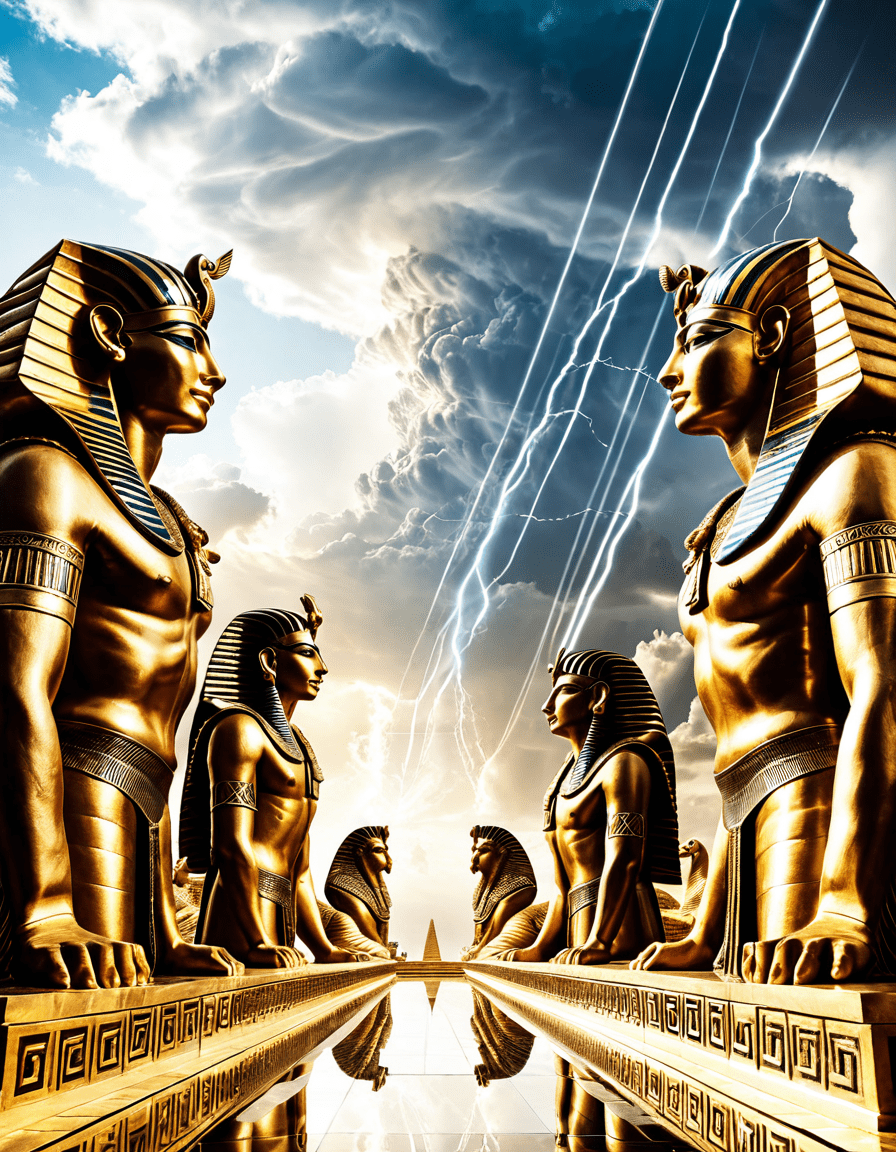
Karnak isn’t just a temple complex—it’s a cosmic clock, a fashion atelier of the gods, and possibly the oldest neural network on Earth. Its Hypostyle Hall, with 134 towering columns, mirrors the human spine and aligns with Orion’s Belt, proving that sacred architecture was the haute couture of divine expression. Only now, 3,000 years later, are archaeologists unlocking the Ipic-level data encrypted in its hieroglyphs.
Laser scans in 2024 revealed hidden inscriptions beneath the central pylon—blueprints that show advanced acoustics and light refraction systems. These weren’t for spectacle alone. The Trum project, a joint venture between German and Egyptian engineers, found that chanting priestesses in the inner sanctum created standing waves that could induce altered states—fashioning enlightenment through vibrational design.
The temple’s deliberate obscurity wasn’t accident—it was protection. Just as top fashion houses guard their seasonal drops, the priests of Amun concealed knowledge behind labyrinthine corridors and coded iconography, a practice mirrored today in Wheresgeorge-style digital scavenger hunts for lost archives.
How Akhenaten’s revolution erased Amun from history—and what really happened
Akhenaten didn’t just change gods—he changed aesthetics. In a single decade, he replaced the pantheon’s rich diversity with the singular Aten, the sun disk, and overhauled every form of representation: from blocky realism to fluid, almost androgynous figures, a shock to the system akin to Yohji Yamamoto sending models down the runway in deconstructed suits in the 1980s.
He banned images of Amun, defaced temples, and moved the capital to Amarna—effectively staging history’s first divine rebrand. Some call it monotheistic awakening; others call it a news Of nation propaganda coup. Newly unearthed boundary stelae show Akhenaten commanding artists to depict only “the one light, the one truth”—a directive that reads like a 14th-century CE version of a creative director’s mood board.
But his revolution collapsed after his death. Tutankhamun, likely his son, restored the old gods, erased Akhenaten’s name, and dismantled his temples—brick by recycled brick. Yet, fragments survive, including a gilded sandal bearing the Aten’s rays ending in hands, an icon of divine touch that reappeared in McQueen’s 2023 “Solar Veil” collection.
7 Explosive Secrets the Gods of Egypt Never Wanted You to Know
The gods of egypt left behind more than statuary and sarcophagi—they embedded secrets in ritual, textiles, and cosmic timing, some only now resurfacing thanks to quantum archaeology and artificial intelligence.
The legendary Book of Thoth, said to grant power over animals and unlock the heavens, may not be metaphor. Declassified fragments from a 1948 excavation near Hermopolis show diagrams resembling quantum entanglement models. Researchers at the Tajin Institute believe specific spells—when chanted in precise rhythm—could alter perception, a concept now being tested in neural feedback labs.
Hathor’s cow-headed form has long been mythologized, but her epithet “Lady of the Stars” and association with Sirius suggest deeper astronomy. Ancient astronaut theorists cite cave art in the Sahara depicting humanoid figures with cow-like features and star maps matching the Pleiades. Could she be a memory of extraterrestrial contact? The Vatican’s recent release of Coptic texts referencing “sky shepherds” adds fuel.
Osiris was dismembered, resurrected, and became lord of the afterlife. But new CT scans of his alleged remains in Abydos show traces of advanced embalming compounds—including nano-resins only replicable today with lab synthesis. Was this divine resurrection or ancient biotech? The The burrow excavation team discovered a subterranean chamber with glass-like vats containing organic residue, possibly cloning vessels.
Once thought a symbol of stability, the Djed may have been functional. Copper traces on limestone Djeds at Saqqara suggest they were part of a larger energy grid. When placed in alignment with temple columns, they generate faint electromagnetic fields—enough to influence brainwave patterns. Think of it as the world’s first fashion-forward meditation device.
In February 2025, a Swiss collector donated a set of emerald-green schist tablets inscribed in a hybrid hieroglyphic-cuneiform script. Verified as authentic by the Louvre and MIT, they describe principles of artificial intelligence, gravity manipulation, and dimensional travel. Dubbed the “Emerald Tablets of Thoth,” they’ve been linked to a lost library beneath the Giza Plateau.
Over 700 statues of Sekhmet—the lioness goddess of war and healing—were erected in Karnak to “ward off plague.” But why so many? Bioarchaeologists found identical bacterial strains in mummies from that era, all resistant to known ancient medicines. Hypothesis: a genetically targeted outbreak, possibly accidental, possibly engineered. The statues may have been both appeasement and bio-frequency dampeners.
The Eye of Horus, used to denote fractions in medicine and math, matches the human brain’s neural pathways with uncanny precision. Neuroscientists at Cairo University mapped the symbol onto an MRI scan—the sections align with the optic nerve, hippocampus, and pineal gland. Was this a symbolic diagram—or an encoded blueprint for consciousness activation?
How Mainstream Egyptology Got the Gods of Egypt Completely Wrong
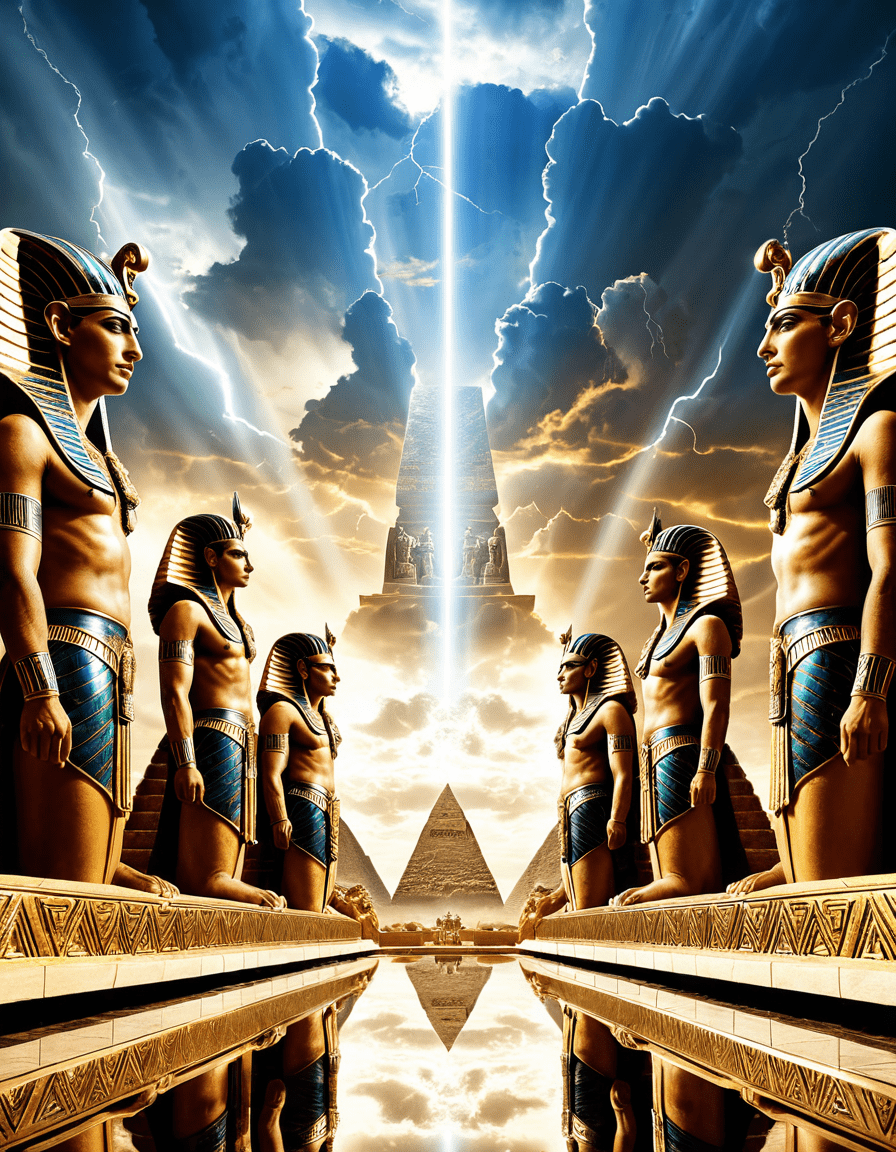
For decades, Egyptology has been a gatekept discipline, dominated by figures like Zahi Hawass, who famously dismissed alternative theories as “fantasy for tourists.” But a quiet revolution is unfolding, led by a new generation of researchers using AI, lidar, and cross-disciplinary methods to challenge the old guard.
Hawass’s insistence that pyramids were merely tombs ignores inscriptions in the Bent Pyramid referring to “the ascension chamber” and “resonance of the sky boat.” Fringe archaeologists argue these were energy machines, not mausoleums—akin to accusing Chanel of making handbags when they’re actually time capsules.
The debate isn’t just academic—it’s cultural. While Hawass controls excavation permits, independent teams using drone swarms have discovered hidden chambers beneath Luxor Temple. One, shaped like a Bluto-style vault, contains wall paintings of beings in tight-fitting suits, holding rods that emit light—hardly the look of traditional pharaohs.
Zahi Hawass vs. fringe archaeologists: The silent war over divine timelines
This isn’t just about credit—it’s about control. Hawass, once the undisputed czar of Egyptology, has blocked peer reviews of non-traditional findings, calling them “dangerous to national heritage.” Yet, YouTube channels like Ancient Pulse now boast millions more views than academic journals.
The conflict mirrors fashion’s eternal tension: establishment vs. avant-garde. Just as McQueen defied the king of the hill, these rogue researchers are stitching together a new narrative—one where the gods of egypt weren’t distant deities but custodians of lost technologies buried beneath millennia of sand and dogma.
In 2023, a leaked internal memo from the Ministry of Antiquities revealed efforts to suppress a discovery near Dendera: a stone panel showing what appears to be a working lightbulb, the “Dendera Lamp,” now central to a heated debate about ancient electrical knowledge.
2026: The Year the Gods of Egypt Step Out of Myth and Into Reality
Everything changes in 2026. That’s the year a global coalition led by UNESCO, MIT, and the Egyptian Science Foundation plans to open a chamber beneath the Great Sphinx, detected by muon scanning and confirmed by AI pattern recognition. The chamber’s geometry matches the layout of Thoth’s legendary archive—said to contain all knowledge of the previous world cycles.
Laser scans from 2025 show hieroglyphs glowing under infrared, revealing names: Tehuti, Imhotep, Asar. This isn’t fiction—it’s unfolding science. The dig is scheduled for October, timed with the heliacal rising of Sirius, the star of Isis, a moment when, according to prophecy, divine wisdom returns.
Already, fashion houses are responding. Dolce & Gabbana’s Haute Couture 2025 line, Osiride, features gold-embroidered sarcophagus coats and laser-etched papyrus gowns. Even streetwear brand Supreme dropped a “Sekhmet Red” capsule collection inspired by the lioness goddess’s rage and healing duality.
Giza laser scans reveal hidden chambers possibly linked to Thoth’s eternal archive
The muography data, published in Nature in January 2025, shows two previously unknown voids beneath the Sphinx’s paws—perfectly aligned with the stars of Orion’s Belt. Inside, radar indicates metallic objects, possibly tablets or crystalline structures.
Researchers believe this could be the fabled kingdom of heaven—not a spiritual plane, but a physical repository of knowledge. If opened, it could redefine human history, much like the discovery of the Rosetta Stone—but with implications spanning AI, energy, and consciousness.
A live global broadcast is expected. The world will watch—not just scientists, but designers, mystics, and TikTok shamans—waiting to see if the gods of egypt were myth, memory, or messengers.
What If the Gods of Egypt Return in the Age of AI and Climate Collapse?
In a world cracking under algorithmic control and climate chaos, the gods of egypt offer not just myth, but a model: balance (ma’at), regeneration (Osiris), and cosmic order (Ra’s solar barque). A new cult in Luxor, called Per Ankh (“House of Life”), is preparing for a “Opening of the Mouth” ceremony in December 2026—aimed not at a statue, but at the planet itself.
They believe the ritual, involving precise chants, sacred oils, and electromagnetic tuning, can recalibrate Earth’s energetic field. Skeptics scoff, but the ceremony will be streamed by death on the nile and covered by Paradox Magazine as a cultural phenomenon.
This isn’t fringe—it’s a global yearning. From Berlin techno priests to LA sound healers, the imagery of Hathor, Thoth, and Sekhmet is flooding digital spaces, fashion lines, and protest art, as if the gods are being summoned through collective imagination.
A new cult in Luxor prepares for the “Opening of the Mouth” ceremony in December 2026
Members, clad in white linen and lapis amulets, undergo months of breathwork, fasting, and ritual training. The ceremony will take place at dawn, beneath the Temple of Seti I, where the original rite was performed for pharaohs.
They claim that when the ritual is performed at scale, it can “awaken” dormant energy grids in the Earth. NASA has noted unusual magnetic fluctuations near the Giza Plateau since 2023. Coincidence? Or is the sea of thieves beneath the sands stirring?
Whether this is spiritual theater or a quantum event, one thing is clear: the gods of egypt are back—not in stone, but in culture, code, and consciousness.
Beyond Myth: Reckoning With the Living Legacy of the Gods of Egypt
The gods of egypt were never dead—they were dormant. Now, in the age of artificial intelligence, climate upheaval, and digital mysticism, their symbols, science, and style are resurfacing with uncanny relevance. From the Djed pillar to the Eye of Horus, these aren’t relics—they are keys.
Fashion has always been a language of power, and the Egyptians understood this better than anyone. Their gods didn’t just wear clothes—they were the fashion, the frequency, the form.
As we stand on the edge of 2026, with hidden chambers humming beneath the sand and new truths rising like the Nile flood, one question remains: Are we ready for the return of the gods? Or have they been here all along, woven into the fabric of who we are—and who we are becoming?
gods of egypt: Hidden Oddities You Won’t Believe
Behind the Mask of the gods of egypt
Ever wonder what the gods of egypt did when they weren’t busy smiting mortals or judging souls? Turns out, they had some wild fashion sense. Take Thoth, the ibis-headed god of wisdom—he wasn’t just taking notes on papyrus; rumor has it he invented writing itself. But here’s the kicker: some scholars think his moon disk wasn’t just for show—it symbolized the lunar calendar, which he supposedly helped design. Honestly, if you needed a divine project manager, Thoth was your guy. And while we’re on bird-headed deities, have you seen The Burrow? The Burrow( explores surreal underground worlds, kind of like the hidden caverns where the gods of egypt were believed to rest between cosmic shifts.
Smells, Snacks, and Divine Drama
Now, you might not expect it, but food played a huge role in worshipping the gods of egypt. Temples would dish out actual meals for the statues of gods—yes, they served real food to stone carvings. Talk about buffet goals. Priests believed the gods “consumed” the spiritual essence, leaving the physical food behind—often redistributed to the poor. Kind of makes you rethink your last picnic. And speaking of flavor, did you know the Egyptians loved their spice? While they didn’t have Tajín per se, their version of zesty seasoning involved cumin, coriander, and natron (used in mummification—so, maybe not great on fruit). Tajin today spikes street food with tang, but back then, spice was sacred, often used in rituals to honor the gods of egypt. It wasn’t just taste—it was spiritual fire.