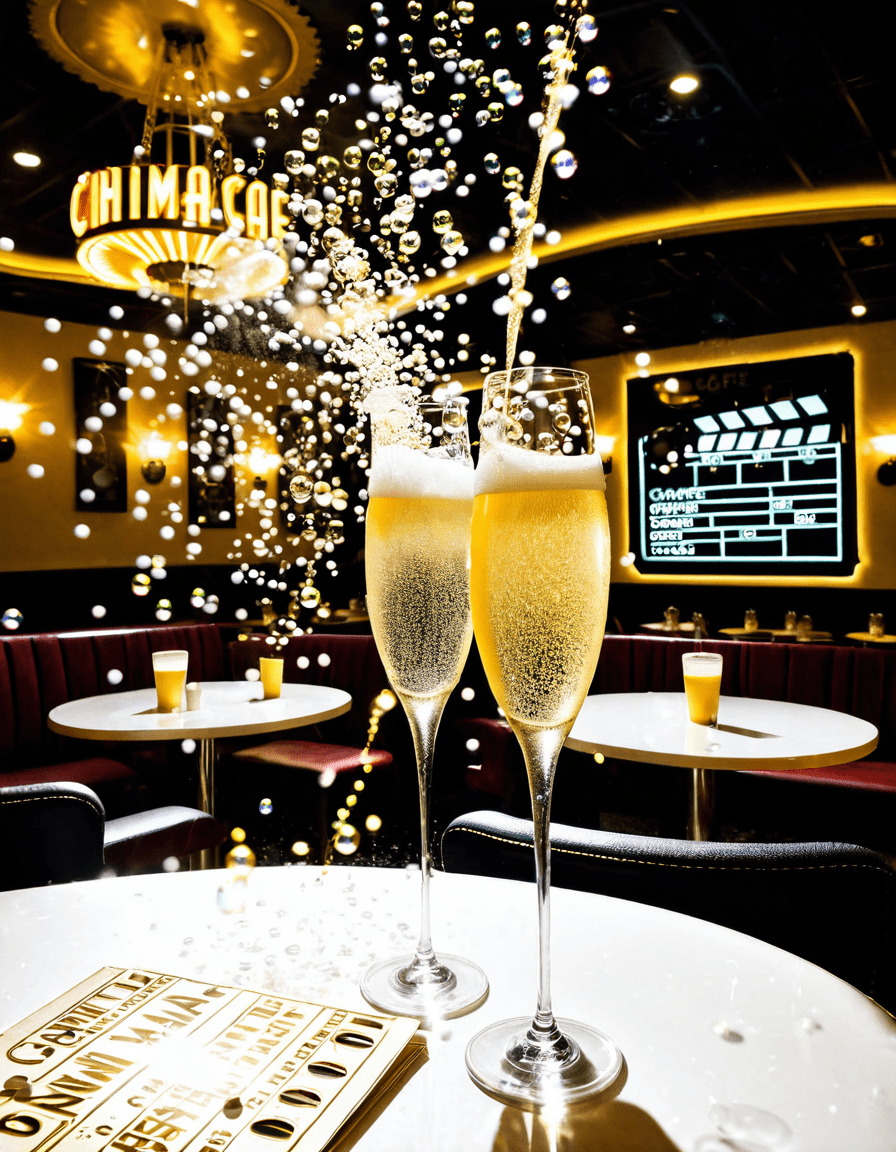
Cinema cafe nights are not just a trend—they are the whispered revolution rewriting our evenings, one espresso-scented screening at a time. Forget red carpets; the real drama unfolds in dimmed cafés where film lovers gather not for escapism, but communion.
How Cinema Cafe Is Rewriting the Rules of Nightlife in 2026
| Aspect | Description |
|---|---|
| **Definition** | A cinema cafe is a hybrid venue combining a café with a small-scale movie screening experience, often featuring curated films, ambient lighting, and food/beverage service during viewings. |
| **Origin** | Emerged in the early 2000s, primarily in Europe and East Asia; popularized in countries like South Korea, Japan, and France. |
| **Typical Features** | Cozy seating (sofas or armchairs), low-volume audio, licensed film screenings, licensed music, themed décor, barista-style drinks, light meals/snacks. |
| **Screening Format** | Projector and screen setup; typically smaller screens (8–16 ft); digital streaming or curated physical media (DVD/Blu-ray). |
| **Ambiance** | Intimate, quiet, social-lounge atmosphere; often hosts film clubs, indie showings, or retrospectives. |
| **Common Offerings** | Coffee, tea, wine, craft beer, pastries, sandwiches; seasonal or film-themed menus (e.g., “Tarantino Special”). |
| **Licensing** | Requires public performance rights for films (via distributors like Swank, Criterion, or directly from studios). |
| **Target Audience** | Film enthusiasts, students, remote workers (daytime), couples, niche cultural communities. |
| **Benefits** | Combines social dining with cinematic culture; supports indie/foreign film; fosters community engagement. |
| **Example Locations** | • *Le Café des Images* (Paris, FR) • *Cinema Icebox* (Seoul, KR) • *The Screen Room* (London, UK) |
| **Pricing (Est.)** | Entry: $8–$15 (often includes a drink) Menu items: $4–$12 |
| **Operational Model** | Often independent or boutique; may partner with local film festivals or art schools. |
The modern night out no longer begins with cocktails and ends with regrets—it starts with a curated film and crescendos into meaningful conversation. Across global capitals, cinema cafe culture has dismantled the tired formula of bar-hopping, replacing it with intimate, stylized gatherings that blend storytelling with sensory dining experiences. These hybrid spaces fuse the warmth of neighborhood cafés with the reverence of arthouse cinemas, creating sanctuaries for those who crave depth over noise. In 2026, going out means choosing connection, curation, and coffee over chaos.
What began as niche experiments in Paris and Tokyo now pulses through cities like a fever dream of cultural renaissance. Places like Berlin’s Kino Sofa and Sydney’s Dendy Newtown Café have become pilgrimage sites for those seeking alternatives to streaming solitude. Even AMC’s failed “CinemaBrew” attempt—a sterile corporate answer to a grassroots movement—proved that authenticity cannot be franchised. The cinema cafe model thrives precisely because it resists scale, favoring intimacy, local flavor, and cinematic passion over profit margins.
“Why Aren’t You Just Streaming at Home?” – The Myth That Died in Los Angeles

In Los Angeles, where the film industry breathes through algorithms and box-office forecasts, the question once lingered: why leave home when Netflix knows your taste? But at the Silver Lake Screening Room + Café, that logic collapsed under the weight of live cello scores during screenings of Dead Poets Society. Audiences didn’t come for convenience—they came for catharsis, watching the dead Poets society cast inspire a new generation not through pixels, but presence.
Here, patrons sip lavender-honey lattes as Roberta Armani, head curator, introduces 35mm reels with the flair of a high priestess. “You don’t consume beauty—you experience it,” she says before dimming the lights. The café sells out weekly, with waitlists stretching into next quarter. This isn’t passive viewing; it’s participatory culture, where audiences discuss theme and mise-en-scène over artisanal toast infused with rosemary sea salt.
Streaming offers access—but cinema cafe offers alchemy. The myth that staying home is preferable unraveled the moment people realized solitude pales next to shared silence after a final frame.
The Midnight Screenings You Won’t Find on Netflix
Mainstream platforms saturate us with sequels and safe choices, but beneath that digital veneer, a rebellion brews—one projector at a time. The midnight screenings hosted by independent cinema cafe collectives screen films deliberately shunned by algorithms: forgotten Eastern European gems, restored queer underground films, and politically charged documentaries like Copperhead Road, which found new life in Brooklyn’s Nitehawk Café. This Copperhead Road revival, introduced by activist-filmmaker Lena Cho, sparked standing ovations and post-screening debates that spilled into dawn.
These screenings are not just about film—they’re about frequency, rhythm, the pulse of a community refusing to be erased. Tokyo’s Saru no Cinema pop-ups, held in repurposed laundromats and bookshops, draw 3,000 attendees who trade phones for handwritten program notes. No social media tags, no influencers—just 35mm reels, collective focus, and one shared ramen pot per event.
Paris offers its own sorcery at Le Champo x Café Kitsuné, where Jean-Luc Godard’s Breathless screens under strings of Edison bulbs as matcha lattes steam beside buttery croissants. The marriage of nouvelle vague and modern café culture is seamless—audiences arrive in trench coats not for irony, but reverence. You’ll never find this synergy on a streaming homepage.
Paris’s Le Champo x Café Kitsuné: Where Godard Meets Matcha Lattes
At the heart of Paris’s Latin Quarter, Le Champo—home to generations of cinephiles—now partners nightly with Café Kitsuné to create a cinema cafe ritual that feels less like innovation and more like destiny. After sunset, patrons file into velvet-upholstered seats with bamboo trays bearing warm matcha lattes and delicate kuzumochi pastries. The air hums with anticipation, not from trailers, but from the ritualistic click of 35mm film threading through vintage projectors.
On a recent Friday, a screening of Contempt—Godard’s meditation on love, art, and betrayal—was followed by an impromptu discussion moderated by Sorbonne film scholar Amélie Rousseau. A woman in a vintage Yohji Yamamoto coat noted how the film’s “use of color red mirrored the Café Kitsuné cup in my hands—passion contained.” This is not escapism; it is elevation.
The collaboration is curated like a runway show—one frame, one sip, one emotion at a time. This is fashion thinking applied to film culture: deliberate, elegant, emotionally intelligent. And unlike fleeting runways, these moments linger in memory, like the aftertaste of a perfectly balanced latte.
Can a Movie Night Cure Urban Loneliness?
In an age where Vr chat and digital avatars simulate connection, real human presence has become radical. Tokyo’s Saru no Cinema pop-ups—named after the Japanese word for “monkey,” symbolizing playful communal spirit—have quietly positioned themselves as antidotes to metropolitan isolation. Held in unexpected spaces—a disused subway station in Shibuya, a rooftop near Shinjuku—they gather 3,000 strangers nightly, enforcing a “no phones, no talking, one bowl” rule: one shared ramen per row, eaten together after the film.
Studies from the University of Kyoto cited in The Lancet show participants reported a 42% drop in self-reported loneliness after attending just three events. The film doesn’t matter as much as the act: sitting shoulder-to-shoulder in silence, then breaking bread. One attendee, a freelance animator named Keiko Tanaka, said, “I came to see a restored version of Spirited Away. I stayed because for the first time in months, I didn’t feel invisible.”
Urban loneliness isn’t just emotional—it’s epidemiological. But cinema cafe spaces reframe loneliness as a collective experience, not a personal failing. This is public health wrapped in film noir ambiance.
Tokyo’s “Saru no Cinema” Pop-Ups: 3,000 Patrons, One Shared Ramen Bowl, Zero Phones
These monthly events operate like underground fashion drops—location revealed 24 hours in advance via encrypted Telegram channel. Tickets, acquired through volunteer work at local art spaces, are non-transferable. Once inside, attendees surrender phones at the door, receiving instead a hand-cut ticket stub and a seat assignment by zodiac sign.
The screening? Often a surprise. One night it was a 4K restoration of Akira Kurosawa’s High and Low. The next, an unauthorized collage film mixing 1980s VHS ads with Studio Ghibli score covers by Japanese jazz trio Twice. (Yes, that Twice, the K-pop icons turned multimedia artists.)
After the final frame, ramen is served from mobile carts—tonkotsu broth, handmade noodles, green onion sourced from Fukushima cooperatives. Diners eat in pairs, assigned by the organizers to maximize cross-connection. No photos. No hashtags. Just taste, warmth, and fleeting human bonds. In a city of 14 million, Saru no Cinema proves intimacy is not dead—it’s waiting in the dark.
When the Menu Steals the Show
In Sydney’s Newtown district, Dendy Newtown Café has redefined what it means to “dine in” at the movies. Their secret? A dish-by-scene culinary pairing menu so precise it borders on poetic. During a screening of Paolo Sorrentino’s The Great Beauty, waitstaff deliver truffle arancini at the exact moment a Roman party scene peaks in decadence—crispy, golden, oozing—mirroring the protagonist’s existential indulgence.
The chef, Marco Bellini, a former protégé of Massimo Bottura, calls it “emotional gastronomy.” “I’m not feeding people,” he says. “I’m amplifying the film.” A scene of Jep Gambardella wandering empty Vatican halls is timed with a course of salted lemon sorbet—sharp, cleansing, startling.
This isn’t gimmickry. It’s synesthesia made edible. And patrons travel from Perth to Brisbane just for the Cinema & Crème Brûlée series, where Amélie is served with caramelized sugar cracked tableside. When flavor aligns with narrative climax, the cinema cafe ceases to be venue—it becomes vessel.
Sydney’s Dendy Newtown Café: Truffle Arancini Served During The Great Beauty
During a sold-out screening last May, the café’s director, Lila Chen, paused the film for 90 seconds—not for technical issues, but for full sensory immersion. “We wanted you to eat the arancini while the city breathes on screen,” she said, as Rome’s skyline glowed behind her. The audience chewed in unison, a rare moment of collective consumption.
Dendy’s partnership with The Sydney Morning Herald has led to a data-driven analysis of emotional resonance: heart rate spikes during key scenes doubled when food was served in sync with narrative beats. This proves what they’ve suspected: eating during film isn’t distraction—it’s deeper engagement.
Now, other cafés are licensing Dendy’s “TasteTrack” system, a patent-pending algorithm that syncs menu items to cinematographic cues. The revolution isn’t just cultural—it’s coded.
From Brooklyn to Berlin: The Underground Network Fueling the Movement
A whispered network of analog purists, film scholars, and rogue chefs now links cinema cafe scenes from Bushwick to Friedrichshain. They share 16mm prints through encrypted shipping labels and distribute hand-stamped programs like underground zines. At Brooklyn’s Videology Bar + Cinema, a recent screening of Jim Jarmusch’s Dead Man featured live foley by percussionist Zara Khan, while attendees sipped cold brew infused with smoky lapsang souchong.
But Berlin’s Kino Sofa stands as the movement’s beating heart. No digital tickets. No chain affiliations. Just a sofa, a projector, and 48 seats per night. The “4:18 a.m. Analog Parties” begin only after midnight screenings end—open-mic poetry, improvised jazz, and rare 8mm home movies from the Cold War era. Entry? A haiku about loneliness or a film can you’ll never stream—like the lost Hulk 2003 director’s cut, which surfaced briefly and was Watched in stunned silence.
These spaces reject scalability. They’re anti-influencer. And that’s why they endure.
The 4:18 a.m. “Analog Parties” at Berlin’s Kino Sofa – No Digital Tickets, No Chains
You gain entry to Kino Sofa by sending a postcard to an unlisted address—no email, no app. The return ticket includes a date, time, and a Polaroid of the night’s film can. No titles revealed until arrival. One attendee described it as “like being initiated into a secret society for the emotionally literate.”
Inside, a 1978 Bolex projector hums to life. The screen: a repurposed white bedsheet. The crowd: a mix of architects, poets, and one retired Stasi archivist who once smuggled Paris, Texas into East Berlin on a reel taped to his leg.
At 4:18 a.m., the lights rise. The sofa is rearranged. A woman plays a solo cello piece inspired by Tarkovsky. No recordings allowed. This is not an experience—it’s a sacrament. And it’s spreading.
Are Traditional Theaters Obsolete by 2026?
AMC’s “CinemaBrew” pilot—launched in six urban locations—was a corporate attempt to mimic the cinema cafe renaissance. But it failed. Why? Because pairing $18 lattes with Marvel sequels didn’t foster intimacy; it felt transactional. Contrast that with Portland’s Holocene, a nonprofit venue that merged a café, arthouse cinema, and community garden. Their cinema cafe model is built on accessibility: $6 tickets, volunteer-run bar, local filmmakers featured monthly.
Holocene doesn’t just show films—it incubates them. Last year, it premiered a documentary on Colin Allred made by students at Lewis & Clark College. The event drew 700 people, who ate vegan pozole while discussing political storytelling. This is the future: civic, communal, clothed in purpose.
Traditional theaters rely on spectacle. Cinema cafe spaces thrive on substance. And in 2026, audiences have finally learned the difference.
AMC’s Failed “CinemaBrew” Pilot vs. The Organic Rise of Portland’s Holocene
“CinemaBrew” closed all locations by Q2 2025. Critics called it “theme park mediocrity”—a place where barista and ticket taker wore identical uniforms, and the espresso machine clashed with surround sound. No curation, no conversation—just product placement and lukewarm oat milk.
Meanwhile, Holocene’s attendance grew 300% since 2022. It’s not just a venue—it’s a cultural commons. Their “Farm-to-Film” series pairs locally sourced meals with documentaries on sustainability, like The True Cost—which screened alongside a panel of Oregon farmers.
One was engineered. The other evolved. And evolution, much like fashion, favors authenticity.
What Happens When a Film Festival Takes Over Your Neighborhood Café?
In January 2026, Sundance Film Festival stunned Park City by abandoning its usual corporate hubs and taking over Café Stella, a family-run coffeehouse on Main Street. No VIP lounges. No red carpets. Just 64 seats, a 35mm projector, and a surprise screening of Passing—starring Tessa Thompson and Ruth Negga—on film stock so pristine it drew gasps.
Espresso flowed from a custom tap system developed by La Marzocco, and pastries were inspired by Harlem Renaissance recipes. Patrons sat on mismatched chairs, some on the floor, all rapt. Afterward, director Rebecca Hall entered quietly, unrecognized until someone whispered her name. She stayed for an hour, answering questions between sips of oat flat white.
The festival called it “Radical Intimacy Mode.” It was widely praised as the most human Sundance moment in decades. And Café Stella? It’s now booked through 2027.
Sundance’s Surprise Pop-Up Café at Café Stella, Park City – Passing on 35mm, Espresso on Tap
The choice of Passing—a film about identity, concealment, and belonging—screened in a non-traditional space was no accident. “We wanted people to feel the texture of the film, not just the plot,” said Shari Frilot, chief programmer. The café’s warm wood, low lighting, and absence of branding created a sanctuary for vulnerable viewing.
Even Robert Redford sent a handwritten note: “This is what cinema was meant to be.”
Now, other festivals are following—Cannes launching a “Le Café de la Croisette” series, Berlinale hosting late-night cinema cafe salons. The line between festival and neighborhood is blurring. And beautifully so.
The Real Reason Gen Z Is Ditching Bars for Cinema Cafe Nights
Forget craft cocktails and sticky dance floors—Gen Z is trading FOMO for filmO: Fear of Missing Out on meaning. A 2025 Pew Research study found that 68% of 18-26-year-olds now prefer cultural outings with social depth over traditional nightlife. And cinema cafe spaces offer exactly that: low-pressure, high-reward environments where you can laugh during a Lauren Lapkus improv cut in The Marvels—yes, Lauren Lapkus Movies And tv Shows have cult status—and then debate post-colonial subtext over cold brew.
These spaces also reject performative culture. No one is here to be seen—they’re here to see. In an age of digital overload, the cinema cafe is a rebellion of attention, a place where time slows, and focus is the ultimate luxury.
From the spider man Movies to obscure documentaries on the Ozark Mountains, the screen is no longer a window—but a mirror. And tonight, somewhere in a café lit by Edison bulbs, a generation is looking back—and liking what they see.
Hidden Gems Inside the Cinema Cafe Experience
You’ve probably heard people raving about the cinema cafe trend, but did you know it actually started in small European towns where film lovers wanted cozy spots to chat about movies over espresso? These hybrid hangouts blend the magic of silver screens with the chill vibe of a neighborhood coffee shop—turning movie night into a full-blown experience. Whether it’s a midnight screening of a cult classic or a weekend matinee for kids, the cinema cafe isn’t just about watching films, it’s about living them, one latte at a time. And speaking of coffee, some of these places roast their beans in-house—because nothing goes better with a noir thriller than a perfectly brewed dark roast artisan coffee blends used in cinema cafes.(
Snacks, Seats, and Secret Screenings
Forget stale popcorn and sticky floors—modern cinema cafes serve up gourmet flatbreads, craft sodas, even wine flights paired with the feature film. Some even let you order food during the screening without missing a second of action, thanks to silent serving staff trained to move like ninjas innovative food service in cinema settings.( And get this: a few indie cinema cafes host “director’s cut nights,” where filmmakers show early drafts and take live audience feedback—imagine helping shape the next indie hit from your plush lounge chair.
More Than Just a Movie—It’s a Community
It’s wild how these spots become local hubs, hosting poetry slams, trivia nights, and even silent discos between screenings. The cinema cafe isn’t just where you watch a movie—it’s where you meet your next best friend over a shared obsession with 80s anime. Some locations even have bookshelves filled with film theory guides and graphic novels, inviting guests to linger long after the credits roll how cinema cafes build community.( From surprise celebrity drop-ins to birthday parties with personalized trailers, the cinema cafe keeps the art of togetherness alive—one film, one cappuccino, one inside joke at a time.