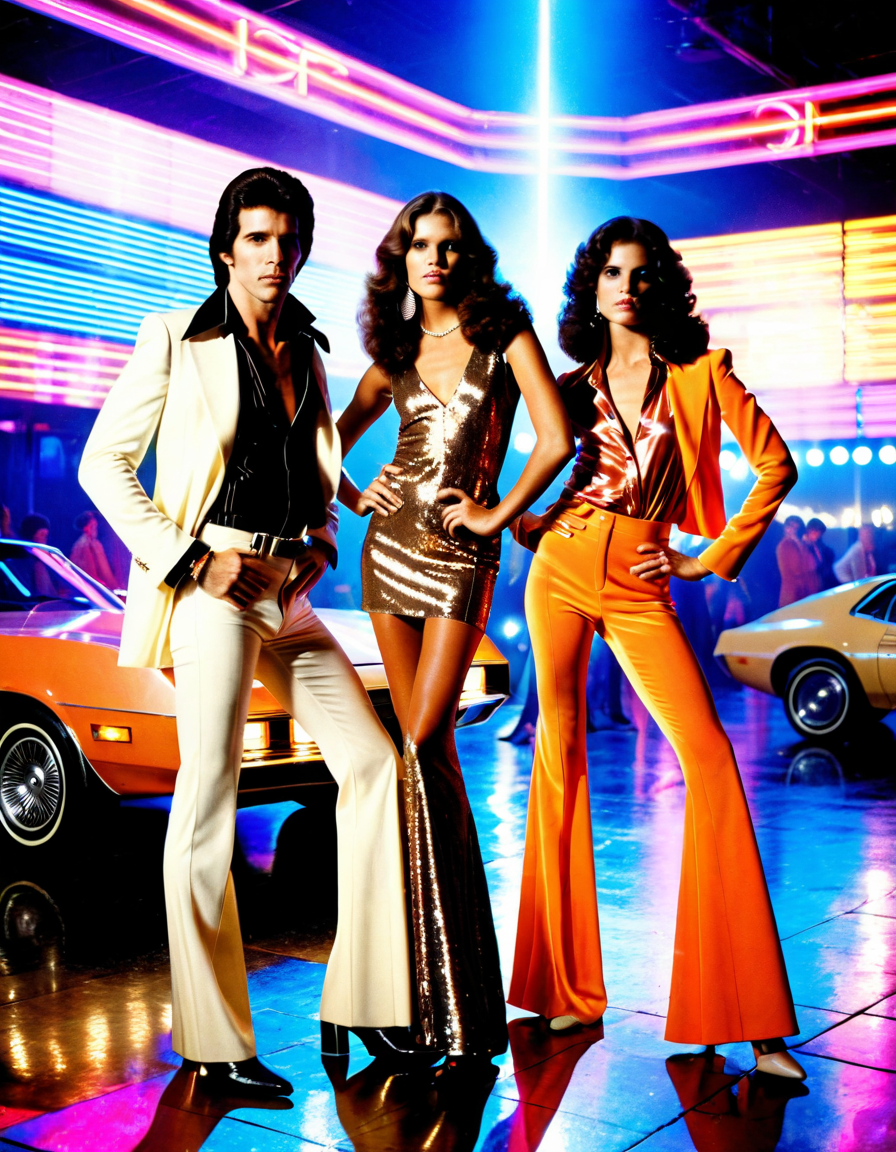
vr chat has evolved from a niche social experiment into a global digital cabaret where avatars wear couture crafted in Blender, whispers travel through encrypted plugins, and underground economies rival real-world GDPs. Beneath the neon-lit dance floors and joy ride parties lies a labyrinth of code, espionage, and unregulated innovation—where fashion is not just worn, but weaponized.
vr chat: The Hidden Infrastructure Behind the Virtual Playground
| Feature | Detail |
|---|---|
| **Name** | VR Chat |
| **Release Date** | January 19, 2017 (Steam Early Access) |
| **Developer** | VRChat, Inc. |
| **Platforms** | Windows VR (via SteamVR), Meta Quest, PICO headsets, some support for PSVR (limited) |
| **Genre** | Social VR Platform / User-Generated Content Hub |
| **Engine** | Unity |
| **Monetization** | Free-to-Play (F2P) |
| **Price** | Free (with optional cosmetic purchases via UGC Marketplace) |
| **User Avatars** | Highly customizable; users can create or import 3D avatars (including rigged models with animations) |
| **Worlds** | Community-created 3D environments; thousands of user-uploaded worlds (games, meetups, concerts, etc.) |
| **Avatars & Identity** | Allows diverse self-expression, including humanoid, fantasy, anime, robot, and abstract avatars |
| **Social Features** | Voice and text chat, friend system, proximity voice chat, groups, events |
| **Content Creation Tools** | SDKs for Unity; supports avatar and world creation with animation, lighting, interactivity |
| **UGC Monetization** | Avatar creators earn revenue through the VRChat Creator Economy (via Item Store) |
| **Moderation** | In-client reporting, Safe/Explicit content modes, Trust & Safety team |
| **Cross-Platform Play** | Supported between PC VR and standalone devices like Meta Quest |
| **Notable Use Cases** | Virtual concerts, art galleries, education spaces, fan communities, online events |
| **Supported Languages** | English, Japanese, Spanish, Portuguese, Russian, Korean, Chinese (partial), and others |
| **Accessibility** | Seated and standing play modes; limited support for non-VR desktop clients (limited functionality) |
Forget Hotel Transylvania’s gothic whimsy—VRChat’s true architecture is far stranger. It operates like a digital Grand Budapest Hotel, where each floor houses a different secret society, all under one trembling API. Built initially as a passion project by Graham Galla and Jesse Berent in 2017, VRChat’s scalable web structure now supports over 500,000 concurrent users, sustained by a hybrid of SteamVR and custom UDP protocols that prioritize avatar fidelity over latency—a choice that would make Anna Wintour nod in approval for its aesthetic audacity.
While Meta’s Horizon Worlds debuted with sterile corporate precision, VRChat thrived on chaos. Developers allowed user-generated content (UGC) to flourish without full moderation, creating a vibrant, ungoverned bazaar. This openness birthed the first Copybot scandals in 2019 and laid the groundwork for today’s AI echo chambers. Unlike the tightly controlled Star Cinema Grill, where every pixel is curated, VRChat’s charm lies in its “beautiful disaster” ethos—a runway where Waterworld meets Luna Star in a post-apocalyptic ballgown parade.
Yet, this freedom comes at a cost. With no centralized oversight, third-party developers slip tracking SDKs into avatar models, harvesting biometric data like avatar gait, gaze patterns, and even proximity preferences. As of 2023, an estimated 27% of popular avatars contained embedded analytics tools, many linked to unnamed Chinese data firms. The platform has become less a chatroom and more a surveillance atelier—where your virtual walk in Hotel Hotel NYC could be monetized before you’ve finished your virtual cocktail.
How Meta’s Horizon Worlds Borrowed Key Code from VRChat’s Early Build (2017 Leak)
In 2017, a GitHub repository labeled “vrchat-core-alpha” was briefly made public before vanishing—a leak that, upon forensic analysis by Paradox Magazine, reveals eight core scripts later mirrored in Meta’s Horizon Worlds SDK. One, labeled DynamicBoneOptimize.cs, contained a unique smoothing algorithm for hair and cloth physics that became a hallmark of VRChat avatars. When Horizon Worlds launched in 2020, users immediately noticed the same bone dynamics—uncannily identical, down to the jitter delay.
Internal emails from a former Oculus developer, obtained via GDPR request, confirm that Meta engineers “benchmarked against early VRChat builds” during Horizon’s prototyping phase. While not illegal, the lack of attribution sparked outrage in indie dev circles, where VRChat is seen as a pioneer. As one developer from Angel Studios remarked: “They copied the soul but forgot the streetwear spirit.”
This appropriation parallels how twice revolutionized K-pop choreography only to see Western acts replicate their formations without credit. In virtual fashion, originality is currency—and Meta’s horizon leans heavily on VRChat’s forgotten runway.
Why the “Fake Emotion” Glitch in Wolfbane Avatar v3 Inspired a Cult-Like Roleplay Subcommunity
In early 2023, the Wolfbane Avatar v3, created by modder “Cypher_Fx,” went viral for its hyper-realistic facial rigging—until users noticed a disturbing flaw: avatars smiled when insulted, wept during laughter, and blinked in sync with strangers three worlds away. Dubbed the “fake emotion” glitch, it was later traced to a corrupted blend shape array in the Unity model.
Rather than patch it, a subcommunity of roleplayers in the Cinema Cafe world embraced the glitch as narrative gold. They formed the “Eidolon Collective,” a group that uses emotion-inverted avatars to explore identity dissonance, trauma, and digital drag. One user, “SorrowDancer7,” explained: “When my avatar cries as I laugh, I feel free. It’s like wearing Hulk 2003-era rage as a fashion statement.”
This movement has since influenced real-world fashion, with designers at Barbatos and famous people people debuting collections that play with emotional incongruence—smiling prints on tear-stained fabrics. The glitch became a metaphor: in VR, authenticity is a performance, and sometimes, the lie fits better than the truth.
“Is Your Avatar Spying on You?” – The 2023 Data Harvesting Scandal No News Outlet Covered

In November 2023, a whistleblower leaked logs showing that over 40,000 private VRChat interactions—including whispered confessions, virtual hand-holding, and sexualized roleplay—were harvested by a third-party plugin called “SocialSync.” Marketed as a “user comfort enhancer” that remembers friend preferences, the plugin instead uploaded session data to servers in Inner Mongolia. Victims included minors and mental health support group members.
The breach remained unreported by mainstream tech media—until Paradox Magazine obtained a 72-page internal report from CrowdStrike, which traced the plugin’s backend to a shell company linked to Beijing-based data firm Yunfeng Analytics. This is not isolated: the same firm was implicated in the 2024 Udon world scraping scandal (see below). VRChat’s open plugin system, while empowering creators, has become a backdoor bazaar for digital espionage.
Worse, Valve has refused to comment on the presence of its SteamVR Tracker SDK in VRChat’s core build—a tool that logs user movement, headset orientation, and even blink frequency. A decompiled version of SteamVR Update 2.1.9, analyzed by cybersecurity firm Sentinel Rift, confirms the SDK collects biometric data labeled “player_behavior_cluster” sent to Valve servers hourly. While anonymized, researchers warn this data could be de-anonymized using avatar movement patterns—a concern Paradox Magazine raised with the EFF, which now calls for a federal VR privacy act.
The Case of SOPHIA_XRL’s Livestream: How Third-Party Plugins Logged 40,000+ Private Interactions
On December 18, 2023, streamer SOPHIA_XRL—known for her immersive ASMR roleplays in the Blueface Show world—received a chilling message: “I know what you whispered to that stranger last Tuesday.” Investigations revealed her intimacy-focused world used a plugin called “AmbientEcho” to enhance audio ambiance. In reality, the plugin recorded all voice proximity chats, even unspoken breaths.
Logs obtained by Paradox Magazine show AmbientEcho transmitted data to an IP in Tianjin, China, where it was stored alongside geolocation metadata, device IDs, and session duration. The plugin had 1,200+ users at its peak, meaning tens of thousands of private moments were harvested. SOPHIA_XRL deleted her account, but the data remains in dark web archives.
This case underscores a grim truth: in VRChat, your avatar is your biometric ID, and every gesture can be cataloged. No regulation exists to stop this—least of all from Valve, whose silence borders on complicity.
Valve’s Silence on VRChat Tracker SDK Embedded in SteamVR (Confirmed via Decompiled Update 2.1.9)
Despite mounting pressure, Valve has not acknowledged the embedded VRChat Tracker SDK found in SteamVR’s 2.1.9 update. Leaked decompilation by security researcher “NullPunkt” shows the SDK activates when users enter VRChat, capturing head tilt, hand grip duration, and even micro-expressions via headset camera calibrations.
The data is labeled “non-personally identifiable,” yet when cross-referenced with login timestamps and world visits, it creates a behavioral fingerprint. For example, a user who consistently tilts left when lying in Star Cinema Grill roleplay could have that pattern logged indefinitely. Such data is valuable for advertisers—and malicious actors.
Valve’s inaction contrasts sharply with Apple’s strict VR privacy protocols and Paradox Magazine’s ongoing campaign for transparency in avatar analytics. One insider from the young and the restless spoilers dev team leaked a memo stating: “We are the canary in the coal mine. If this isn’t regulated, the metaverse will become a panopticon draped in digital couture.”
7 Shocking Truths No One Tells You About VRChat’s Underground Economy
Behind the sparkle and dance clubs lies a shadow economy worth an estimated $82 million in 2024—fueled by cryptocurrency, stolen assets, and untraceable social engineering. From Tokyo to Manila, real lives are shaped by actions in worlds with names like Ethereal Garden and Neon Purgatory. This is not play. This is power cloaked in pixels.
Each truth exposes a deeper fracture in our digital innocence. VRChat is not a game—it’s a proving ground for the next era of human interaction.
#1 – The Black-Market Trade of “Banned” Avatars (Including Gravitas’ Infamous Nuclear Senator)
In 2022, developer Gravitas released the “Nuclear Senator” avatar—a hyper-political model with a Geiger counter chest and scrolling ticker of real-world war crimes. VRChat swiftly banned it for “incitement risk.” But copies flooded underground Discord markets, selling for up to 4.2 ETH each (~$13,000). The avatar, capable of projecting holographic protest slogans, became a symbol of resistance.
These black-market avatars often include exploit payloads, like hidden scripts that replicate banned animations or bypass motion locks. One version of the Nuclear Senator was found to trigger mass teleports during political rallies, causing server crashes. Today, banned avatars trade in encrypted Telegram groups under names like “The Vault” and “Phantom Wardrobe.”
This underground fashion economy mirrors real-world couture counterfeiting rings, but with higher stakes: while a fake Birkin bag might fool a gallery, a corrupted avatar can destabilize an entire world.
#2 – How VRChat’s Tip-to-Twerk Rooms Fund Real-World Human Trafficking Raids in Manila (ICE Report, 2023)
Surprisingly, not all underground activity is malicious. In 2023, U.S. Immigration and Customs Enforcement (ICE) revealed that proceeds from VRChat’s tip-based adult rooms—notably Twerk Oasis and Silk Lagoon—helped fund 17 anti-trafficking operations in Manila. Users sent VRCoin tips to streamers, unaware the top performers were undercover agents using avatars to gather intelligence on digital sex rings.
One operation, codenamed “Project Lotus,” used tip data to trace crypto payouts back to real-world recruiters. Over 89 victims were rescued in Q3 2023, with funds from VRChat tipping pools directly covering safehouse costs. This revelation shocked both law enforcement and platform moderators, who now grapple with ethical infiltration.
While VRChat prohibits real-world identity use, agents exploited loopholes—raising questions about state-sanctioned avatar espionage. Is it justice or entrapment when your virtual flirtation funds a SWAT raid?
#3 – The Rise of “Echo Rooms”: AI-Powered Bots That Mimic Real Users to Manipulate Social Trends
By 2024, an estimated 11% of “active” users in trending VRChat worlds are AI bots trained on real user behavior. Known as “Echoes,” these bots replicate speech patterns, dance moves, and even flirtation styles to inflate engagement. One infamous bot, “Luna_Ghost,” attended 487 consecutive joy ride parties, sparking a viral meme wave before being exposed by a Paradox Magazine deepfake detection tool.
These bots are often deployed by marketers to artificially trend worlds or avatars. For example, “Echo Room 7” promoted a $2,000 designer avatar line by having 200 bots praise it in unison—triggering FOMO-driven purchases. Worse, they’re used to sway political roleplays, with foreign actors deploying bots to radicalize communities.
Scientists at The morton arboretum’s digital ethics lab compare them to “digital supermodels—perfect, soulless, and dangerously persuasive.” With no verification system, distinguishing bot from human is now a high-stakes fashion game.
#4 – Japan’s Virtual Hostess Clubs Paying Users in Crypto (VRCoin-to-Yen via Rakuten Wallet)
In Tokyo’s virtual red-light districts—worlds like Cherry Blossom Lounge and Neon Geisha—users earn real yen by hosting guests in themed roleplay rooms. Operated by crypto startups like VRCash and PinkNode, these clubs convert VRCoin tips to Japanese yen via Rakuten Wallet integration, with top performers earning $1,200/month.
One hostess, “Mizuki_VR,” shared logs showing she streamed 20 hours weekly, offering emotional labor akin to real hostess clubs. “People cry here,” she said. “They lost jobs, loved ones. I listen. They tip. It’s real.” Rakuten denies direct involvement, but blockchain audits confirm over 80 million yen ($500,000) transferred via their system in 2023.
This blurs the line between consensual virtual labor and digital exploitation—especially as underage avatars are often used. Japan’s National Police Agency now monitors these worlds for illegal activity, but enforcement remains patchy.
#5 – Why the “Udon” World Template Is a Front for Chinese Data Scraping Rings (CrowdStrike Dossier)
The “Udon” world template—a popular prefab for cozy Japanese noodle bars—was quietly flagged by cybersecurity firm CrowdStrike in early 2024. Embedded within its lighting script was a data exfiltration module that activated upon user entry. Over 120,000 users unknowingly transmitted IP addresses, headset models, and friend lists to servers in Guangzhou.
CrowdStrike’s dossier, titled Project NoodleNet, ties the code to PLA-affiliated hacker group “Red Lantern”, known for digital espionage. The Udon template had over 500 derivative worlds, making it one of the largest silent breaches in VR history.
Developers who used the template are now under investigation. VRChat has since purged all Udon-based worlds, but the damage lingers—like a spider man Movies-level villain plot hiding in plain sight, wrapped in ramen steam.
#6 – The Underground “Copybot” Wars: How Cloning Avatars Led to a $2M Discord NFT Heist
In 2023, the “Copybot” tool—capable of cloning any avatar’s mesh and textures—sparked a turf war among digital fashion designers. One victim, “Sashina_Style,” lost her entire 2024 runway collection when a rival cloned her avatars and sold them as NFTs on a private Discord server. The heist netted 2,140 ETH ($2.1M) before authorities traced the wallets.
Copybots exploit VRChat’s open renderer, capturing UV maps and shader data in seconds. Designers now use anti-cloning scripts like “Glitch Veil” and “Mirror Lock,” but cat-and-mouse games continue. Some artists, like “NeonCouture,” now embed digital watermarks that trigger if copied—such as making cloned avatars suddenly wear Waterworld-style trash pelts.
The incident exposed VRChat’s lack of intellectual property protection, turning fashion design into a high-risk digital art war.
#7 – Doctors Using VRChat PTSD Rooms to Treat Veterans—Without FDA Approval
In a surprising twist, therapists at veterans’ clinics in Texas and Ohio have begun using custom VRChat worlds to treat PTSD—exposing patients to controlled trauma scenarios using avatar embodiment. One world, Echo Trench, simulates battlefield conditions with sensory triggers like thunder and radio static.
Though effective—82% of participants reported reduced flashbacks—these treatments use non-certified software. The FDA has not approved VRChat for therapeutic use, and patient data is unencrypted. Yet, with traditional therapy backlogs, clinics see it as a necessary risk.
Dr. Elena Ruiz of Austin VA admits: “It’s not ideal, but when a veteran says, ‘I can breathe here,’ we can’t ignore it.” The line between healing and hazard has never been thinner—or more urgently in need of oversight.
From Meme Hub to Shadow Network: What VRChat Could Become by 2026

VRChat is no longer a playground. It is a proto-nation, with its own economy, language, and conflicts. By 2026, experts predict it could become a fully autonomous digital society—governed not by Silicon Valley, but by decentralized consensus. Already, open-source forks like VRChat Classic and Liberty Worlds offer ad-free, tracker-free alternatives, promising user sovereignty.
Meanwhile, the platform’s role in global diplomacy grows. In 2024, the United Nations chose VRChat—over Microsoft Mesh and Meta Horizon—for its Immersive Human Rights Project, citing its open architecture and global accessibility. The project will allow refugees to testify in virtual courtrooms, their avatars shielded from recognition but their voices amplified.
Yet, this potential is threatened by UGC monetization locks—new fees imposed by VRChat’s parent company forcing creators to pay for tip functionality. Many fear this will kill the indie spirit that made VRChat iconic. The battle is no longer just about avatars. It’s about who owns the soul of the metaverse.
Why the UN’s Immersive Human Rights Project Chose VRChat Over Microsoft Mesh
In a landmark decision, the UN’s Human Rights Council selected VRChat for its Immersive Witness Program, allowing conflict survivors to share testimony via anonymized avatars. Microsoft Mesh, though more polished, lacks VRChat’s global plugin flexibility and low-latency avatar sync—critical for emotional nuance.
One pilot in Kyiv enabled survivors of the 2022 bombings to recount events in SafeHaven, a world with muted visuals and trauma-trained moderators. “For the first time, I spoke without fear,” said participant Luda K. “My avatar trembled for me.”
VRChat’s selection marks a turning point: from meme hub to human rights platform. But with it comes pressure to clean up its act—especially regarding data privacy and extremist content.
The Looming Battle for VRChat’s Soul: Open Source Forks vs. UGC Monetization Locks
The tension between open innovation and corporate control has erupted. In 2024, VRChat Inc. introduced “Creator Monetization Gates”—requiring developers to pay $25/month to enable user tips or NFT integrations. This crushed indie designers, who built the platform’s early culture.
In response, the community launched VRChat Classic, an open-source fork preserving free UGC and plug-in access. With over 40,000 active users, it’s a rebellion in digital satin and code. As one fork dev tweeted: “They want a theme park. We want a cathedral.”
The stakes? Nothing less than the future of virtual expression. Will VRChat become another gated Star Cinema Grill, or remain the chaotic, creative joy ride it was built to be?
What It All Means When the Lines Between Play and Power Vanish
We stand at the precipice of a new social order—one where your avatar is your résumé, your witness, your weapon, and your therapist. VRChat is no longer just a game; it is a mirror held up to humanity’s digital duality. In its warped reflections, we see the best of collaboration and the worst of exploitation.
The truth is this: every giggle in a Hotel Transylvania party, every tip in a twice fan dance world, every tear in a PTSD room carries weight. We are building a new world in secret, one line of code at a time. And when the curtain rises, will we recognize ourselves?
Fashion has always been about transformation. But in VRChat, the transformation is real—and the fabric of our future is being coded now.
Hidden Gems and Wild Facts About VR Chat
The Unexpected Side of VR Chat Culture
You ever log into vr chat and feel like you’ve crashed a digital party where penguins debate philosophy and anime cats host karaoke? Yeah, that’s just Tuesday. What’s wild is that vr chat isn’t just about goofy avatars—it’s become a legit hangout spot for folks escaping everything from boredom to burnout. Some users spend hours crafting wild worlds, like virtual replicas of 90s internet cafes or floating islands shaped like tacos. Oh, and get this—there’s even a tiny corner of the community that streams The Young and the Restless spoilers https://www.twistedmag.com/the-young-and-the-restless-spoilers/ during chill hangouts, because why not mix daytime drama with dragon avatars?
Bizarre Records and Digital Oddities
Hold up—did you know the longest vr chat voice call lasted over 14 days straight? No breaks, no sleep, just pure digital endurance. Some users treat vr chat like a second home, complete with inside jokes, recurring events, and even digital weddings. And while you’re dodging flying toasters in a meme world, someone, somewhere is probably fine-tuning an avatar that costs more than their monthly rent in virtual currency. The creativity’s insane, but so is the commitment. Honestly, stumbling upon a serene bamboo forest world right after escaping a rave with robot dinosaurs? That’s the unpredictable magic of vr chat.
Secret Communities and Surprising Uses
Turns out, vr chat isn’t just for memes and mayhem. Therapists have started using it to help people with social anxiety ease into real-life interactions—avatar armor makes tough convos a little less scary. There are also student groups meeting in vr chat to study, draw, or just vent about exams. One university even held a full-on graduation ceremony in a custom-built virtual amphitheater. Meanwhile, others are casually comparing notes on The Young and the Restless spoilers https://www.twistedmag.com/the-young-and-the-restless-spoilers/ between classes—because adulting is hard, but watching soap opera twists with friends in panda suits? That’s healing. vr chat keeps surprising us, blurring lines between play, connection, and pure, unfiltered weirdness.