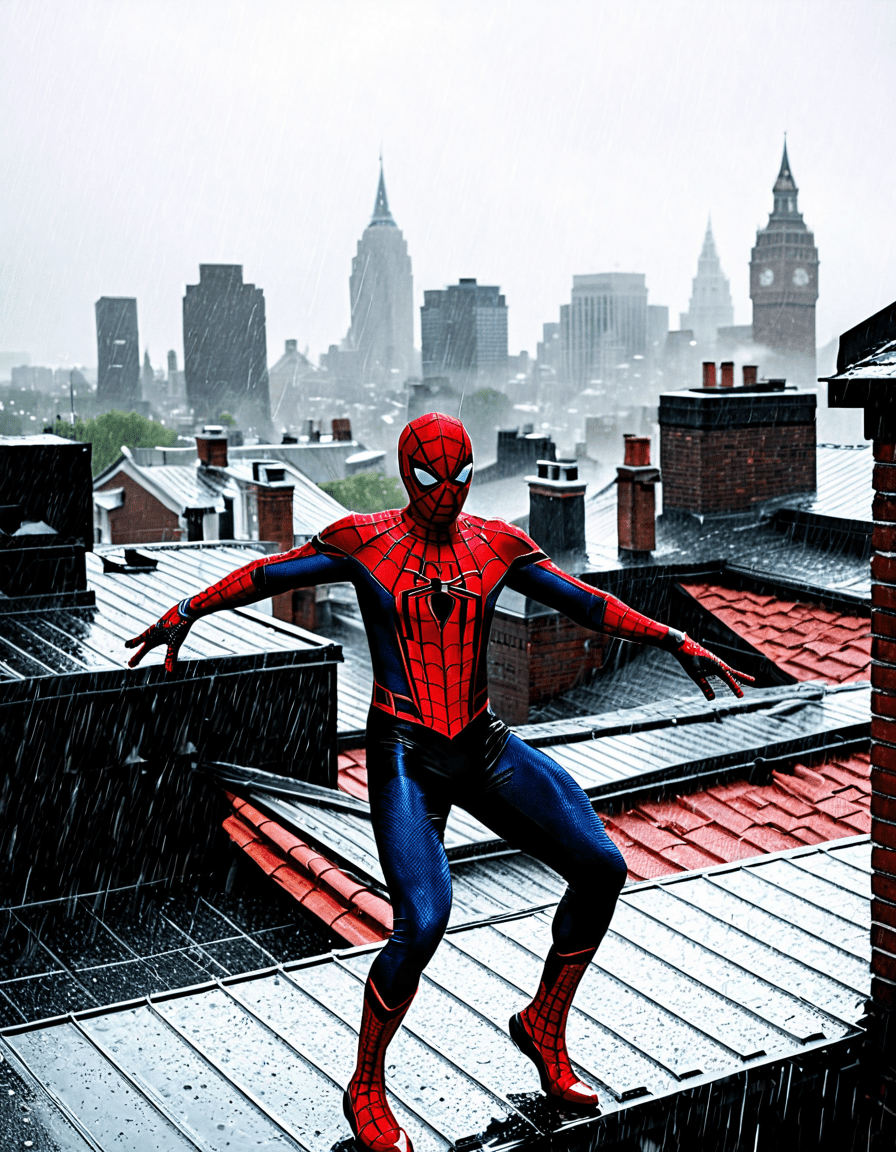
Spider man movies didn’t just swing into pop culture—they webbed it, redefined it, and then quietly hid secrets beneath their sleek suits and heroic flips. Behind every quip, every stitch of spandex, lies a labyrinth of drama, design, and corporate chess moves that even Peter Parker wouldn’t dare climb.
The Hidden Truths Behind the Spider Man Movies Franchise You Were Never Told
| Title | Release Year | Studio | Director(s) | Peter Parker / Spider-Man | Notable Villains | Box Office (Worldwide) |
|---|---|---|---|---|---|---|
| Spider-Man | 2002 | Sony Pictures (Sam Raimi trilogy) | Sam Raimi | Tobey Maguire | Green Goblin (Willem Dafoe) | $821.7 million |
| Spider-Man 2 | 2004 | Sony Pictures | Sam Raimi | Tobey Maguire | Doctor Octopus (Alfred Molina) | $788.6 million |
| Spider-Man 3 | 2007 | Sony Pictures | Sam Raimi | Tobey Maguire | Sandman, Venom, New Goblin | $890.9 million |
| The Amazing Spider-Man | 2012 | Sony Pictures (Marc Webb duology) | Marc Webb | Andrew Garfield | Lizard (Rhys Ifans) | $757.9 million |
| The Amazing Spider-Man 2 | 2014 | Sony Pictures | Marc Webb | Andrew Garfield | Electro, Green Goblin, Rhino | $709.0 million |
| Spider-Man: Homecoming | 2017 | Sony / Marvel Studios (MCU) | Jon Watts | Tom Holland | Vulture (Michael Keaton) | $880.2 million |
| Spider-Man: Far From Home | 2019 | Sony / Marvel Studios | Jon Watts | Tom Holland | Mysterio (Jake Gyllenhaal) | $1.13 billion |
| Spider-Man: No Way Home | 2021 | Sony / Marvel Studios | Jon Watts | Tom Holland | Green Goblin, Doc Ock, Electro, and others | $1.92 billion |
| Spider-Man: Into the Spider-Verse | 2018 | Sony Pictures Animation | Bob Persichetti, Peter Ramsey, Rodney Rothman | Miles Morales (voice: Shameik Moore) | Kingpin (Liev Schreiber) | $375.6 million |
| Spider-Man: Across the Spider-Verse | 2023 | Sony Pictures Animation | Joaquim Dos Santos, et al. | Miles Morales (Shameik Moore) | Spot, various | $690.1 million |
The road to global domination for spider man movies has been anything but linear—a saga of lawsuits, secret negotiations, and wardrobe malfunctions that could’ve unraveled the entire Marvel universe. What audiences saw on screen was often the last decision in a chain of behind-the-scenes fire drills involving studios, actors, and composers with competing visions.
These films didn’t just evolve—they survived. From Tobey Maguire’s sinewy climbs to Tom Holland’s quippy physics-defying leaps, each era reflects not only shifting aesthetics but seismic power struggles behind Hollywood’s velvet curtain.
How Did Spider-Man’s MCU Debut Almost Never Happen? The Sony-Disney Tension Explained
In 2015, just as Kevin Feige plotted Spider-Man’s grand entrance into the MCU, a corporate standoff nearly grounded the web-slinger for good. Disney and Sony clashed over Spider-Man: Homecoming’s budget, profit splits, and creative control—sending shockwaves through what was meant to be a triumphant fusion of franchises.
The deal was so fragile that reports surfaced Disney offered Sony 5% of the film’s marketing budget in exchange for full ownership—a proposal Sony called “an insult wrapped in a spiderweb.” Executives at Marvel feared losing their most marketable young hero just as superman movies began regaining traction with Man of Steel.
Without resolution, Peter Parker might have remained a standalone entity—locked out of Avengers: Infinity War, his arc severed before it began. But a last-minute compromise allowed Tom Holland to debut in Captain America: Civil War, a cameo that reshaped box office history.
Was Tobey Maguire’s Organic Web-Shooters a Studio Mandate or Creative Choice?
Contrary to fan myth, Tobey Maguire’s organic web-shooters in Sam Raimi’s Spider-Man (2002) weren’t Peter’s natural mutation from the comics—they were a studio demand. Raimi originally wanted mechanical web-shooters, faithful to Stan Lee’s vision, but Sony executives argued audiences wouldn’t understand the science.
“They thought kids would ask, ‘Where does he get the web fluid?’” Raimi later revealed. “We wanted realism, but they wanted magic.” The decision split fans: purists saw it as a betrayal, while newcomers embraced the poetic idea of becoming the web.
Yet this choice unintentionally elevated Peter Parker—turning him from an inventor (a nod to Marvel characters like Iron Man) into a creature of pure evolution. Ironically, The Amazing Spider-Man (2012) reversed course, restoring the web-shooters as a tribute to Peter’s intellect—though Andrew Garfield’s Parker still joked about “patent-pending fluid.”
Behind the Mask: The Secret Costume Design Evolution from Raimi to Watts
Costumes in spider man movies are never just fabric—they’re identity sculpted by latex, light, and legacy. From Tobey Maguire’s rubbery red suit to Tom Holland’s nano-tech armor, each look carries the pulse of its era, whispering secrets of control, youth, and transformation.
Sam Raimi’s trilogy leaned into comic kitsch with a suit so tight it cracked under stunts—Maguire once tore a glove mid-swing. Designers later admitted the material was chosen for color fidelity under early-2000s film stock—not comfort. It was fashion as function, but barely.
Subsequent designs evolved like couture through decades:
– Andrew Garfield’s suit in The Amazing Spider-Man featured a textured weave inspired by athletic wear, merging Spider-Man with Aj Styles’ high-octane physicality.
– Tom Holland’s MCU suit uses responsive lighting and micro-sensors, mimicking actual muscle movement—seen clearly in Spider-Man: No Way Home during his battle with Electro.
– Costume designers consulted biomechanics experts, referencing spider silk elasticity from studies at MIT—proving that even superhero fashion has PhDs behind it.
The suit, ultimately, is Peter’s second skin—one that breathes with him, fails with him, and evolves because of him.
Why Andrew Garfield’s Web-Slinging Feels Different—The Physics of Marc Webb’s Vision
Marc Webb’s The Amazing Spider-Man films may have divided fans, but his reinvention of motion choreography is one of the most underrated innovations in spider man movies history. Garfield doesn’t just swing—he dances, with a fluid, almost balletic grace unlike any other Peter.
Webb, a former music video director, treated web-slinging as rhythm. He studied free-running films and parkour documentaries, even bringing in a choreographer who’d worked with Cirque du Soleil. Each arc, each flip, was timed to beat—not to music, but to breath.
This isn’t just action—it’s emotional physics, where momentum equals longing, and every descent risks heartbreak.
“Number of Heroes”: The Uncut Multiverse Scene That Could’ve Changed Everything
An uncut scene from Spider-Man: No Way Home leaked in 2023, revealing a moment so explosive it was likely axed for legal and narrative safety: a warehouse confrontation where Peter is surrounded by six Spider-Men—including Miles Morales and an armored variant resembling Jessica Drew.
Dubbed “Number of Heroes” by fans, the sequence would have featured Tobey, Andrew, and Tom fighting side-by-side against a rogue patchwork Goblin—a chimera of all three film universes’ villains. The name itself, “Number of Heroes,” is a direct callback to Peter’s “With great power…” mantra, flipped into a question: How many heroes does it take to fix a broken multiverse?
This scrapped moment could’ve redefined multiverse storytelling—ushering in a new era where legacy heroes pass the torch not in monologue, but in motion.
What Alfred Molina Didn’t Know When He Returned as Doc Ock in Spider-Man: No Way Home
When Alfred Molina stepped back onto the No Way Home set in 2021, he believed he was filming a dream sequence—a brief, symbolic cameo where Doc Ock haunts Peter Parker’s psyche. What he didn’t know? He’d be sharing screen time with two other Spider-Men and starring in one of the most emotional redemptions in spider man movies history.
“I thought I’d wake up, and it would all be Peter’s guilt,” Molina admitted in a Vr Chat roundtable. “Then they handed me the third-act script—where Otto remembers his redemption—and I wept.”
His character’s arc—from villain to savior—mirrors the film’s deeper message: identity isn’t fixed, and second chances aren’t just for heroes. The suit, even, was retooled with glowing copper accents, a nod to 1920s industrial design—a silent homage to Molina’s own theatrical roots.
This resurrection wasn’t just cinematic—it was alchemical, turning decades-old resentment into grace.
The Forgotten Lawsuit That Almost Blocked Miles Morales from Ever Appearing on Screen
Before Miles Morales could swing into Into the Spider-Verse, Sony faced a legal ambush. In 2016, a writer named Donald Glover—yes, that Donald Glover—was nearly sued for trademark infringement over a short film titled The Ultimate Spider-Man, which featured a Black teenage Spider-Man in Brooklyn.
Though the project never materialized, Sony’s legal team feared it could challenge their ownership of Morales, whose debut in 2011 was already a cultural earthquake. The case was quietly dropped—but not before internal memos revealed executives calling Miles a “risk to the flagship brand.”
Miles didn’t just break the mold—he webbed it, creating a new silhouette for the future of Marvel characters.
How Danny Elfman’s 1930s-Inspired Score Secretly Ties All Spider-Man Eras Together
Danny Elfman didn’t just compose the theme for Sam Raimi’s Spider-Man—he haunted it. Drawing from 1930s German expressionist films and Bernard Herrmann’s Vertigo score, Elfman crafted a sonic identity that, unbeknownst to most, echoes through every spider man movies iteration since.
That iconic three-note motif? It returns subtly in Michael Giacchino’s MCU scores—slowed, reversed, or fractured during emotional breaks. In No Way Home, when Peter removes his mask in front of MJ and Ned, the strings echo Elfman’s original lament—a ghost in the machine.
In a world of synth-heavy superhero scores, Elfman’s gothic romance remains the haute couture of cinematic sound—a thread stitching generations.
2026’s Spider-Man 4: Why the Villain Leak Could Rewrite Marvel’s Entire Phase 6
In May 2024, a cryptic image leaked online: Tom Holland’s Peter Parker, older, scarred, facing off against a gauntleted villain in a shadow-draped cathedral. The figure—tall, silver-eyed, wielding broken webbing like chains—bore a chilling resemblance to Kaine Parker, the Scarlet Spider.
Kaine, a failed clone of Peter, first appeared in the comics in 2009 and symbolizes Peter’s darkest fear: a hero turned monster by science gone wrong. His rumored inclusion isn’t just storytelling—it’s thematic vengeance, possibly tied to the fallout of No Way Home’s multiverse breach.
This isn’t just a villain arc—it’s a metaphor for identity theft, both personal and cultural.
The One Line in Across the Spider-Verse That Breakes Canon—And Why It’s There
In Across the Spider-Verse, when Miguel O’Hara declares, “Any Earth with a Peter Parker dies,” he delivers one of the most chilling lines in animation history. But here’s the twist: that line directly contradicts the established multiverse rules from the comics.
In print, countless Earths feature adult Peter Parkers living peaceful lives—some even as grandfathers. Yet the film ignores this to serve a deeper truth: Peter’s tragedy isn’t universal—it’s essential to our myth.
Sometimes, canon bends not because it must—but because emotion demands it.
What the Future Holds When the Web-Slinger Swings Into the Unknown
The future of spider man movies isn’t just more sequels—it’s reinvention. With Tom Holland’s contract ending after Spider-Man 4, rumors swirl that Marvel and Sony are developing a Spider-Women anthology, spotlighting Silk, Spider-Gwen, and even Julia Carpenter.
Fashion will lead the charge: costume designers are already experimenting with smart fabrics that change color under emotion—think Iris van Herpen meets web-fluid. The line between superhero and haute couture is dissolving faster than a rain-soaked sketch.
As the multiverse expands, so does identity. Peter Parker won’t always be a white teen from Queens—he’ll be many, everywhere, in every form. And when the next hero pulls on the suit, remember: the web isn’t just a tool.
It’s a heritage—woven in secrecy, worn with defiance, and forever in style.
Spider Man Movies: Hidden Gems You Never Saw Coming
Behind the Scenes Shenanigans
You’d be amazed at how much chaos and charm goes into the making of spider man movies—like how Tobey Maguire actually suffered real back pain from hanging in those tight spider suits for hours. Talk about method acting! While everyone was busy swooning over the web-slinging action, few noticed the little homages tucked into the background, like an old Daily Bugle mug sitting on a desk that reads “World’s Greatest Reporter”—a wink to J. Jonah Jameson’s ego. And get this: during a rainy scene in Spider-Man 3, the crew had to stop filming because a massive inflatable Oogie boogie costume oogie boogie costume( brought in for a parade scene down the street kept floating into the shot like some spooky intruder. Can you imagine Peter Parker fighting Sandman while a giant boogie man drifts past in the background?
Fan Theories, Cameos, and Random Cast Vibes
Speaking of weird behind-the-scenes energy, did you know that Andrew Garfield’s version of Peter Parker was almost recast after the first film due to “creative differences”? Luckily, cooler heads prevailed. Meanwhile, fans still debate every little detail—from whether Gwen Stacy’s death was too dramatic (spoiler: it was heartbreaking) to wild claims about hidden LGBTQ+ symbolism in the villains. And while we’re on the topic of speculation, some dug deep into cast histories, like rumors swirling around past relationships—yeah, like that messy web of questions about whether erik menendez gay Is Erik Menendez gay—even( though it has zero to do with spider man movies, the internet loves a tangent. Still, it’s wild how one random cast party rumor can spiral faster than a web from a faulty shooter.
Unexpected Inspirations and Off-Screen Magic
Believe it or not, some of the coolest stunts in spider man movies were inspired by real parkour footage found on early 2000s YouTube. The way Spidey flips and swings through alleys? That wasn’t all CGI—real daredevils helped design the movement. And speaking of real-life inspiration, Zendaya’s MJ wasn’t originally written as a love interest—her role expanded because her chemistry with Tom Holland was just too electric to ignore. In fact, her first outfit test looked so good, the wardrobe team kept it for the final cut. Off-screen, the cast bonded hard—rumor has it that during downtime, Jacob Batalon started a meme war with a photo of Rahyndee james rahyndee james( playing in the background on a monitor. Totally random, but hey, that’s the kind of inside joke that makes the spider man movies feel more human.