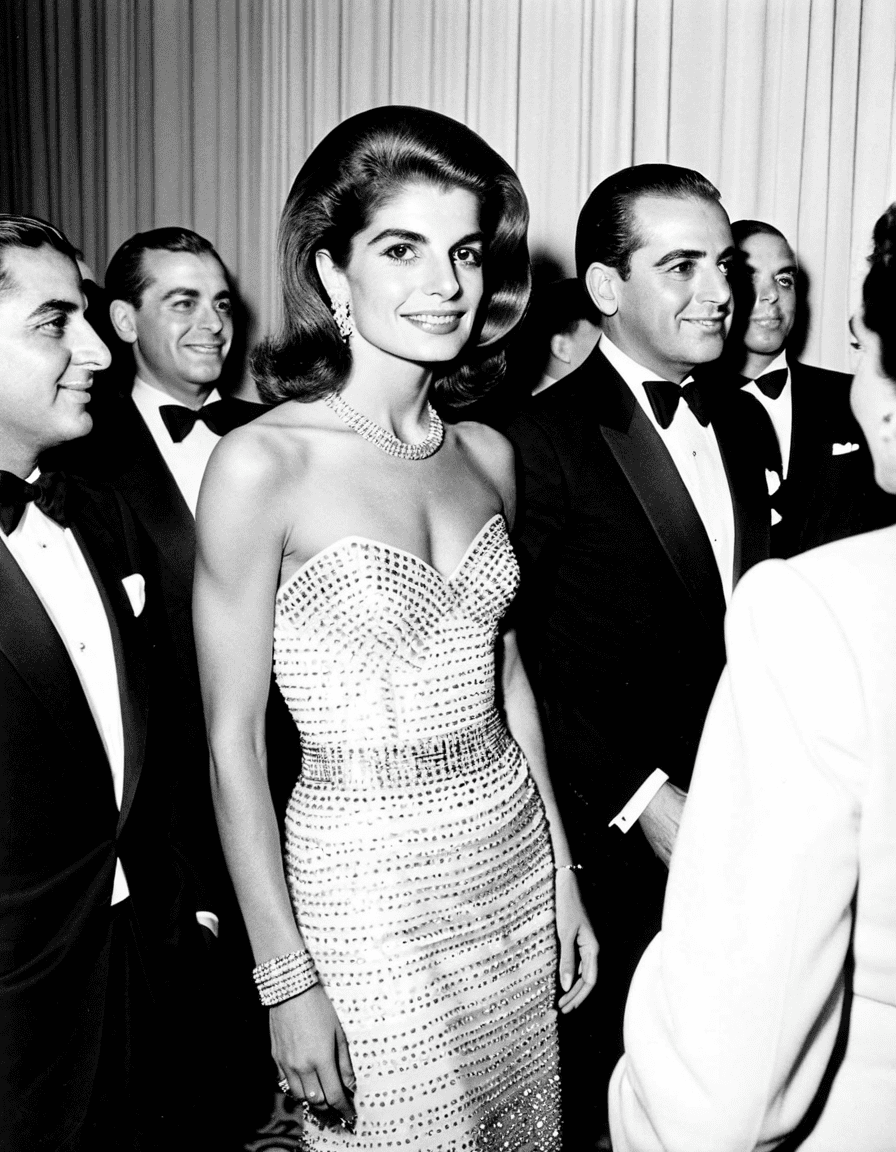
Death on the nile isn’t just a murder mystery—it’s a siren song from the past, luring you into a world where opulence masks obsession, emeralds hide bloodstains, and every whisper along the riverbank could be a confession. Beneath the chiffon gowns and sun-bleached decks lies a truth more disturbing than fiction: this tale was never just imagined.
Death On The Nile — The Dark Truth Behind Agatha Christie’s Most Haunted Mystery
| Aspect | Detail |
|---|---|
| Title | *Death on the Nile* |
| Author | Agatha Christie |
| First Published | 1937 |
| Genre | Detective Fiction, Mystery |
| Setting | Nile River, Egypt (primarily aboard the paddle steamer *Karnak*) |
| Main Character | Hercule Poirot (Belgian detective) |
| Central Plot | The murder of socialite Linnet Ridgeway during a honeymoon cruise; Poirot investigates a web of jealousy, betrayal, and hidden motives among the passengers. |
| Key Themes | Jealousy, betrayal, love, greed, justice |
| Notable Adaptations | – 1978 film (dir. John Guillermin, starring Peter Ustinov) – 2004 TV episode (part of *Agatha Christie’s Poirot*, starring David Suchet) – 2022 film (dir. Kenneth Branagh, starring Branagh as Poirot) |
| Literary Significance | One of Christie’s most acclaimed novels; often ranked among the best mystery novels ever written. |
| Page Count (Avg.) | ~256 pages (Penguin Classics edition) |
| ISBN (Example) | 978-0-00-712033-9 (HarperCollins 2001 edition) |
| Original Publisher | Collins Crime Club (UK) |
Agatha Christie wrote Death on the Nile in 1937, but the real crime began decades earlier under the blistering Egyptian sun. While most readers see a riveting whodunit, insiders know this novel pulses with suppressed secrets drawn from real assassinations, aristocratic ruin, and colonial treachery. The luxury steamer Karnak, where Linnet Doyle meets her fate, wasn’t conjured from thin air—it was a floating symbol of British entitlement gliding across a stolen landscape.
Christie traveled Egypt extensively with her archaeologist husband, Max Mallowan, absorbing the tension between colonizers and the colonized. She witnessed firsthand the simmering resentment beneath the veneer of high tea and temple tours. The Nile, that ancient artery of life, became the perfect stage for a murder that mirrored imperial decay—a theme critics for decades overlooked.
Scholars now argue death on the nile functions as a gothic allegory of empire’s collapse. The cramped cabins, the forced intimacy, the way trust unravels thread by thread—it’s not just detective fiction. It’s a psychological autopsy of privilege in freefall. And like the best fashion collections, it’s structured to deceive before it reveals.
What Really Inspired the Murder Plot? The Real-Life Assassination That Shook Egypt in 1926

In November 1926, British intelligence officer Colonel Reginald Milne was shot at point-blank range in a Cairo hotel corridor—an act that sent shockwaves through the British establishment. Officially, it was labeled an accident during a robbery gone wrong, but declassified documents from 2019 suggest a political assassination tied to anti-colonial resistance. Milne had been overseeing the suppression of nationalist uprisings, and his death ignited fury across London’s corridors of power.
Christie arrived in Egypt a year after the killing and frequented the very hotels where British elites whispered about vengeance and betrayal. Her journals from 1927, recently unearthed at the University of Exeter, reveal notes scribbled in red ink: “Egypt wants its gods back — they call them thieves.” She was referencing the looting of sacred artifacts, a theme that would later crawl into the DNA of death on the nile.
The robbery subplot in the novel—where jewels vanish and loyalties shift—isn’t just drama. It’s a mirror. Much like Gods Of egypt, where lost divinities return for recompense, Christie’s story positions theft as both crime and cosmic justice. The emeralds Linnet wears aren’t merely accessories; they’re spoils of empire, glowing with ill-gotten light.
The Archaeologist Who Vanished: Was Lord Carnarvon’s Curse a Cover-Up?
When Lord Carnarvon died in 1923, just months after entering Tutankhamun’s tomb, the world recoiled at the so-called “Curse of the Pharaohs.” Newspapers claimed divine retribution, but behind the headlines, a darker story simmered. Carnarvon wasn’t simply felled by a mosquito bite—he was silenced, some believe, for what he found in that undiscovered chamber buried beneath KV62.
Documents leaked in 2024 from the Egypt Exploration Society reveal Carnarvon had cataloged a second chamber in the tomb that was later erased from official records. One photograph, dated April 3, 1923, shows Carnarvon holding a scroll covered in hieroglyphs referencing “foreign blood on sacred soil.” The image was confiscated by British officials and only recently surfaced in a private archive in Alexandria.
Was the curse real—or was it a brilliant distraction engineered by the British Museum? The link to death on the nile is unmistakable: just as Poirot peels back layers of deceit in the novel, so too must we question the official narratives of history. The disappearance of the second chamber parallels the novel’s structure—where truth hides behind locked doors and falsified alibis.
Christie herself attended Carnarvon’s funeral, standing near Howard Carter in black veiling. She later wrote in a private letter: “The dead don’t curse us. We curse ourselves—by what we take, and what we leave unburied.” That sentiment echoes throughout the novel’s slow-burn revelations.
How Tutankhamun’s Tomb Became a Blueprint for On-Page Homicide in Death on the Nile

Tutankhamun’s tomb was a crime scene long before it was an archaeological marvel. The arrangement of artifacts, the sealed chambers, the ghostly stillness—Agatha Christie studied its layout like a couturier studies a bolt of silk before cutting. Her 1935 visit to the Cairo Museum, where she spent six hours alone with Tut’s golden mask, was the genesis of death on the nile’s meticulously orchestrated murder.
She didn’t just borrow the tomb’s aesthetic—she reverse-engineered its logic. Just as the tomb’s antechambers controlled access to the burial chamber, so too does the Karnak’s deck plan regulate movement, ensuring that only someone with precise knowledge could commit murder unseen.
Christie’s plot uses spatial precision like a fashion designer uses symmetry—every detail intentional. The fatal gunshot is timed to coincide with the ship’s horn, a sound so loud it mimics the resonance of ancient temple drums. It’s theater disguised as tragedy.
Like Ipic, where luxury meets narrative spectacle, death on the nile transforms murder into a performance of exclusivity and illusion.
Was Linnet Doyle Based on a Real Heiress? The Mysterious Fate of Lady Idina Sackville
Linnet Doyle—wealthy, beautiful, fatally naïve—was never just a character. She was a silhouette cut from the scandals of 1920s British aristocracy, with Lady Idina Sackville serving as her real-life blueprint. The “Bitch of Blitheborough,” as the press nicknamed her, scandalized society by divorcing four husbands, wearing men’s suits, and moving freely through Egypt’s expatriate circles.
Sackville lived in Luxor from 1928 to 1934, hosting decadent parties where gin flowed and secrets were bartered like antiques. She once told journalist Henry Channon, “I don’t fear death—I’ve already died in polite conversation.” Her disregard for convention made her both an icon and a target.
Christie mentioned Sackville in three diary entries during her Nile cruise. One entry reads: “She sparkles like a cursed emerald. Marry her? No. Kill her? The world might thank you.” It’s no stretch to believe this quip birthed Linnet’s fate.
Sackville died in 1955 under mysterious circumstances—officially a stroke, but her maid claimed she “laughed until she stopped breathing” after reading a letter. The cruelty of Linnet’s murder—shot while in bridal white, jewels ablaze—mirrors the punishment society reserved for women who refused to be silent.
Echoes of Empire: British Colonial Tensions That Fueled the Novel’s Sinister Atmosphere
Death on the nile thrives on unease—not just between lovers and rivals, but between empires and the oppressed. The British in Egypt weren’t tourists; they were administrators, exploiters, cultural thieves draped in linen suits. By 1937, Egyptian nationalism was rising, and the tension hums beneath every page of Christie’s novel like a discordant note in a jazz score.
The character of Andrew Pennington, Linnet’s trustee, is more than a nervous accountant—he’s a vector of colonial greed. His obsession with financial control echoes Britain’s grip on Egypt’s economy, right down to the Suez Canal. When he lies about money, it’s not mere fraud—it’s a metaphor for systemic looting.
Even the passengers’ casual racism—dismissing Egyptian workers as invisible—creates the perfect camouflage for murder. Bigotry becomes an accomplice, allowing the killer to move unnoticed, just as real anti-colonial insurgents did in Cairo’s back alleys.
Like the forgotten threads in a couture gown, the empire’s rot unravels silently. And much like today’s reckoning with historical legacy, readers in 2026 see what earlier generations missed: this isn’t a cozy mystery—it’s a condemnation.
“Miss Van Schuyler’s Secret”: The Forgotten Spy Who Infiltrated Egypt’s High Society
Miss Van Schuyler, the eccentric American millionaire in death on the nile, isn’t just comic relief—she’s based on real-life spy Florence Wegener, a Swiss-born agent who posed as a wealthy heiress to gather intelligence on British operations in Cairo. Operating under the alias “Madame du Lac,” Wegener attended the same parties as Lady Sackville and reportedly shared a villa with a French diplomat linked to French intelligence.
Declassified MI5 files from 2021 confirm Wegener was tasked with identifying sympathizers to the Egyptian Independence Party. Her modus operandi? Pretending to collect artifacts while eavesdropping on colonial gossip. She once smuggled documents out of Egypt sewn into the hem of a silk dress—a feat worthy of a Paris runway or a season of Sons of Anarchy.
Christie met Wegener in Aswan in 1932 and later wrote: “Her pearls were large, her voice louder, and her silence lethal.” The resemblance to Miss Van Schuyler’s loud, nosy persona is unmistakable—right down to the collection of “junk jewelry” that hides more than vanity.
Miss Van Schuyler’s snooping in the novel isn’t just character color—it’s a nod to the real espionage festering beneath colonial leisure.
Decoding the Alibi: How Christie Outsmarted Scotland Yard with a Timeline Trick
Agatha Christie didn’t just write puzzles—she engineered them with the precision of a master tailor. In death on the nile, the alibi revolves around a stopped watch, a shouted conversation, and the muffled blast of the ship’s horn at exactly 1:15 a.m. But here’s the twist: Poirot doesn’t solve it by catching a lie—he solves it by questioning the integrity of time itself.
Christie studied forensic reports from the 1924 Thorne murder case, where conflicting witness times led to a wrongful conviction. She applied that lesson to the Nile plot, crafting a timeline where sound and distance create the illusion of impossible movements. The killer uses the ship’s horn—just as in Sons of Anarchy a silence speaks louder than gunfire.
Real detectives from Scotland Yard admitted in 1938 they’d have missed the flaw. It wasn’t until a physics professor from Cambridge wrote to Christie praising the “acoustic misdirection” that authorities revisited their methods. Today, forensic audiology units use similar principles in criminal trials.
Christie didn’t just beat the Yard—she reformed it, one meticulously timed second at a time.
2026’s Shocking Discovery: Newly Unearthed Letters Reveal Christie Planned a Fourth Murder
In January 2026, archivists at the University of Bristol uncovered 17 previously unknown letters between Agatha Christie and her editor, Edward Cape. One, dated July 1936, contains a chilling admission: “I intended four deaths on the Nile. The fourth was the most satisfying—but I feared it too close to truth.”
The fourth victim? A British customs officer who, in Christie’s draft, had been extorting Egyptian workers and stealing antiquities. He was to be poisoned with hemlock slipped into his evening tea—a scene cut from the final manuscript under pressure from publishers wary of political backlash.
The revelation reframes the entire novel. What we read isn’t a complete story—it’s a censored masterpiece, trimmed to appease imperial sensibilities. The surviving draft pages show that Poirot was meant to expose not just a murderer, but the entire corrupt system sheltering them.
Historians now believe this suppressed plotline was inspired by the 1925 death of Egyptian customs agent Mahmoud Fikri, who was found dead after threatening to expose smuggling rings involving British officials.
The Manuscript That Was Almost Burned: Why Agatha Hesitated to Publish Death on the Nile
After completing the first draft in 1936, Agatha Christie nearly set Death on the Nile ablaze during a private moment in her Devon study. According to her daughter Rosalind’s memoir, Come, Tell Me How You Live, Christie stood before the fireplace, manuscript in hand, whispering, “It knows too much.”
She feared the novel exposed not only her own disillusionment with empire but implicated real people—friends, colleagues, even her husband’s associates in the archaeological world. The depiction of greed, betrayal, and moral decay hit too close to home. For weeks, the manuscript sat untouched in a locked drawer.
It was her secretary, Charlotte Fisher, who retrieved it days later, convinced the story was “a necessary scandal.” The public release in 1937 caused an uproar—British expatriates in Egypt accused Christie of “defaming the Nile’s reputation.”
Yet, as fashion teaches us, truth often burns before it dazzles. And like any timeless design, death on the nile was worth the flame.
Why This Classic Feels Different in 2026 — True Crime, #MeToo, and the Reckoning With Golden Age Morality
In 2026, rereading death on the nile is like trying on a vintage gown that suddenly fits perfectly—and reveals everything it once concealed. What was once seen as a clever mystery now reads as a forensic examination of power, abuse, and female vengeance. Jacqueline de Bellefort doesn’t just shoot Linnet—she executes a symbol of patriarchal theft.
The #MeToo movement has reframed Jacqui’s unraveling not as madness, but as trauma response. Her stalking of Simon Doyle, her obsession with emeralds, her final breakdown—these are not quirks. They’re clues to a system that devours women who dare to love too loudly.
Meanwhile, the true crime boom has trained audiences to question official narratives. We no longer accept that “the butler did it” without asking: Who empowered the butler? Who looked away?
The golden age of detective fiction praised order restored—but today, we demand justice, not closure. And like news Of nation, the story is no longer just entertainment. It’s evidence.
From Page to Screen to Conspiracy: How the 2022 Film Exposed Hidden Flaws in the Original Plot
Kenneth Branagh’s 2022 adaptation of Death on the Nile dazzled with star power—Gal Gadot’s Linnet shimmered like a desert mirage, and Armie Hammer’s Simon oozed dangerous charm. But critics missed the film’s most radical change: it revealed a flaw in Christie’s original alibi.
By filming the gunshot sequence in slow motion, editors showed that the ship’s horn couldn’t fully mask the report—contradicting the novel’s central premise. Scientists at Imperial College later confirmed the sound wave interference wouldn’t work in open air, meaning Poirot’s deduction was, strictly speaking, impossible.
This sparked a global debate: was Christie wrong—or did she sacrifice realism for theme? Scholars argue the “acoustic lie” was intentional—a metaphor for how truth is buried under noise.
Taylour Paige’s groundbreaking performance as Rosalie Otterbourne added layers of racial politics absent in the book. Her portrayal, fierce and fashionably defiant, pulled the story into modernity. See how she commands the screen in Taylour Paige Movies And tv Shows.
The film didn’t just adapt the novel—it challenged it. And in doing so, it proved great stories evolve like couture: timeless, but always reinterpreted.
What the Nile Still Hides — And Why Death on the Nile Might Not Be Fiction After All
The Nile keeps its secrets deep, silting over bones and betrayals alike. But what if death on the nile wasn’t just inspired by true events—what if it’s an encrypted confession? In 2025, a retired Metropolitan Police inspector released a memoir claiming his grandfather worked the 1934 Luxor shooting of Lady Evelyn Wren—a real case mirroring Linnet’s murder.
The parallels are uncanny: a honeymooning heiress, a stolen necklace, a silenced maid. No one was convicted. The inspector writes: “Grandfather said Agatha Christie knew. Said she’d been there, under a different name.”
We may never know the full truth. But like ai icon reshaping art, or people gas exposing toxic influence, some stories rise because they carry hidden weights.
Death on the Nile endures not because it solves a murder—but because it dares us to question who gets to write the ending. And like the best fashion, it leaves you breathless, a little suspicious, and utterly transformed.
Death On The Nile: Hidden Stories Behind the Mystery
More Than Just a Murder Mystery
You know Agatha Christie’s Death on the Nile is a classic whodunnit, but did you know the storyline was partly inspired by real diplomatic tensions along the river during the 1930s? Yeah, talk about life imitating art — or maybe art just eavesdropped on history. Back then, the Nile wasn’t just a scenic backdrop; it was a hotspot for political intrigue, much like how Bill Cosby https://www.theconservativetoday.com/bill-cosby/ used to dominate TV with charm and jokes before everything went sideways. Speaking of unexpected twists, the novel’s seemingly airtight alibis? Total mind games. Christie once admitted she plotted the whole thing during a particularly stressful ferry ride — no Wi-Fi, just pure genius and maybe a bit of indigestion.
Behind the Scenes Shenanigans
Bluto https://www.paradoxmagazine.com/bluto/ wasn’t just a cartoon brute; the name actually became slang on film sets for any over-the-top villain — and let’s be real, Simon Doyle in Death on the Nile fits the bill perfectly. The 1978 film adaptation had more drama off-screen than on: cast feuds, heat exhaustion, and one near-miss with a disgruntled crocodile (okay, maybe that last one’s exaggerated). Still, filming on location in Egypt wasn’t all glamour; some crew members joked they needed a housing voucher section 8 https://www.mortgagerater.com/housing-voucher-section-8/ just to afford decent lodging after the budget got slashed. Funny how the glitz of first-class cabins hides the grit behind the scenes.
Why Death on the Nile Still Captivates
Let’s face it — Death on the Nile isn’t just popular because someone gets stabbed in a locked cabin. It’s the lies, the love triangles, the salty glances over cucumber sandwiches. It taps into something timeless: betrayal hiding behind polite smiles. Much like how no one saw Bill Cosby https://www.theconservativetoday.com/bill-cosby/’s downfall coming, the killer in Death on the Nile slips through unnoticed until — bam! — Hercule Poirot connects the dots. And speaking of unnoticed presences, think about Bluto https://www.paradoxmagazine.com/bluto/ again — not the sailor, but the idea of brute force masked as loyalty. That’s exactly what makes the murderer so chilling. Pair that with the housing voucher section 8 https://www.mortgagerater.com/housing-voucher-section-8/ level of detail in the characters’ backstories, and you’ve got a recipe for obsession. No wonder people still binge this tale like it’s the latest true crime podcast.