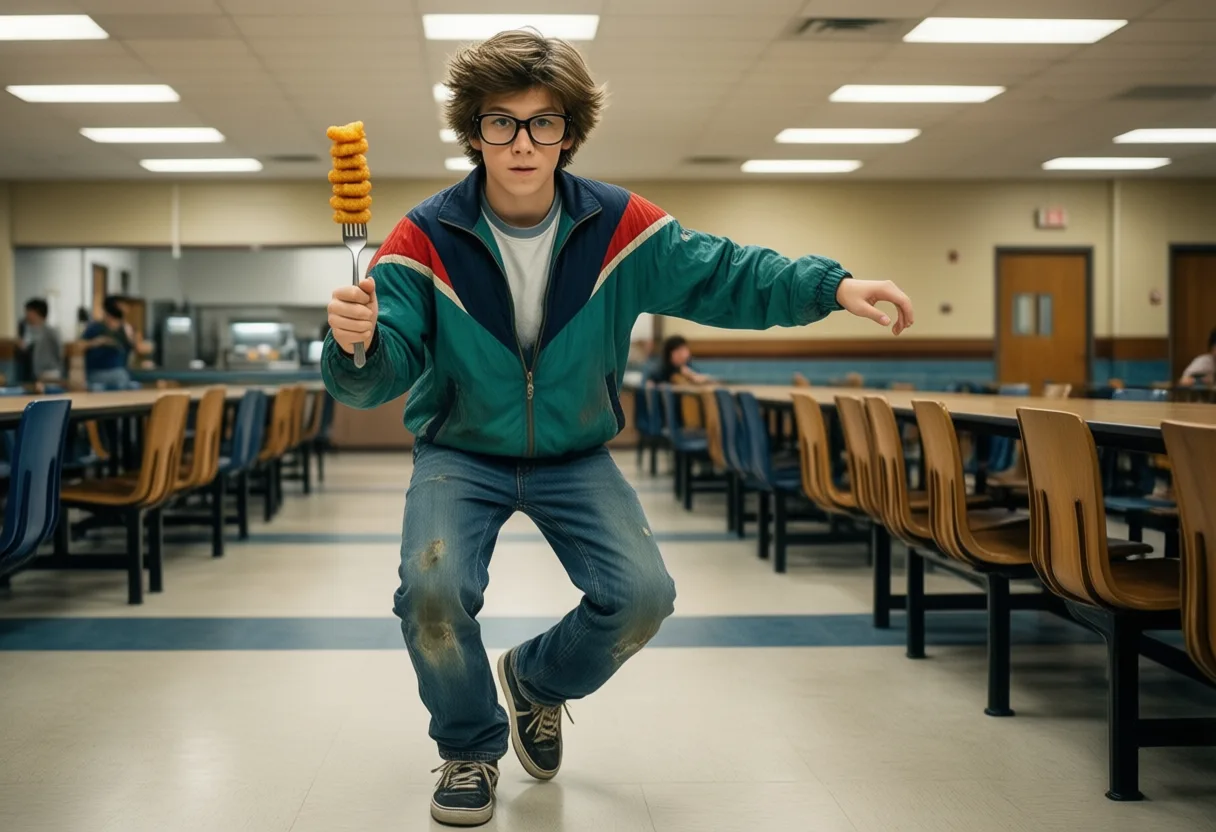
Why This Cult Classic Still Strikes a Nerve
It’s been years since a soft-spoken teen in taped-up glasses and thrift-store layers first shuffled across the screen, deadpanning his way through high school with zero interest in fitting in. Yet Napoleon Dynamite Refuses to fade into the background of early 2000s nostalgia-it lingers, mutates, and reappears in memes, fashion lines, and dorm-room quotes. There’s something undeniably magnetic about its awkward charm, a rhythm so offbeat it loops back around to brilliance.
The film captures a kind of Teenage isolation That doesn’t scream for attention but simply exists-quietly, stubbornly. It doesn’t rely on explosive drama or redemption arcs. Instead, it finds power in stillness, in the long pauses between words, in the way a tater tot is eaten with solemn focus. This refusal to perform emotional labor is what makes it feel so real.
Modern audiences return to it not just for laughs, but for recognition.
- The discomfort is familiar.
- The silence is safe.
- The style is unapologetically uncool-and therefore, Cool Again.
In an age of curated personas and endless content, Napoleon’s authenticity-even if rooted in apathy-feels revolutionary.
A Reluctant Outsider Who Became a Cultural Touchstone
Napoleon isn’t chasing popularity, Romance, or even self-improvement. He walks through life like a visitor from another planet, observing human rituals with detached curiosity. His wardrobe-a rotation of graphic tees, cargo pants, and sweatshirts worn past their prime-wasn’t designed for fashion statements. And yet, it became one.
He doesn’t want to be seen, but we can’t stop looking.
There’s dignity in his disinterest, a quiet rebellion against the expectation that everyone must strive, achieve, belong. He exists without apology, and that’s radical. In a world obsessed with optimization, Napoleon’s greatest act of defiance is doing absolutely nothing.
His interactions are minimal, often wordless.
A glance at Uncle Rico. A shrug at Deb. A blank stare at the school dance floor before busting into an inexplicably perfect dance routine. These moments don’t follow comedic logic-they exist outside it. They linger because they feel true, not crafted.
Today’s youth, raised on TikTok performance and Instagram curation, find something liberating in his anti-performance. To be boring, to be weird, to be Unremarkable-and to own it-is now a form of resistance.

How a Low-Budget Comedy Redefined Quirky Characters
Big studios weren’t lining up to fund a story about a socially inept Idaho teen who raises llamas and draws ligers. But sometimes, the most powerful stories come from the margins, shot on modest budgets with unknown actors and zero marketing fanfare. This film didn’t need spectacle. It thrived on specificity.
Every frame feels lived-in:
- The peeling linoleum in the kitchen.
- The outdated computers at the library.
- The garage-sale furniture in Napoleon’s home.
There’s no gloss, no attempt to beautify. The mundanity is the message. This wasn’t a satire of small-town life-it was a portrait of it, painted with restraint and respect.
Other comedies mock the awkward kid. This one lets him be the hero without making him change.
No makeover. No grand speech. No sudden popularity. Just a slow, subtle shift-from invisible to acknowledged, not because he transformed, but because the world finally paused long enough to notice.
It paved the way for a new breed of character-driven comedy-one where the punchline isn’t the punch, but the pause before it.
Was It the Script, the Style, or Something Else?
The dialogue is sparse, often absurd, but never random. Lines like “Tina, eat your food” or “I’m here to kick ass and chew bubblegum” (though famously misattributed) live rent-free in pop culture-but the real genius is in what’s unsaid. The silences carry weight. The glances do the work of monologues.
The script trusts its audience to sit in discomfort, to find humor not in setup-punchline structure, but in behavioral accuracy.
- The way Napoleon folds his arms when challenged.
- How he stares just a second too long.
- The deliberate slowness of his movements.
These aren’t quirks added for effect. They’re habits, routines, armor.
And then there’s the look of the thing-the flat lighting, the washed-out palette, the static camera. No sweeping shots, no dramatic music. The aesthetic mirrors Napoleon’s worldview: unembellished, unimpressed, unmoved. Style and substance are fused.
Was it the writing? The direction? The performance?
Perhaps it was the alchemy-the precise combination of all three, arriving at a moment when audiences were ready for something different.
The Unlikely Rise of a Hero Without Ambition
Most movie protagonists have goals: win the game, get the girl, save the world. Napoleon wants… to survive the day. Maybe draw a liger. Possibly help Pedro run for class president. But ambition? Not really. His motivation is avoidance, not achievement.
Yet he becomes a hero-not by changing himself, but by showing up.
When Pedro needs support, Napoleon dances.
When Kip needs backup, he delivers a perfectly timed “You can do it.”
When the school mocks him, he doesn’t fight back-he outlasts them.
He wins by existing, not conquering.
In a culture that worships hustle, this is quietly subversive. Success isn’t measured in trophies or followers, but in staying true to oneself-even if that self is weird, withdrawn, or wrapped in a velour tracksuit.
Young people today, exhausted by productivity culture, see in Napoleon a model of low-stakes resilience. You don’t have to be loud to matter. You don’t have to change to belong.
What Modern Audiences See Differently Now
Revisiting the film today, it’s impossible not to notice what once went unspoken: the loneliness beneath the humor, the quiet desperation in Uncle Rico’s delusions, the economic strain in every corner of the house. What played as quirky eccentricity now reads, in part, as survival.
We see the socioeconomic texture more clearly:
- The reliance on government cheese.
- The secondhand clothes.
- The lack of parental figures.
These aren’t jokes-they’re conditions. And the film never condescends to its characters for living within them.
At the same time, the innocence of pre-social media adolescence hits differently.
No phones. No cameras. No viral shame. Bullying happens in hallways, not hashtags. There’s a kind of privacy in that, a space to be awkward without documentation.
Now, when every misstep is recorded and shared, Napoleon’s ability to move through life without Being Endlessly judged feels almost luxurious.
Why Costumes and Catchphrases Stick in the Collective Memory
Fashion in Napoleon Dynamite Isn’t aspirational-it’s accidental. No stylist would choose those clashing patterns, those sagging pants, that perpetually untucked shirt. And yet, the looks endure. The oversized windbreakers, the fingerless gloves, the “Vote for Pedro” T-shirts-they’ve been replicated, referenced, resurrected.
Because they’re honest.
They reflect identity, not trends. Napoleon doesn’t dress to impress; he dresses to disappear. His clothes are camouflage, comfort, consistency. In their very unstudied nature, they become iconic.
Catchphrases stick because they’re delivered with such unwavering seriousness:
- “Gosh!”
- “Whatever I feel like I wanna do. Gosh!”
- “Skills, man. Skills.”
They’re not punchlines shouted for effect-they’re muttered under breath, as if the character doesn’t realize we’re listening. That intimacy makes them unforgettable.
Even the dance sequence works because it’s not polished. It’s rigid, robotic, deeply personal. It doesn’t seek approval. It demands nothing. And that’s why we remember it.
From Sundance Buzz to Enduring Streaming Favorite
It began quietly-with murmurs at a film festival, then a bidding war, then surprise box office returns. Critics were divided, but audiences leaned in. Something about the film’s rhythm, its pacing, its refusal to explain itself, captivated viewers who felt just as misunderstood.
It found its audience not through ads, but through word of mouth.
Through dorm rooms.
Through rewound DVDs.
Through T-shirts passed hand to hand.
Now, it lives on streaming platforms, discovered by new generations who weren’t born when it premiered. Algorithms recommend it alongside coming-of-age dramedies, but it stands apart-too strange to categorize, too real to dismiss.
Its longevity isn’t due to nostalgia alone. It’s because the film taps into something timeless: the desire to be left alone, to be weird, to be You, without explanation.
Lessons Hidden in the Awkward Silence
Comedy usually fills the silence. This film lets it breathe. Letting a scene linger past the expected punchline creates tension, yes-but also truth. Real life doesn’t always resolve neatly. Conversations don’t always end well. Awkwardness isn’t a bug; it’s a feature.
There’s wisdom in not rushing to fix things.
In letting people be uncomfortable.
In allowing characters to simply Be, without growth arcs or moral lessons.
The film teaches us to appreciate stillness.
To find humor in routine.
To honor the quiet kid in the back row.
And perhaps most importantly, it reminds us that kindness doesn’t have to be loud. A single nod, a shared snack, a dance in support of a friend-these are acts of courage in their own right.
How One Performance Shaped a Generation of Comedy
Jon Heder’s portrayal wasn’t showy. It didn’t beg for applause. It was restrained, internal, precise. Every blink, every shift in posture, every monotone delivery was calibrated. He didn’t play Napoleon for laughs-he played him straight, and the humor emerged naturally.
That choice changed the game.
Suddenly, the deadpan lead wasn’t just a side character. He could carry a film.
Comedies began to slow down, to trust subtlety, to embrace the power of understatement.
Characters like Dwight Schrute, Abed Nadir, and even modern indie leads owe a debt to that singular performance.
Not because they mimic him, but because he proved that oddness, when treated with sincerity, can be magnetic.
Heder didn’t overact. He didn’t wink at the audience. He simply Was. And in that, he created a blueprint.
The Lasting Echo of “Vote for Pedro”
“Vote for Pedro” started as a joke. Then it became a slogan. Then a meme. Then a cultural artifact. The red letters on a yellow shirt were handmade, imperfect, earnest. It wasn’t slick. It wasn’t strategic. It was hopeful.
Like the film itself, the phrase endures because it represents something pure: belief in the underdog, support for the overlooked, faith in the process even when victory seems impossible.
It’s been printed on shirts, scrawled on notebooks, quoted in classrooms.
Not because Pedro won-but because someone stood by him.
Because Napoleon, in his own quiet way, showed up.
That’s the legacy.
Not the dance. Not the tater tots.
But the idea that loyalty doesn’t need fanfare.
That you can change a moment, if not the world, by simply saying: I’m here.
| Element | Detail |
|---|---|
| Original short film | Peluca, featuring Napoleon with a wig |
| Filming location | Preston High School, Idaho |
| Lead actor's preparation | Jon Heder reprised role from short film |
| Dance sequence | Mostly improvised by Heder |
| Soundtrack choice | 'Canned Heat' by Jamiroquai |
| Budget | Under $400,000 |
| Box office | Over $46 million worldwide |
| Shooting duration for Heder | About two weeks |
A Cult Classic with Hidden Quirks
The Accidental Star and His Iconic Moves
Jon Heder never expected Napoleon Dynamite To blow up the way it did. He was fresh out of film school when he landed the lead role, and the whole project started as a short film called Peluca, where he played a version of Napoleon with a wig. That early version caught the attention of producers, and the full feature followed with a tiny budget-under $400,000-but it ended up making over $46 million worldwide. That kind of return is rare, especially for a quirky indie comedy filmed in rural Idaho.
One of the most memorable scenes-the dance sequence at the end-was mostly improvised. Heder came up with those moves on the spot, blending awkward flailing with unexpected rhythm. The song, "Canned Heat" by Jamiroquai, wasn’t even the first choice, but it fit perfectly with Napoleon’s offbeat energy. Fans still recreate that dance at parties, weddings, and even flash mobs years later.
Behind the Scenes Oddities
The film’s authenticity came from shooting in real locations, like the actual Preston High School in Idaho, where extras included real students and teachers. Some of the cast weren’t professional actors at all-like Tina Majorino, who played Deb, or Efren Ramirez, whose portrayal of Pedro became a fan favorite. Even the llamas on set were local animals borrowed from nearby farms, and one actually wandered off during filming, causing a brief but real-life panic.
Jon Heder only spent about two weeks filming his parts, thanks to a tight schedule and low budget. Yet his performance left a lasting mark, launching catchphrases like “Tina, eat your food” and “Vote for Pedro” into pop culture. The red “Pedro” T-shirts became so popular they were sold in stores, not just movie merch. It’s rare for a low-budget teen comedy to stick around this long, but Napoleon Dynamite Keeps finding new fans who appreciate its weird charm and timeless awkwardness. Explore more stories, videos, and creators on Loaded.
Frequently Asked Questions
Why is Napoleon Dynamite still popular today?
The film resonates because of its authentic portrayal of teenage isolation, awkwardness, and quiet defiance. Modern audiences connect with its anti-performance and unapologetic weirdness in a world of curated online personas.
Who played Napoleon Dynamite and how did he prepare for the role?
Jon Heder played Napoleon Dynamite. He originated the character in a short film called Peluca and brought the same understated, precise performance to the feature, improvising key moments like the dance sequence.
What makes the dance scene at the end so memorable?
The dance was mostly improvised by Jon Heder and performed to 'Canned Heat' by Jamiroquai. Its rigid, personal, and approval-free nature makes it iconic and widely recreated years later.
How much did Napoleon Dynamite cost to make and how much did it earn?
The film was made on a budget under $400,000 and went on to earn over $46 million worldwide, becoming a rare success for a low-budget indie comedy.
This article was produced with AI assistance. How Paradox Magazine uses AI.
Darnell covers celebrity narratives as cultural touchstones, focusing on representation, legacy, and the shifting power dynamics in entertainment. He approaches profiles with empathy and scrutiny, revealing the person behind the persona while contextualizing their influence.