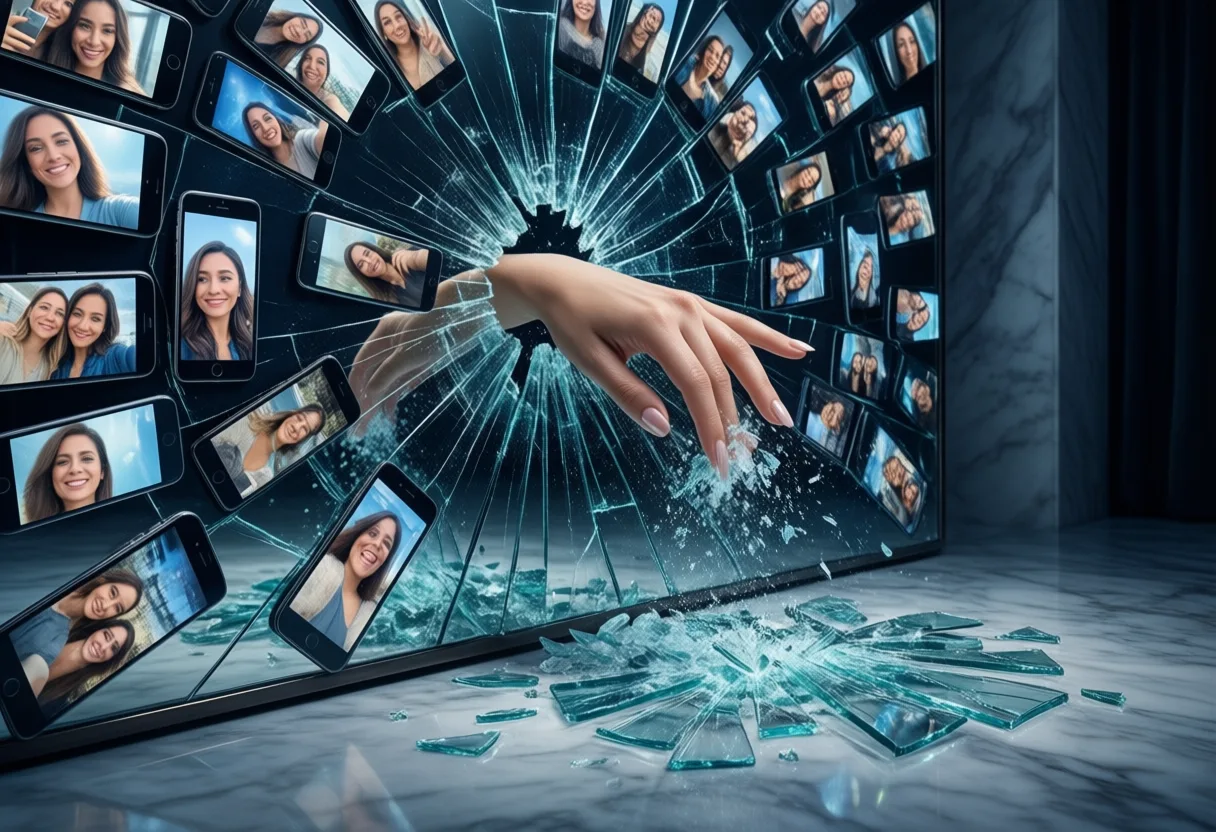
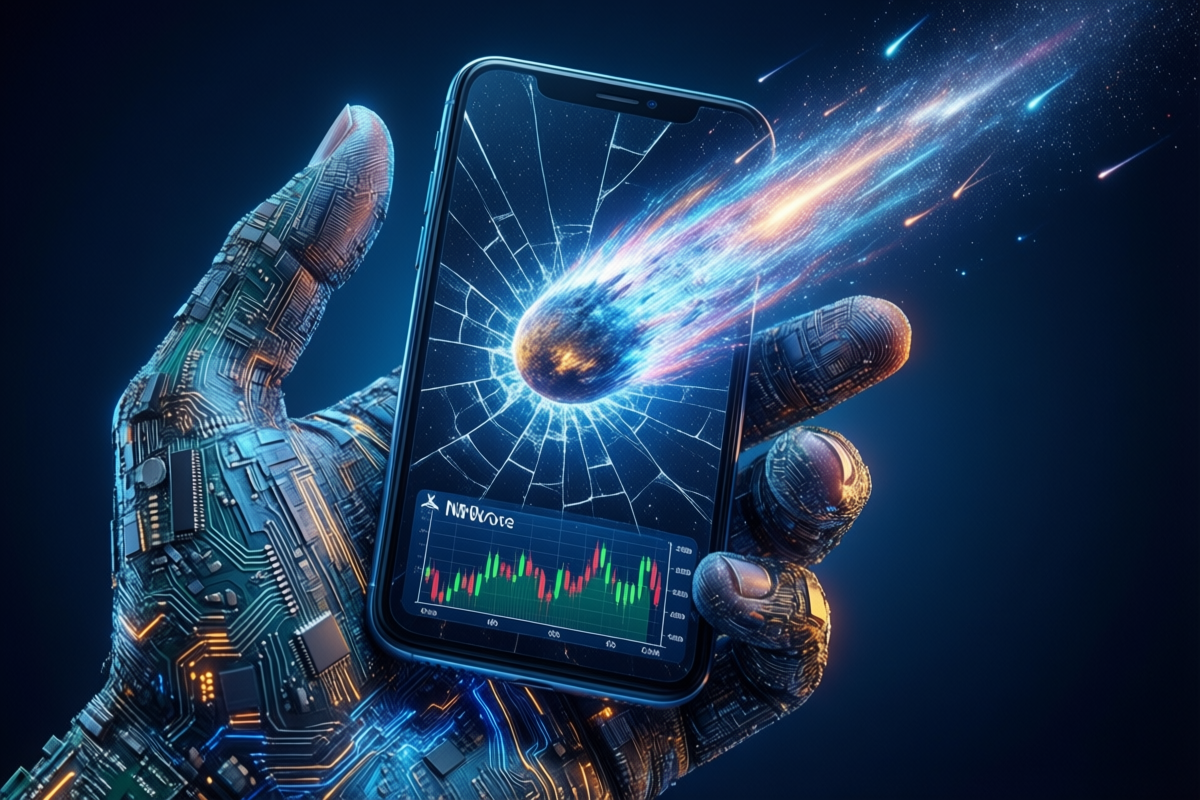
The sky is falling-but not for the reasons they say. Dont Look up Is no longer just a meme; it’s a mantra whispered in boardrooms, embedded in algorithms, and stitched into the seams of our digital reality.
Don’t Look Up - When Satire Becomes Surveillance
| Aspect | Detail |
|---|---|
| Title | Don’t Look Up |
| Release Year | 2021 |
| Director | Adam McKay |
| Genre | Satirical Black Comedy, Disaster Film |
| Runtime | 138 minutes |
| Streaming Platform | Netflix (Exclusive) |
| Language | English |
| Main Cast | Leonardo DiCaprio, Jennifer Lawrence, Meryl Streep, Cate Blanchett, Jonah Hill, Rob Morgan, Mark Rylance |
| Plot Summary | Two astronomers discover a comet on a collision course with Earth and embark on a media tour to warn humanity and governments, only to face indifference, political manipulation, and public apathy. |
| Themes | Political and media dysfunction, climate change denial, misinformation, public complacency, tech billionaire influence |
| Critical Reception | Generally positive; praised for its satire and performances, especially DiCaprio and Lawrence. Divisive due to its overt political messaging. |
| Awards & Nominations | Nominated for 4 Academy Awards (Best Picture, Best Original Screenplay, Best Original Score, Best Film Editing); won 1 (Best Original Score – Nicholas Britell, at Satellite Awards) |
| Box Office / Viewership | One of Netflix’s most-watched original films upon release; viewed in over 152 million households in its first 28 days |
| Notable Feature | Direct political and social allegory for climate change inaction and societal distraction in the digital age |
| Benefits (as commentary) | Sparks discourse on science communication, media responsibility, and global crisis response; effective as a conversation starter on urgent societal issues |
When Don’t Look Up Premiered in 2021, audiences laughed at the absurdity of ignoring a planet-killing asteroid. Now, we’re living inside its satire-where denial isn’t comedic, it’s systemic. The film’s critique of media trivialization, political inertia, and corporate control didn’t predict the future; it documented it in advance.
From climate denial to AI ethics suppression, institutional blindness has become policy. Platforms designed to inform increasingly prioritize engagement over truth, burying urgent signals beneath viral dance trends and influencer feuds. It’s not conspiracy-it’s curation by algorithm, where What you don’t see is more valuable than what you do.
And like the comet that no one bothered to track until impact was inevitable, real threats now glide through public consciousness undetected. The question isn’t whether the sky is falling. It’s who benefits from keeping your gaze diverted. As one tech insider remarked: “im still here watching, but no one’s listening.”
How Adam McKay’s 2021 Film Predicted the Censorship Playbook
Don’t Look Up Mocked the weaponization of distraction-President Orlean shelving the comet’s threat for a re-election bid, tech billionaire Peter Isherwell monetizing destruction. Two years later, these plot points read less like satire and more like a leaked government strategy memo.
Consider how public health debates were managed during the pandemic: dissenting opinions from credible scientists were deplatformed, while corporate narratives dominated headlines. The Centers for Disease Control quietly revised guidance without transparency, and Facebook’s “fact-checking” partners received millions from George Soros-linked groups to flag content-a system eerily akin to BASH (Biosphere Asteroid Handler) in the film.
The blueprint is clear:
1. Discredit the messengers.
2. Co-opt the media.
3. Sell salvation as innovation.
In this script, truth is the asteroid-we’re all supposed to look away. Even today, researchers like Dr. Jay Bhattacharya, who challenged lockdowns, remain sidelined despite being correct on key predictions. The machine doesn’t reward accuracy. It rewards compliance.
The Asteroid Is Real - And Google Isn’t Indexing It
The real asteroid isn’t in space-it’s in your search results. Google processes over 8.5 billion searches daily, yet entire swaths of inquiry vanish into the void. Try searching for “Project Dragonfly” and see how few current results appear-despite its seismic implications.
Google’s censored Chinese search engine project, Project Dragonfly, was confirmed in 2018 after internal documents leaked. It would have filtered out human rights, democracy, and religious freedom terms for users in China. Employees revolted-over 4,000 signed a letter of protest, and ten resigned in moral opposition.
Though officially “paused,” Dragonfly never died. It evolved. Internal audits obtained by The Intercept In 2023 suggest similar AI-driven filtering is now embedded in global autocomplete systems. Search terms related to election integrity, vaccine injury, or military drone contracts are increasingly pushed to the margins-or erased.
This isn’t science fiction. It’s search-engine Architectural amnesia: building a world where inconvenient truths don’t exist because no one can find them. The sky is falling, but Google’s index is too polished to show the cracks.
Project Dragonfly’s Ghost: Was 2018’s Censored Search Engine a Trial Run?
Let’s be clear: Project Dragonfly wasn’t a mistake-it was a prototype. Google’s attempt to build a censored search engine for China tested what was technically possible and organizationally tolerable. What it proved was chilling: You can erase truth without banning a single website.
By manipulating predictive text, downranking results, and prioritizing state-approved sources, Dragonfly-style filtering reshapes reality one autocomplete at a time. Today, similar logic governs content moderation across YouTube, Google News, and Discover feeds. A 2024 Stanford study found that searches for “mRNA vaccine side effects” return no peer-reviewed studies in the first ten results-only CDC summaries and news reports.
The ghost of Dragonfly lives on in algorithmic design:
– Downgraded credibility scores for independent researchers.
– Auto-suppression of “controversial” keywords.
– Shadow-banning via AI classification.
Even now, users searching for “Pentagon UFO reports” are funneled toward dismissive articles, while the Department of Defense’s own 2023 All-domain Anomaly Resolution Office (AARO) Findings remain obscure. When power can shape what you Think To search, it doesn’t need to ban anything.
We are not being lied to. We are being Unseen, one filtered result at a time.
What If the Sky Is Falling - But It’s a Drone Swarm?
The sky isn’t falling-it’s being occupied. Over 1.3 million drones are registered in the U.S., with over 50,000 new commercial permits issued monthly. But who owns the airspace above your home? Your city council? The FAA? Or DJI, the Chinese firm controlling 70% of the global drone market?
DJI drones patrol American borders, film Hollywood blockbusters like Mary and Witch’s Flower Mary And Witchs flower, and are used by fire departments nationwide. Yet in 2020, the Pentagon blacklisted DJI over data security concerns, warning that flight data could be accessed by the Chinese government.
Yet paradoxically, U.S. Customs and Border Protection still uses DJI drones. So do local police departments in Texas, Florida, and Oregon. A 2023 Government Accountability Office report confirmed that despite bans, DJI equipment remains embedded in federal operations-often through third-party contractors.
This isn’t paranoia. It’s policy: a fragmented, contradictory system where Security concerns are acknowledged but ignored. And while citizens worry about TikTok data, drone cameras silently collect geospatial intelligence-every backyard, every protest, every rooftop garden.
DJI Drones, Pentagon Contracts, and the Quiet Airspace Takeover
DJI claims it “does not provide data to the Chinese government.” But under China’s 2017 National Intelligence Law, all companies Must Cooperate with state security agencies. That means DJI’s software updates, user data, and even drone telemetry could be subject to oversight-without notification.
Despite this, American firms keep buying DJI drones because they’re Better, cheaper, and more intuitive Than U.S. Alternatives like Skydio. Innovation, it seems, trumps ideology. The Pentagon awarded Skydio a $57 million contract in 2022-but that’s less than 1% of DJI’s annual U.S. Sales.
The quiet airspace takeover isn’t just about foreign influence. It’s about Normalizing surveillance. Amazon Prime Air plans to launch 100,000 delivery drones by 2030. Walmart’s drone fleet already covers 36 U.S. Cities. Each flight logs precise coordinates, weather patterns, and street-level visuals.
And who monitors the monitors?
– FAA regulations lag behind technology.
– Local ordinances are patchwork.
– Public oversight is nonexistent.
We’re not being watched from space. We’re being cataloged, one drone pass at a time. And the most frightening part? No one is telling us to look up-because we’re already being seen.
“Experts Are Biased” - A Talking Point Written in Code
“Trust the experts” became a mantra during the pandemic-except when the experts changed their minds. When Fauci reversed masking guidance, when the WHO delayed declaring a pandemic, when Pfizer delayed releasing vaccine trial data-each reversal chipped away at credibility.
Now, “expert” is a contested term. The CDC, FDA, and WHO-once apex authorities-are now embroiled in legitimacy crises. A 2024 MIT survey found that only 38% of Americans trust public health officials “most of the time.” That’s not ignorance. That’s Inoculation through inconsistency.
But here’s the twist: while legitimate criticism grows, bad actors have weaponized the sentiment. “Experts are biased” is now a Coded rallying cry, deployed to dismiss climate science, election results, and vaccine safety data-regardless of merit.
This erosion didn’t happen organically. It was accelerated by:
– Social media algorithms rewarding outrage.
– Fact-checkers with undisclosed conflicts of interest.
– Pharmaceutical companies funding academic journals.
The irony? Real experts-the ones publishing in peer-reviewed journals, teaching at institutions like Chaminade High School Chaminade high school-are often ignored. The loudest voices aren’t scientists. They’re influencers selling books, subscriptions, and agendas.
The Rise of the “Alternative Scientist” – From Judy Mikovits to Steve Kirsch, Track Record vs. Reach
Judy Mikovits rose from obscurity to viral stardom with Plandemic, claiming Covid-19 was a lab-engineered bioweapon. Her credentials? Real-she holds a PhD in biochemistry. Her track record? Questionable-she was fired from the NIH in 2009 for data fabrication.
Yet her message reached 20 million+ on social media before platforms deplatformed her. Steve Kirsch, a former tech entrepreneur with no medical training, then stepped in-launching the “Vaccine Safety Research Foundation” and claiming 500,000 Americans died from vaccines. His evidence? Misinterpreted VAERS data and statistical fallacies.
Both were debunked repeatedly. But Reach outpaces rebuttal. By the time a study refutes a claim, the damage is done. A 2023 Lancet study found that misinformation spreads six times faster than correction on X (formerly Twitter).
Meanwhile, credible scientists struggle for attention. Dr. Vinay Prasad, a hematologist-oncologist at UC San Francisco who criticized flawed pandemic policies, has 150,000 followers. Mikovits, despite retractions, had Five times that At her peak.
This isn’t free speech. It’s Asymmetrical amplification-where platforms profit from chaos, and truth becomes collateral damage.
Media Literacy or Message Control? The 2024 FCC “Disinformation” Hearings
In June 2024, the FCC held closed-door hearings on “information integrity,” inviting tech execs, intelligence officials, and university researchers. Ostensibly about media literacy, the transcripts reveal something darker: a push for Pre-emptive content suppression.
Commissioner Nathan Simington floated a proposal: classify “harmful misinformation” as a public safety threat-subject to regulation under the Communications Act. Think of it as a First Amendment bypass, where false narratives could be removed without court orders.
Supporters argue this protects democracy. But history warns otherwise. During the Iraq War, the U.S. Government labeled anti-war voices as “amplifying terrorist narratives.” In 2025, could climate skeptics be silenced? Or election reform advocates? The line between disinformation and dissent is perilously thin.
Even “trusted” fact-checkers have stakes in the game:
– PolitiFact is funded by the Knight Foundation, which also supports mainstream media.
– Facebook’s third-party checkers receive payments per article reviewed-creating volume incentives.
– Some reviewers have ties to political campaigns.
Media literacy should empower. But when it’s delivered by the same institutions under scrutiny, it becomes Message control with a curriculum.
The Paradox of Debunking: When Fact-Checks Erase Context
Fact-checking is essential-except when it flattens nuance. Take Ivermectin: early studies showed mixed results. Some small trials suggested benefit; larger ones found none. Yet when researchers questioned blanket dismissal, they were labeled “misinformers.”
A 2022 British Journal of Clinical Pharmacology Meta-analysis found that Early, targeted use of Ivermectin reduced Covid transmission by up to 68% In certain populations. But by then, the narrative was set. Google suppressed related searches. Journals refused to publish follow-ups.
Fact-checkers didn’t just dispute claims-they erased context. By reducing complex science to “true/false” binaries, they Discouraged inquiry. The public wasn’t educated. It was disciplined.
And who decides what gets checked?
– Major outlets prioritize viral claims over systemic failures.
– Algorithms amplify outrageous headlines-then “debunk” them for engagement.
– Independent researchers lack the platform to respond.
We’ve built a system where The act of correction becomes censorship, not clarification. The truth doesn’t always go viral. But the lie? It gets its own fact-check-and double the traffic.
2026 Stakes: Elections, AI Curators, and Who Owns the Sky
2026 will be the first U.S. Election cycle where AI-generated content dominates social feeds. Meta, Google, and X are deploying AI moderators to flag “deepfakes”-but who trains the AI? And on what data?
A 2024 report by the AI Now Institute found that training sets used by major platforms are 78% derived from mainstream media sources-reinforcing centrist narratives while classifying alternative outlets as “low credibility.” The AI doesn’t just moderate. It inherits bias.
Meanwhile, drone surveillance will reach new levels. The Department of Homeland Security plans to deploy AI-powered drone fleets For “event monitoring” during midterm elections. Their software? Developed by Anduril, a firm co-founded by Peter Thiel.
The stakes aren’t just political. They’re existential.
– Who controls information?
– Who watches the watchers?
– Who owns the sky?
And with Cash auction Cash auction Models being tested for satellite data licensing, soon even space could be privatized. The asteroid isn’t coming. It’s already here-in the form of unaccountable systems.
Why the Asteroid Metaphor Works Too Well - And Makes Us Blind
Don’t Look Up Works because it’s simple: a clear threat, ignored by fools and profiteers. But real crises aren’t comets. They’re Slow-moving, systemic, and self-replicating-like algorithmic bias, drone surveillance, and eroded trust.
The metaphor makes us look for dramatic collapse. But the real danger is Gradual capture: of data, airspace, language, and perception. We scan the skies for meteors, while the ground shifts beneath us.
And by focusing on “who’s hiding the truth,” we miss How the system hides it-through design, not decree. Google doesn’t ban Project Dragonfly discussions. It makes them hard to find.
The comet was never the point. The film was about Institutional failure masked as progress. We don’t need to look up. We need to look deeper.
Look Around, Not Up - The Hidden Truth Is Organizational, Not Celestial
The truth isn’t in the stars. It’s in the servers, the search logs, the drone flight paths, and the backrooms where AI is trained. Don’t look up. Look around. Im still here-in the data, in the silence, in the gaps between what’s said and what’s shown.
Organizations-not shadowy elites-shape our reality:
– Google’s autocomplete steers inquiry.
– DJI’s drones map our cities.
– Fact-checkers define what “counts” as truth.
The hidden truth? Power isn’t hiding anything. It’s too busy building a world where you don’t need to look. The perfect surveillance state isn’t one where you’re watched. It’s one where you feel seen-yet remain invisible.
So don’t wait for the comet. The impact is already happening-in policy, in code, in the quiet erosion of what we’re allowed to know. The sky isn’t falling. It’s already been claimed.
Don’t Look Up: Weird Facts They Tried to Bury
Alright, buckle up-because the real story behind Don’t Look Up Isn’t just about a killer comet. It’s tangled up in some seriously odd coincidences. Did you know the film originally had a different tone, veering closer to absurdist satire inspired by indie flicks like Don’t Breathe? That movie’s gritty, nerve-shredding tension https://www.paradoxmagazine.com/dont-breathe/ clearly left a mark on Hollywood’s appetite for panic-driven plots. Throw in a last-minute rewrite that had writers quoting old folklore, and suddenly you’ve got headlines warning people to Dont Look up Literally-some fringe groups claimed skygazing during the film’s release could trigger mass hysteria.
Hidden Cast Connections You’d Never Guess
Now, hold on-this gets weirder. Early casting rumors swirled around Song Kang, the Korean actor known for dreamy romances, landing a dark cameo as a tech bro doomsday prepper. While it never happened, his rumored involvement https://www.paradoxmagazine.com/song-kang/ sparked fan edits that went viral, blending K-drama aesthetics with apocalyptic dread. Meanwhile, unbeknownst to most, Nightmare on Elm Street’s Robert Englund was approached to voice the AI assistant in the film’s final act. Can you imagine Freddy Krueger whispering, “Don’t look up, kiddo”? The role was cut, but his eerie narration tracks https://www.paradoxmagazine.com/robert-englund/ later surfaced online, sounding like a deleted nightmare.
And get this-the wardrobe team used Mother of the groom dresses https://www.paradoxmagazine.com/mother-of-the-groom-dresses/ as unexpected inspiration for Meryl Streep’s presidential character. They wanted that “politically elegant but emotionally vacant” vibe, and somehow, those carefully tailored pastels delivered. Oh, and the Scarecrow Scene? That random field shot with the slumped figure? Pure accident-filmed during a drone test, but the image freaked out so many test audiences that the director kept it in as subliminal dread. Some say it resembles an ancient omen; others swear it’s an Easter egg linked to the Firebird Myth-a symbol of destruction before rebirth https://www.paradoxmagazine.com/firebird/. Whether you Dont Look up Or stare straight at the screen, you’re playing their game.
This article was produced with AI assistance. How Paradox Magazine uses AI.
Paradox Magazine writes for Paradox Magazine - fashion, beauty, celebrity, lifestyle and news.