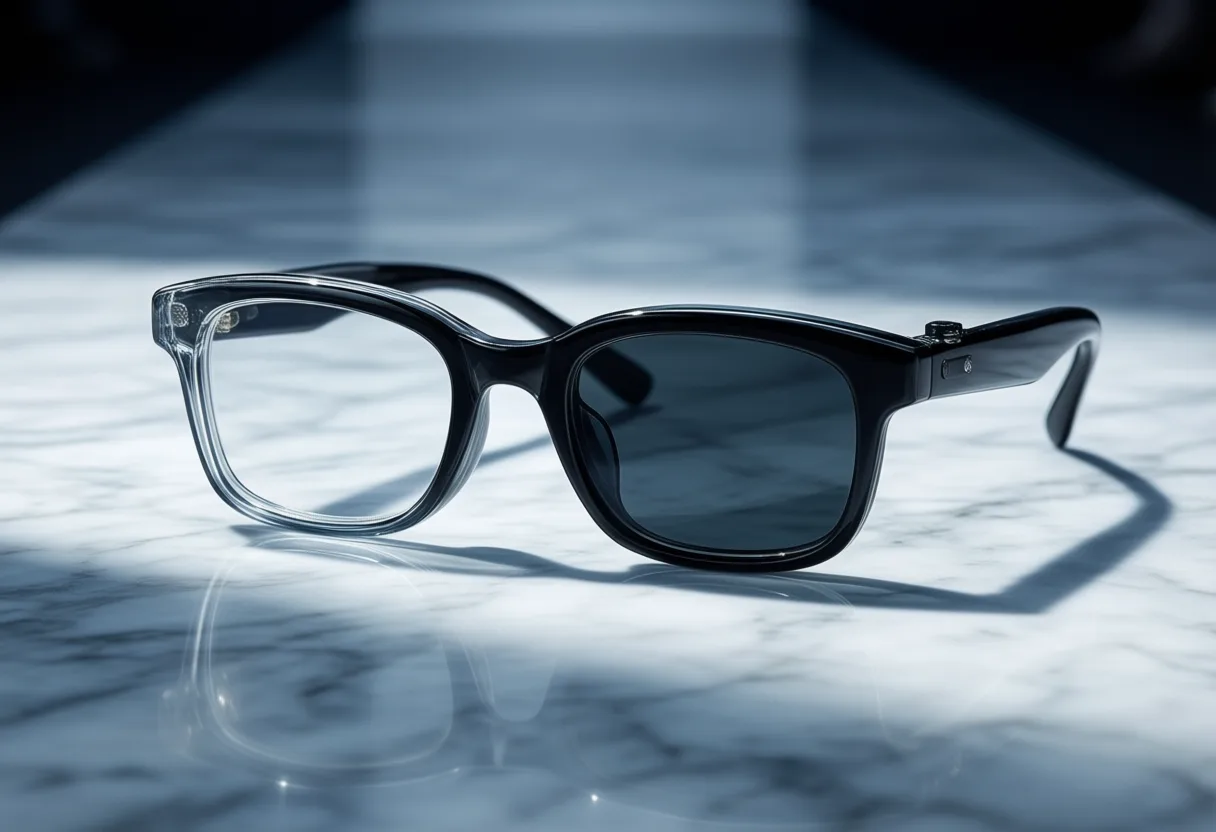
There is a quiet revolution happening behind the eyes of the modern fashion set-not in runway theatrics or viral trends, but in the subtle alchemy of Light And lens. As we glide from sun-drenched sidewalks to softly lit boutiques, our eyewear must perform with the precision of a couture seam and the grace of a perfectly timed exit. Enter transition glasses: not mere accessories, but intelligent companions choreographing vision and style through shifting skies.
Why Transition Glasses Are More Than Just a Convenience
Transition glasses have long been misunderstood-as if they were the sensible cousin at a family dinner, dutiful but dull. But today’s adaptive lenses are anything but ordinary; they are sartorial intelligence made visible, responding to sunlight with the elegance of a slow reveal on a Parisian catwalk. These lenses darken when exposed to sunlight and fade back to clear indoors, offering the fluidity of two pairs in one: prescription clarity by morning coffee, sunglass sophistication by afternoon stroll.
They are the antidote to the clumsy ballet of switching spectacles-fumbling in handbags, balancing sunglasses atop heads like misplaced crowns. With transition lenses, there is no performance, only presence. You move through environments as you would a well-curated gallery: uninterrupted, composed, always in focus.
And yet, their value extends beyond convenience. In an era where Blue light Hums from screens and UV rays linger even on overcast days, these lenses serve as silent guardians. They protect without demanding attention, like the perfect foundation that disappears into skin while doing the work beneath. This is functional luxury-where innovation meets intention.

How Light Conditions Shape Your Lens Needs
Light is not a constant-it is a mood, a variable actor in the daily drama of urban life. The sharp glare bouncing off glass towers at noon demands a different response than the diffused glow filtering through café windows at dusk. Our eyes, delicate and responsive, crave adaptation, not compromise.
Indoors, artificial lighting-especially LED and fluorescent-emits a cool, often harsh spectrum that can strain the visual cortex over time. Outdoors, UV exposure accumulates silently, contributing to long-term ocular fatigue. Transition lenses respond to this duality, adjusting tint levels based on ambient light conditions. They do not merely react-they anticipate, deepening subtly as you step outside, softening just as gracefully upon reentry.
For those who live in cities where shade and sun alternate like rhythm and syncopation, the ideal lens behaves like a seasoned dancer: aware of tempo, never missing a beat. Whether under open sky or beneath subway arches, your vision remains balanced, unburdened by squinting or shielding. Light isn’t just seen-it’s interpreted.
What Makes a Transition Lens Truly Effective?
Effectiveness in transition lenses isn’t measured solely by how dark they get, but by how Well They transition-how swiftly, evenly, and completely they adapt to environmental shifts. A superior lens darkens quickly under sunlight and returns to crystal clarity indoors, eliminating the ghostly haze some older models left behind.
The best-performing lenses activate not just from direct sunlight, but also from ambient UV radiation, meaning they begin responding before you’ve fully stepped outside. This anticipatory behavior ensures seamless protection, whether you're emerging from a dim theater into midday glare or walking through a shaded garden where light filters unpredictably.
Equally important is fade-back speed. No one wants to appear mysteriously shaded in a boardroom or restaurant, their lenses lagging behind like a delayed subtitle. High-efficiency models achieve near-invisible clarity within minutes, maintaining discretion and dignity in every setting. Performance, in this case, is indistinguishable from poise.
The Science Behind Adaptive Tint Technology
At the heart of every transition lens lies a molecular marvel-photochromic compounds embedded within the lens material that shift structure when exposed to ultraviolet light. These molecules, dormant indoors, stretch and align under UV rays, causing the lens to darken. When UV diminishes, they relax, returning the lens to transparency.
This transformation is not mechanical, but organic-a kind of botanical logic encoded in synthetic form. Unlike clip-ons or switchable shades, there is no bulk, no mechanism to fail. The change occurs at the atomic level, invisible to the eye but felt in the comfort it delivers.
Temperature can influence activation-cooler climates often yield deeper tints, while extreme heat may slightly delay darkening. Yet advancements in photochromic engineering have minimized these variances, allowing for consistent performance across seasons. It is science dressed as elegance, chemistry masquerading as chic.
Top 7 Transition Glasses for Balanced Sun and Indoor Protection
1. Lenses That Deliver Fast, Full Darkening Outdoors
For those who live boldly under open skies, rapid-response lenses are essential. Transitions Signature GEN 8 lenses offer swift darkening the moment UV hits, achieving deep tint efficiently-even on cloudy days when UV persists despite gray cover. Their responsiveness makes them ideal for pedestrians, cyclists, and anyone whose day unfolds largely outdoors.
These lenses strike a balance between function and subtlety, avoiding the overly smoky appearance that once marked early transition models. Instead, they deepen with sophistication, like a silk scarf catching wind.
Their performance shines brightest for individuals seeking reliable sun defense without the commitment of permanent sunglasses. When the sun plays hide-and-seek, these lenses keep pace.
2. Options with Enhanced Fade-Back Clarity Indoors
Clarity upon reentry is non-negotiable for professionals moving between meetings, galleries, or homes with varying light. Transitions XTRActive lenses stand out here, not only for their outdoor performance but for their ability to return to a clean, neutral state indoors.
Though they maintain a faint residual tint in some cases-due to their heightened sensitivity-they excel in minimizing visual disruption inside. For frequent comers and goers, this means less adjustment, more immersion.
They are particularly suited to dynamic routines: think journalists darting between press conferences and street interviews, or parents navigating school drop-offs and office calls. Vision stays steady, frame after frame.
3. High-Performance Lenses for Drivers and Commuters
Driving presents a unique challenge-windshields block most UV rays, which traditionally limited the activation of photochromic lenses inside vehicles. However, newer technologies have evolved to meet this gap.
Transitions XTRActive lenses are designed to react not only to UV but also to visible light, allowing them to tint moderately even behind glass. While they won’t reach full darkness like outside, they offer enhanced comfort against glare from wet roads, headlights, or reflective surfaces.
Commuters will appreciate the reduced eye strain during morning and evening drives, especially in high-glare conditions. These lenses don’t eliminate sunglasses for driving, but they elevate everyday readiness.
4. Styles Engineered for Persistent Lens Tint in Variable Light
Some environments refuse to commit to light or shadow-urban canyons, forest trails, covered patios-where brightness fluctuates unpredictably. For these in-between spaces, lenses with persistent responsiveness are key.
Transitions XTRActive lenses, known for their exaggerated level of tint, perform exceptionally in such conditions. They remain active longer and respond to lower levels of UV, making them ideal for partial sun exposure.
They behave like a well-trained ensemble-subtle when needed, bold when called upon-adapting without overstatement. Ideal for adventurers, creatives, and wanderers who thrive in ambiguity.
5. Frames from Leading Brands Designed for Seamless Transitions
Style should never be sacrificed for function-least of all in eyewear, where silhouette shapes identity. LensCrafters offers a wide selection of transition eyeglasses featuring frames from Armani Exchange, Oakley, and Ray-Ban, ensuring optical innovation meets design authority.
Whether you favor the architectural lines of aviators or the retro flirtation of cat-eye silhouettes, transitions are now available in forms that flatter face and fashion alike. These aren’t medical devices disguised as accessories-they are accessories elevated by intelligence.
The fusion of premium branding and adaptive technology means you needn’t choose between looking polished and seeing clearly. The frame holds the future.
6. Lenses with Superior UV Defense in All Environments
Protection is not optional-it is foundational. Every transition lens provides continuous UV defense, both indoors and out, shielding the eyes from harmful radiation regardless of tint level.
Even when clear, they block 100% of UVA and UVB rays, acting as an invisible shield against cumulative damage. This is critical for long-term eye health, especially given that UV exposure occurs year-round, even through windows.
In this way, transition lenses function like SPF for the eyes-silent, consistent, essential. Not a trend, but a standard.
7. Adaptive Designs Ideal for Frequent Indoor-Outdoor Movement
For those whose lives unfold across thresholds-stepping from office to sidewalk, café to park, home to errand-the ideal lens must be perpetually ready. Models like Transitions Signature GEN 8 and XTRActive cater precisely to this rhythm.
They minimize the lag between environments, reducing visual fatigue caused by sudden light changes. No more blinking in disbelief as the world brightens; instead, a smooth dissolve, like a film transition executed flawlessly.
Urbanites, travelers, and multitaskers will find these designs indispensable-not as gadgets, but as graceful extensions of daily flow.
Debunking the Myth: Do Transition Lenses Work Behind the Wheel?
Understanding Limitations in Car Settings
A common misconception persists: that transition lenses fail entirely inside cars. The truth is more nuanced. Because most car windshields are laminated to block UV radiation, traditional photochromic lenses receive fewer activation signals and thus darken less.
However, newer generations-particularly Transitions XTRActive lenses-are engineered to respond to visible light as well, enabling moderate tinting even behind glass. They won’t replace dedicated polarized sunglasses for intense driving conditions, but they do offer meaningful glare reduction.
Passenger-side wearers may notice greater activation due to side windows transmitting more UV. Still, expectations should be calibrated: these lenses enhance comfort, not replicate full outdoor performance. Acknowledging this distinction allows for smarter choices-not disappointment.

How to Choose the Right Pair for Your Daily Routine
Matching Lens Behavior to Your Lifestyle Needs
Selecting the right transition lens begins not with optics, but with observation-of your own rhythms. Ask: Where do I spend my daylight hours? Am I behind the wheel for hours, or walking beneath open sky? Do I work near large windows, or in controlled indoor lighting?
For predominantly outdoor lifestyles, Transitions XTRActive or XTRActive Polarized options may be optimal, offering deeper tint and enhanced response. Those alternating frequently between environments may prefer the balanced performance of Transitions Signature GEN 8.
Frame choice, too, should reflect usage. Lightweight materials suit active days; classic silhouettes endure boardrooms and brunches alike. Let practicality whisper, but let personal style speak louder.
Final Thoughts: Smarter Vision Across Changing Light
Transition glasses have shed their outdated skin-no longer clunky compromises, but refined instruments of modern living. They embody a philosophy: that elegance need not be static, and protection need not be obvious.
Today’s best models merge scientific precision with aesthetic grace, serving those who demand both performance and panache. From city streets to coastal drives, they adapt with quiet confidence.
To wear them is to move through the world with fewer interruptions, fewer adjustments-just clear sight, clear thought, and the effortless assurance of being perfectly seen.
| Lens Type | Best For | Indoor Clarity | UV and Light Response |
|---|---|---|---|
| Transitions Signature GEN 8 | Everyday wear and outdoor use | Clear indoors | Responds to UV light |
| Transitions XTRActive | Driving and variable light | Slight residual tint | Responds to UV and visible light |
| XTRActive Polarized | Bright skies and glare reduction | Slight tint indoors | Responds to UV and visible light |
More Than Meets the Eye: Cool Facts About Adaptive Lenses
One Pair, Two Looks – Automatically
Think of transition lenses as your glasses’ superpower: they go from clear indoors to tinted in sunlight, all without you lifting a finger. It’s like having two pairs of glasses in one frame-no more fumbling for sunglasses every time you step outside. The magic kicks in thanks to photochromic technology that reacts to UV light, darkening quickly when you hit the sunshine and fading back just as fast when you head indoors.
The Toughest Tint for Real-World Glare
If you’re someone who spends a lot of time driving or under bright skies, the Transitions XTRActive lenses might be your best bet. These lenses don’t just respond to direct sunlight-they actually activate behind the wheel, where regular transitions sometimes lag, because they react to visible light too. That means more consistent tinting and better protection even when you’re cruising down the highway with the sun at an angle.
Pick Your Shade, Pick Your Style
Not all transition lenses work the same. The Signature GEN 8 lenses are a top pick for everyday wear, offering a balanced shift between clear and dark. But if you want something with a bit more attitude, the XTRActive lenses take on a deeper tint, even in milder light. And the best part? You can pair them with frames from big names like Ray-Ban, Oakley, or Armani Exchange, so looking good while your lenses adapt is definitely part of the package.
Frequently Asked Questions
Do transition lenses work behind the wheel?
Traditional transition lenses darken less behind car windshields because they block UV rays. However, Transitions XTRActive lenses respond to visible light as well, allowing for moderate tinting while driving.
How do transition lenses protect your eyes?
Transition lenses block 100% of UVA and UVB rays at all times, even when clear. They also reduce glare and shield eyes from harmful light in both indoor and outdoor environments.
What makes transition lenses different from regular glasses?
Transition lenses automatically adjust tint based on light conditions, darkening in sunlight and clearing indoors. They combine the function of prescription glasses and sunglasses in one seamless pair.
Which transition lenses are best for frequent indoor-outdoor movement?
Transitions Signature GEN 8 and XTRActive lenses are ideal for frequent transitions between environments. They minimize lag and reduce visual fatigue from sudden light changes.
This article was produced with AI assistance. How Paradox Magazine uses AI.
Maeve explores avant-garde fashion through the lens of cultural evolution, blending runway analysis with street-level trends. She investigates how identity and innovation collide in fabric, silhouette, and statement, making high fashion accessible without diluting its daring.