
Beneath the palm trees and mirrored skyscrapers of Los Angeles, la brea bubbles with secrets older than civilization itself—a primordial cocktail of asphalt and death that has seduced and silenced creatures for over 50,000 years. While Hollywood dreams of immortality, the tar pits deliver it in the most unexpected way: fossilized fame.
The La Brea Tar Pits Are Still Hunting—Here’s How They’ve Trapped Science for 50,000 Years
| Aspect | Details |
|---|---|
| **Name** | La Brea |
| **Type** | Natural Area / Paleontological Site |
| **Location** | Los Angeles, California, USA |
| **Coordinates** | 34°03′52″N 118°20′00″W |
| **Established** | 1916 (as a protected site) |
| **Managed by** | Natural History Museum of Los Angeles County (exhibits), LA Parks (land) |
| **Formation Process** | Tar pits formed from crude oil seeping to the surface through faults; asphalt trapped animals over time |
| **Age of Fossils** | 10,000 to 50,000 years old (Late Pleistocene epoch) |
| **Significant Discoveries** | Over 1 million fossils recovered, including saber-toothed cats, dire wolves, mammoths, mastodons, ground sloths, and ancient birds |
| **Museum On-Site** | La Brea Tar Pits and Museum (part of the Natural History Museums of Los Angeles County) |
| **Visitor Features** | Observation pits, Ice Age animal sculptures, active excavation areas, museum exhibits with fossil labs |
| **Scientific Importance** | One of the world’s richest sources of Ice Age fossils; ongoing paleontological research |
| **Public Access** | Open to the public; free admission to the park, ticketed entry for museum |
| **Notable Ongoing Research** | Study of climate change, ancient ecosystems, and extinction patterns through fossil analysis |
| **Cultural Significance** | Iconic Los Angeles landmark; used in educational programs and media |
Beneath the velvet lawns of Hancock Park, la brea simmers like a runway that never closes—slick, black, and lethally deceptive. This is no ordinary sinkhole; it’s a natural asphalt seep, where hydrocarbons from the Earth’s crust ooze upward and harden into deadly traps camouflaged by dust and leaves. Predators lured by the thrashing of trapped prey became prey themselves, creating one of the richest fossil assemblages on the planet. Over 100 excavated pits have yielded more than 3.5 million specimens, each a time capsule from the last Ice Age.
Far from a static museum, la brea remains geologically active—gas bubbles still rise, and new microseeps appear after rain, much like a fashion house unveiling its next collection season after season. Scientists monitor the site like couturiers measuring a perfect fit, knowing that every tremor or storm could expose a fossil previously unseen. Just last year, a team from the La Brea Tar Pits and Museum discovered a rare Ice Age bison skull in Pit 1, proving that la brea isn’t done revealing its secrets. In this city of reinvention, the past refuses to be buried.
While the rest of Los Angeles chases the new, la brea reminds us that true legacy is forged in endurance—and asphalt. It’s a runway where evolution walked, stumbled, and sank, but left behind a couture catalog of lost life. Much like the enduring influence of Rachel House in contemporary theatre, la brea exerts a quiet but undeniable dominance over culture and science alike.
Why “Tar” Is a Lie (Hint: It’s Not Petroleum)
Despite the name, la brea contains no tar—brea is Spanish for asphalt, and it’s the real star of this macabre drama. This natural asphalt is a dense, sticky form of petroleum that rose through fissures in the Earth’s crust due to tectonic activity along the nearby Newport-Inglewood fault. Over millennia, it collected in shallow basins, creating a predator’s paradise and, ultimately, their tomb.
Unlike refined tar used in roads today, this asphalt is chemically complex—rich in heavy hydrocarbons that preserve organic material with astonishing fidelity. Bones, teeth, even insects and plant matter survive with microscopic detail. A wasp wing from 30,000 years ago can be studied like a designer sketch—every vein in perfect relief.
This sticky elegance has allowed scientists to reconstruct entire food webs, revealing a Pleistocene Los Angeles cloaked in juniper forests and riparian corridors, far from the concrete jungle of today. It was a world where the hunt was everything, and la brea was the final curtain—a natural mise en scène of survival, failure, and fossilization. Much like how a pair of chunky Sneakers can ground a high-fashion look in reality, la brea anchors speculative science in tangible, inescapable truth.
7 Shocking Facts from the La Brea Death Assemblage You Won’t Believe Are Real
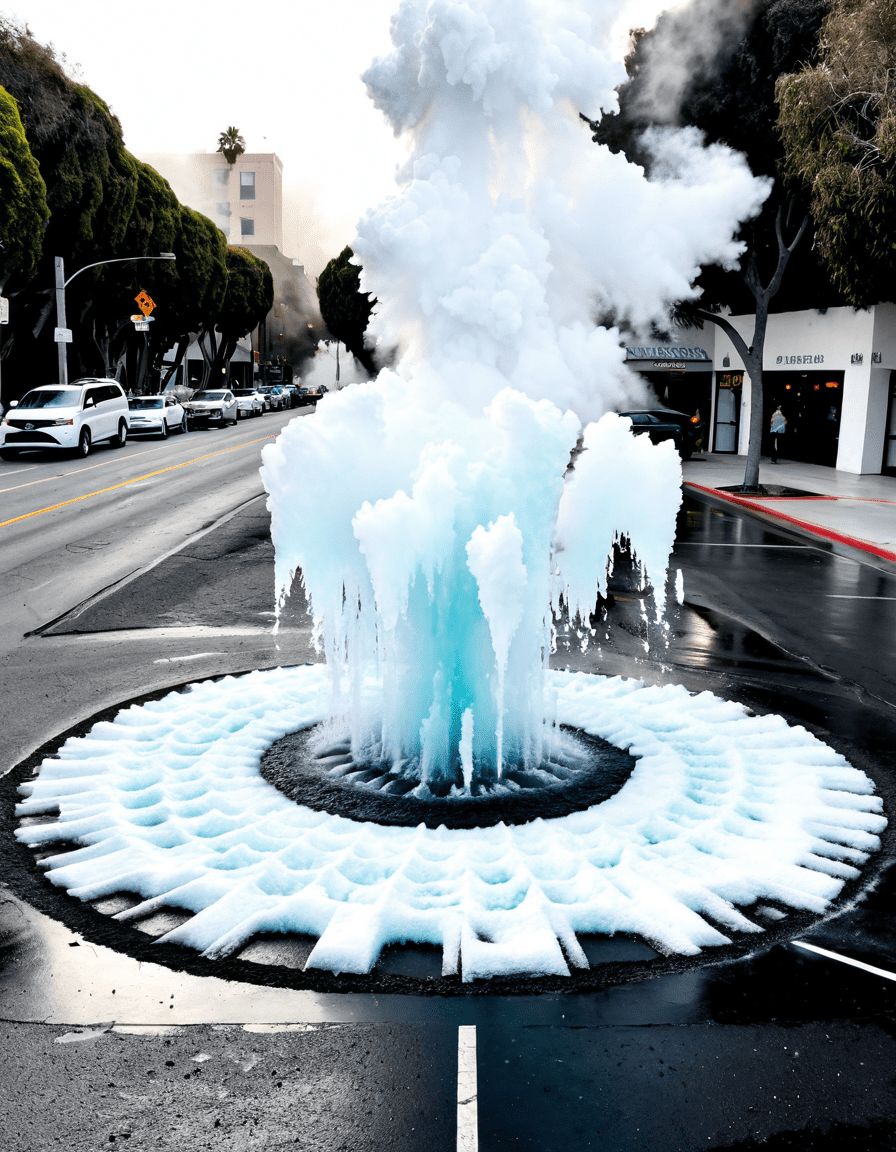
Beneath Wilshire Boulevard, where influencers sip matcha and art galleries pulse with curated minimalism, lies a crypt of Ice Age carnage. The La Brea Tar Pits aren’t just oddities—they’re revelations, each fossil a whisper from a lost world. These 7 facts transcend science; they are narrative, drama, and tragedy fossilized in asphalt.
1. The Dire Wolf Massacre: Over 4,000 of Their Skulls Found in One Pit
Pit 61 holds a death toll unmatched in paleontology: over 4,000 dire wolf skulls, more than any other site on Earth. These fearsome canids—Canis dirus—were larger and more robust than modern gray wolves, with bone-crushing jaws evolved to dominate Pleistocene megafauna. Yet they fell not to rivals, but to la brea’s sticky deception.
Fossil evidence shows dire wolves arrived in packs, drawn by the cries of mammoths or bison mired in asphalt. In their eagerness, they too sank—unable to escape the slow, suffocating embrace. The concentration of their remains reveals a species that lived by the pack and died by it. It’s a cautionary tale: even apex predators aren’t immune to fashion’s favorite trap—going too hard for the look.
Today, dire wolves live on in pop culture—from Game of Thrones to TikTok memes—yet their real legacy is buried in la brea. If Pocoyo taught us anything about play and consequence, the dire wolf teaches us that curiosity without caution can be fatal. And much like the mythic bond between Tom And Raquel, the connection between predator and prey here is eternal—frozen in time and tar.
2. Saber-Tooths Were Social—And That’s Why So Many Died Together
For decades, Smilodon fatalis—the saber-toothed cat—was imagined as a solitary, brooding assassin. But la brea’s fossil record tells a different story: over 2,000 saber-tooth specimens suggest they hunted and lived in social groups, much like lions. High rates of healed injuries—broken bones, degenerative joint disease—indicate wounded individuals were supported, not abandoned.
They likely followed dire wolves to trapped prey, creating a deadly feedback loop. One cat would approach, sink, and roar—drawing others to its aid. In minutes, an entire pride could be lost. This social instinct, so key to survival, became their downfall.
It’s a paradox worthy of casino movie lore: the traits that ensured their dominance in life sealed their fate in death. Like a couture gown that catches fire on the runway, evolution’s brilliance can’t always predict disaster. And while Lolita might dazzle with illusion, la brea offers a rawer truth—beauty, strength, and loyalty can’t save you from the wrong step.
3. The La Brea Bee Nest Reveals a 40,000-Year Climate Bombshell
In 1971, excavators unearthed a perfectly preserved ancient bee nest—not of the honeybee, but Anthophora, a solitary, ground-nesting species. Radiocarbon dating placed it at 40,000 years old, and pollen trapped in its cells revealed a bombshell: Los Angeles once hosted a cooler, wetter climate with abundant flowering plants and coastal sage scrub.
This tiny nest rewrote assumptions. Scientists had believed Ice Age L.A. was arid, but the bees told a different story—one of seasonal blooms, moderate temperatures, and biodiversity. The nest was not just shelter; it was a seasonal climate log, packed with pollen from plants no longer native to the region.
Like a vintage Chanel inventory listing extinct fabrics, this find shows how much has been lost. The bees’ world—lush, floral, temperate—contrasts sharply with today’s drought-stressed, smog-choked basin. And as climate change accelerates, the bee nest stands as a haunting fashion forecast: what was lost may never return.
4. Microfossils Show L.A. Was Once Covered in Juniper Forests
Beyond bones, la brea preserves the unseen—microfossils of plants, insects, and fungi. Thousands of juniper (Juniperus) pollen grains have been extracted from asphalt samples, suggesting vast woodlands blanketed the region. These forests thrived between 15,000 and 30,000 years ago, when temperatures averaged 5–7°C cooler than today.
Juniper woodlands attract deer, camels, and browsing ground sloths—all of whom met their end in la brea. Their fossils, alongside plant remains, paint a picture of a green, biodiverse L.A., a far cry from the asphalt empire we know. Even the soil chemistry shows higher moisture retention, evidence of persistent fog and winter rains.
Today, junipers grow in the mountains, not the flats. Their absence speaks volumes about urban sprawl and ecological amnesia. If Primo were a landscape, he’d be this lost forest—strong-scented, resilient, and quietly erased. And while we chase urban renewal, la brea asks: what are we building over?
5. A Human Woman Died Here 10,000 Years Ago—But Her Dog Was Never Found
In 1914, workers uncovered the partial remains of a woman, later dubbed “the La Brea Woman,” buried in asphalt-dampened soil. Radiocarbon dating placed her death at 10,250 years ago, making her the oldest human found in California. She was approximately 18–25 years old, with evidence of dental wear suggesting a tough, fibrous diet.
What’s haunting is what’s missing: no dog remains were found with her, despite evidence that early North Americans buried with their canines. In other Ice Age sites, human-dog burials are common—symbols of loyalty, companionship, and spiritual journeying. Her solitary rest suggests abandonment, tragedy, or a lost bond.
Was her dog trapped earlier in la brea? Did it flee? Or was it never hers to begin with? We may never know. But her story resonates in an age obsessed with connection—like the unanswered texts in a failed relationship. While Emily Tennants films explore modern isolation, this ancient woman’s silence echoes even deeper. Her story is a reminder: even in death, some bonds are broken.
6. The Fossil That Shouldn’t Exist: A Tropical Parrot from the Ice Age
Among the mammoths and saber-tooths, paleontologists found something impossible: a parrot fossil. Species unidentified but clearly a member of the Psittacidae family, this bird thrived in a Los Angeles far warmer than the Ice Age norm. Its presence 11,000 years ago suggests microclimates existed—pockets of tropical warmth along ancient river corridors.
Parrots require year-round fruit and warmth—conditions absent in glacial L.A. Yet here it is: proof of a forgotten Eden, where palm groves and riparian refuges sheltered exotic life. This single fossil challenges climate models and expands our vision of Pleistocene ecology.
Like a sequined jacket in a minimalist collection, this parrot doesn’t fit—but it’s glorious. It suggests that la brea wasn’t just a death trap, but a crossroads of worlds. And if Lobo symbolizes the wild heart of nature, this parrot is its flamboyant soul—feathers blazing against the ice.
7. Predators Outnumbered Prey—Because the Ecosystem Was a Death Trap by Design
In a healthy ecosystem, prey outnumber predators. But at la brea, the ratio is inverted: carnivores outnumber herbivores 9 to 1. Dire wolves, saber-tooths, American lions—all are vastly overrepresented. Why?
Because the tar pits didn’t kill at random. They functioned as predator traps: herbivores occasionally sank, but it was the scavengers and hunters that flocked to them, only to meet the same fate. The site became a natural selection snare—eliminating the bold, the hungry, the curious.
Evolution favors the intelligent and cautious, but la brea favored the asphalt-resistant (a trait that doesn’t exist). Over millennia, this skewed the fossil record and possibly weakened apex predator populations. It wasn’t just death—it was ecological sabotage by geology.
Today, it’s a metaphor for urban life: Los Angeles still lures the ambitious, the bold, the starry-eyed—and some never make it out unscathed. Like a high-stakes game at the beach house, the city promises glamour but demands sacrifice.
Everyone Thinks La Brea’s an Evolutionary Graveyard—But It’s Actually a Behavioral Crime Scene
La brea is not a cemetery. It’s a crime scene—one where the victims were caught not by violence, but by instinct. Every fossil tells of an animal that followed its nature to destruction: the dire wolf chasing prey, the saber-tooth investigating movement, the vulture descending on carrion.
They weren’t stupid. They were predictable. Evolution had trained them to respond to struggle, to opportunity, to hunger. And la brea exploited that like a master manipulator.
Trapped by Curiosity: Carnivores That Died Trying to Feed
The real killer wasn’t the asphalt—it was curiosity. Scavengers like the extinct Teratornis merriami, a giant vulture with a 12-foot wingspan, likely circled the pits for days, waiting for meals that never came. Fossil counts show over 100 individuals of this species—all lured, all lost.
Coyotes, foxes, even the agile Miracinonyx (American cheetah) are found in high numbers—not because they lived here, but because they couldn’t resist the scent of death. Like influencers drawn to viral drama, they arrived for the spectacle and never left.
This behavioral bias is now a scientific goldmine. By studying what got trapped, researchers learn not just who lived in Ice Age L.A., but how they acted. It’s fashion anthropology: what they wore (fur, fang, feather) and how they moved (bold, cautious, desperate). And just as the legend of Zorro endures in L.A.s mythos, la brea preserves the untold stories of those who played by nature’s rules—and lost.
Why 2026 Could Rewrite La Brea’s Story Forever
In 2026, a new excavation project dubbed “Project 2026” will launch beneath the Page Museum, targeting a 50-foot-deep trench long considered too risky. Using ground-penetrating radar and micro-drilling tech, scientists aim to extract undisturbed sediment layers dating back 50,000 years—potentially uncovering entirely new species or, more tantalizingly, evidence of early human activity in North America.
This isn’t just archaeology—it’s a cultural intervention. If human tools or fire pits are found deeper than the La Brea Woman, it could shift the timeline of human migration in the Americas. And in a city built on reinvention, la brea may yet deliver a plot twist.
The Urban Wildfire Effect: Smoke, Asphalt, and Fossil Exposure in Climate-Stressed L.A.
Climate change is accelerating fossil exposure. Increased heat and drought make the asphalt more fluid, while urban wildfires wash sediment into the pits, revealing new bone clusters. After the 2020 Bobcat Fire, researchers found a cache of small mammal bones previously sealed underground.
Smoke particles from distant blazes now coat the pits, altering chemical preservation. Paradoxically, destruction is leading to discovery. But with each storm and fire, there’s risk: fossils can degrade before they’re documented.
It’s like a couture gown left in the rain—ephemeral beauty, lost to time. And as L.A. grapples with its own environmental reckoning, la brea becomes a mirror: what we bury today may resurface tomorrow, changed and unsettling.
What Happens When the Past Won’t Stay Buried—And the Pits Aren’t Done Killing
La brea is not a relic. It’s alive—bubbling, shifting, consuming. In 2021, a sinkhole opened near the Miracle Mile, swallowing part of a drainage system. It wasn’t a collapsed pipe. It was asphalt migration—a reminder that the pits are still expanding.
And while we calculate budgets with a car loan calculator google and chase trends, la brea continues its silent work. It has already claimed mammoths, lions, and a young woman with no name. Who’s next?
The truth is, la brea doesn’t care about fashion. It predates it. But in its dark embrace, it holds a lesson: everything that rises, sinks eventually. Even stardom. Even asphalt. And like every great story in Kjj, the most enduring legacies are the ones that refuse to be forgotten.
la brea: Where Ice Age Drama Met Sticky Death
Ever heard of a place so gruesome it turned animals into fossils like macabre popcorn? Welcome to la brea—yes, the La Brea Tar Pits, where “la brea” literally means “the tar” in Spanish, but most folks don’t realize that’s kind of the whole point. Thousands of creatures got trapped in the goo over 50,000 years,( lured by water, struggling animals, or just bad luck—and unlike quicksand, this sticky stuff didn’t swallow them fast. It was slow, messy, and attracted predators like a dinner bell, which only added to the fossil pile-up. Smilodon fossils dominate the remains,( meaning sabertooth cats were either really dumb or really hungry—either way, they didn’t see that tar coming.
The Pits That Time Forgot
You’d think predators were the kings of la brea, but get this: coyotes are actually the most commonly found carnivore fossil there. Over 400 individual coyote skeletons have been pulled from the pits.( While sabertooths get all the headlines (thanks, Flintstones), the crafty coyote was clearly thriving—even if some got a little too close to an easy meal. And speaking of meals, some dire wolves were found with bones from other dire wolves inside their stomachs—yep, cannibalism was likely part of the survival game when dinner got stuck in tar. Amber-like asphalt preserved bones so well, scientists can study ancient proteins,( giving us rare insights into Ice Age biology. Talk about hitting the paleontological jackpot.
Not Just a Death Trap—A Snapshot in Time
The la brea pits aren’t just a graveyard; they’re a time capsule that still reveals new secrets. Every few years, a new excavation uncovers a trove of bones, plants, even ancient insects that paint a full picture of Pleistocene life. One deposit revealed an entire ancient ecosystem, from mice to mammoths,( showing how diverse the area was before the ice retreated. That sticky asphalt didn’t just kill animals—it froze a moment in Earth’s history, right in the middle of modern-day Los Angeles. So next time you’re stuck in LA traffic, just remember: you’re literally driving over thousands of years of la brea drama. Now that’s something to think about.