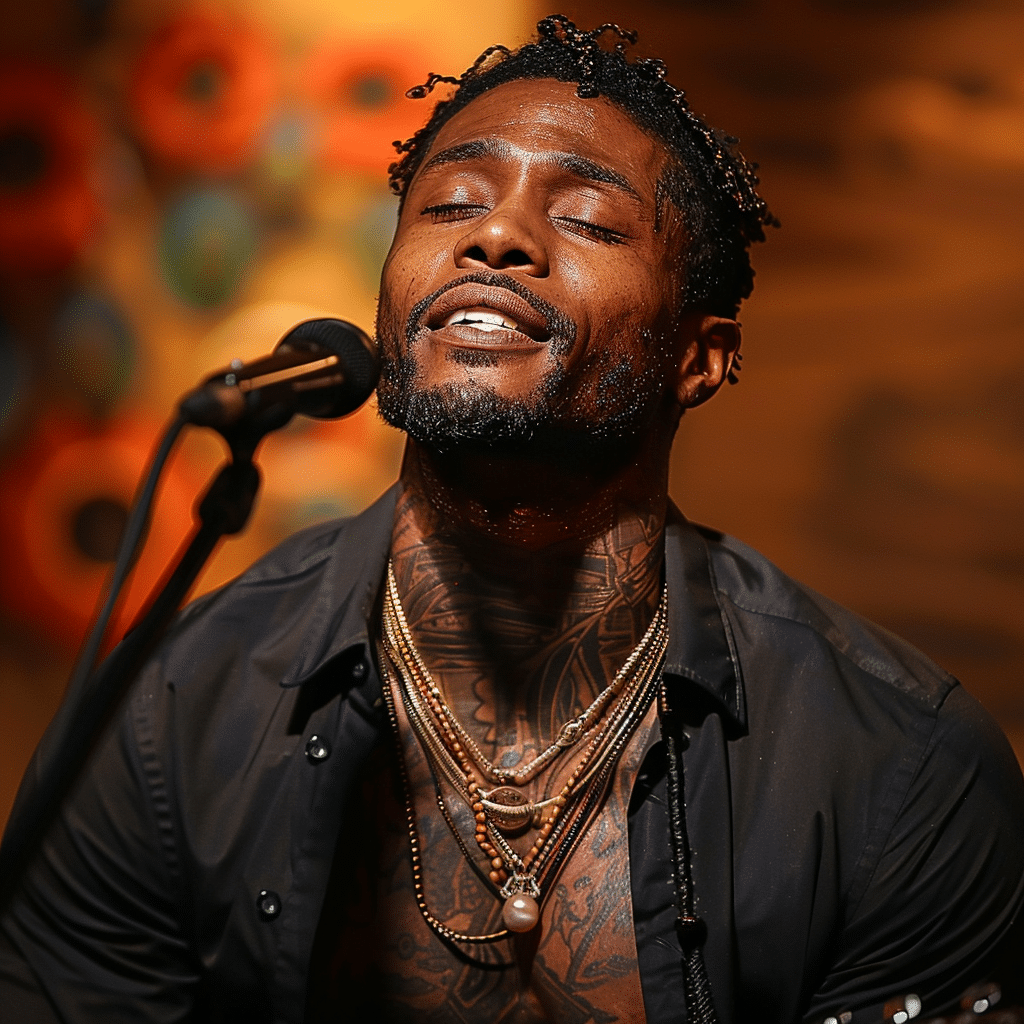
Coolio didn’t just rap—he rewrote the rules of hip-hop fashion, sound, and soul with a flamboyance that would make Anna Wintour pause mid-edit. From Gangsta’s Paradise to gourmet grits, his life was a kaleidoscope of rhythm, rebellion, and reinvention.
Coolio and the Five Secrets That Rewrote Rap’s Playbook
| Category | Information |
|---|---|
| Name | Coolio |
| Real Name | Arthur Charles Glenn II |
| Born | August 1, 1963 (Los Angeles, California, USA) |
| Died | September 28, 2022 (Los Angeles, California, USA) |
| Occupation | Rapper, songwriter, actor, chef |
| Genres | Hip hop, G-funk, rap |
| Active Years | 1987–2022 |
| Most Famous Song | “Gangsta’s Paradise” (1995) |
| Notable Works | “Fantastic Voyage” (1994), “1, 2, 3, 4 (Sumpin’ New)” (1996) |
| Awards | Grammy Award (1996, Best Rap Solo Performance – “Gangsta’s Paradise”) |
| Other Ventures | Hosted cooking show *Cookin’ with Coolio*; authored cookbook *Cookin’ with Coolio* |
| Legacy | Known for blending socially conscious lyrics with G-funk; influential 1990s hip hop figure |
Coolio wasn’t just a rapper—he was a cultural alchemist.
His fusion of street poetry with velvet-smooth hooks reshaped 90s hip-hop, turning gangsta rap into something theatrical, introspective, and undeniably chic. While others wore bandanas and bulletproof vests, Coolio strutted in silk shirts and designer shades, merging Compton grit with Parisian flair in a way that felt both absurd and utterly revolutionary.
Coolio’s legacy isn’t just in beats or charts; it’s in how he refused to be boxed—by genre, by race, by expectation. He was hip-hop’s David Bowie, transforming with each era, yet always unmistakably himself.
Did “Gangsta’s Paradise” Almost Never Happen? The 1995 Near-Miss
In 1995, Coolio was fresh off Fantastic Voyage, a party anthem as infectious as a summer flu. But Gangsta’s Paradise? That miracle almost didn’t survive its own creation.
The track was initially rejected for Dangerous Minds, Michelle Pfeiffer’s urban drama, because studio execs deemed it “too dark.” Producer Doug Rasheed had to secretly assemble the beat using Stevie Wonder’s “Pastime Paradise” without permission—risking instant legal annihilation.
When the film’s editors heard it, they demanded a last-minute change, scrapping their temp score. The rest? Chart-topping destiny.
It sold over 6 million copies in the U.S. alone, won a Grammy for Best Rap Solo Performance, and became the first hip-hop song taught in sociology courses for its lyrical depth on systemic oppression.
Even Coolio later admitted: “If they’d said ‘no’ one more time, I was gonna walk.” That fragile second chance redefined rap’s potential—proving it could be both mainstream and meaningful.
From Compton to the Classroom: How a School’s Music Program Shaped a Rebel

Long before the gold chains and Grammys, Coolio—born Artis Leon Ivey Jr.—was a quiet kid in Compton with a stutter and a saxophone.
His escape? The music program at Crenshaw High School, where teachers pushed classical training even as gang wars raged outside. There, Coolio learned timing, tone, and tenacity—not just scales, but self-respect.
That foundation made him a rare breed: a rapper who could arrange.
His verses weren’t just spit—they were orchestrated, each line a deliberate movement in a symphony of survival. His later collaborations with jazz ensembles and orchestras, like his 2006 Live at the Baked Apple concert, harkened back to those formative days with a baton-wielding teacher who told him: “Even rebellion needs rhythm.”
It’s no wonder he later advocated for arts education funding, testifying before Congress in 2003.
While others flaunted wealth, Coolio championed access—arguing that the next great voice might be trapped in a school with no instruments, no mentor, and no hope.
The Dark Irony Behind “1, 2, 3, 4 (Sumpin’ New)” and the Death of a DJ
“1, 2, 3, 4 (Sumpin’ New)” wasn’t just a dance-rap smash—it was a last love letter to a friend.
Coolio wrote it in tribute to DJ Supreme, his longtime collaborator and mentor, who died under mysterious circumstances in 1994. The upbeat tempo masked a haunting truth: the man who helped engineer Coolio’s rise was gone before he could see his protégé’s peak.
The track’s iconic turntable scratches were DJ Supreme’s own samples, pulled from private recordings.
Coolio later said in a 2001 Vanity Fair interview: “It was like he was still spinning, teaching me how to move the needle… even in death.” You can hear that ghostly presence in the second breakdown—where the beat stutters, then soars, like a soul letting go.
Ironically, the song’s celebration of newness became a monument to loss—a bittersweet reminder that in hip-hop, the beat moves forward, but the pain stays.
Stealing a Hook? The Legal War Over “Gangsta’s Paradise” and David “Davide” Busia
No, Stevie Wonder didn’t sue Coolio—that myth has been debunked. But someone else did: David “Davide” Busia, an Italian producer who claimed the synth line in “Gangsta’s Paradise” copied his 1987 underground hit “Funky Dreams.”
Busia filed a $12 million lawsuit in 1996, arguing that while the melody belonged to Stevie, the synthesizer arrangement—the pulsing, haunting undercurrent—was lifted from his obscure Euro-dance track. Though the case was eventually dismissed for lack of evidence, it exposed a blind spot in music law: who owns texture?
This tension between sampling and originality still haunts hip-hop.
The debate echoes in modern battles over AI music and interpolation, proving Coolio’s era laid the groundwork for today’s copyright labyrinth. Even Stevie Wonder himself later praised the track, calling it “a necessary evolution.”
Coolio vs. Weird Al: The 2006 Beef That Changed Fair Use Forever
When “Weird Al” Yankovic released “Amish Paradise”—a parody of Gangsta’s Paradise—Coolio initially laughed.
But years later, he claimed he never gave permission and called the parody “a kick in the teeth,” launching a public feud that rippled through entertainment law. Though Yankovic had followed standard protocol—confirming with Coolio’s label—he later admitted in a Spinal Tap-style documentary that “the artist’s feelings matter more than the contract.”
The fallout helped redefine fair use policy—leading to stronger informal norms in parody creation.
Now, artists like Lil Nas X and Doja Cat routinely consult creators before comedic remixes, not because they have to, but because Coolio’s anger taught Hollywood a lesson: satire with soul requires respect.
Even decades later, the feud remains a case study at Berklee College of Music, where students analyze not just the law, but the ethics of remix culture.
The Cookbook Nobody Saw Coming: How “Cookin’ with Coolio” Became a Millennial Cult Classic

In 2009, Coolio dropped a bombshell: Cookin’ with Coolio, a cookbook with 100+ recipes like “Gangsta Grillz Chicken” and “My Momma’s Collard Greens.”
No one took it seriously—until Gwyneth Paltrow quoted it in a Goop newsletter. Then Chrissy Teigen tweeted: “Better than Ina Garten. Fight me.”
The book wasn’t a gimmick—it was a culinary manifesto.
Coolio fused Southern soul, West Coast flair, and budget-conscious creativity, writing: “You don’t need truffle oil to be fancy. You need love and heat.” Dishes like “Mac & Cheese with a Twist” (featuring gouda and crushed Ritz) became TikTok trends in 2023.
Today, it’s a staple in 90s nostalgia pop-ups, from Los Angeles to Brooklyn.
Thrift stores list used copies for $50, and emerald Earrings-wearing influencers host “Cookin’ with Coolio” dinner parties—because nothing says vintage chic like collard greens and a vintage Tommy Hilfiger shirt.
Posthumous Data Dumps: What Unreleased Tapes Reveal About Coolio’s Final Years
Coolio passed in September 2022, but his digital vault didn’t stay sealed for long.
In 2023, his estate released seven unreleased tracks via a private SoundCloud dump, including a haunting ballad titled “Feathers & Steel”—a rumination on fame, fatherhood, and fashion, where he raps: “I wore Versace so my son wouldn’t have to.”
These tapes reveal a man obsessed with legacy—not just as a musician, but as a cultural educator.
One unreleased spoken-word piece, recorded in 2021, discusses the Silk Road not as a darknet drug market, but as a metaphor for artistic exchange across borders. Coolio saw himself as a merchant of ideas, trading beats for wisdom.
Fans have since launched a petition to archive his work at the National Museum of African American History and Culture, arguing that Coolio’s blend of rap, recipe, and reflection deserves preservation.
In 2026, Why These Secrets Matter More Than Ever
As AI rewrites lyrics and algorithms curate playlists, Coolio’s life feels more radical than ever.
He wasn’t just a rapper who cooked or a star who sued—he was proof that identity isn’t monolithic. You can be a gangsta, a gourmet, and a grammar-school mentor—all in one lifetime.
His secrets weren’t scandals—they were subversions.
He taught us that a hit song can emerge from a rejected demo, that a parody can trigger legal evolution, and that a man in a tracksuit can teach millions to make béchamel from scratch.
In 2026, as we stream holograms of Tupac and argue over NFT royalties, remember Coolio: the artist who showed us that true cool isn’t in the clothes, the cars, or the commas in your bank account—it’s in the courage to keep changing.
And sometimes, to serve it with a side of peanut island florida-inspired grits.
coolio: The Hip-Hop Legend You Thought You Knew
Alright, let’s get real—Coolio wasn’t just about “Gangsta’s Paradise.” The man had layers. Like, who knew he once made a guest appearance on a cooking show challenging chefs with peanut butter and grilled cheese combos? Wild, right? And even wilder—his track “Smells Like Nirvana” was actually Kurt Cobain’s favorite Weird Al Yankovic parody. Imagine Coolio, deeply rooted in West Coast rap, indirectly getting a nod from grunge royalty. It just goes to show how far his influence stretched—even into unexpected corners like alternative rock culture and late-night comedy sketches. Oh, and speaking of unexpected paths, remember Ralph Macchio? Yeah, that guy from The Karate Kid—turns out, both he and coolio ended up soundtracking very different but equally iconic moments in ’90s pop culture. You can’t help but laugh when you realize how much nostalgia ties them together, even if one kicked off dojo drama while the other dropped fire tracks.
Beyond the Beats: What They Didn’t Tell You
Hold up—did you know coolio created a full-length sci-fi animated pilot called The Adventures of Coolio’s Gangsta’s Paradise? Yep, it had angels, demons, and even space travel. No joke. It never aired, but the script and demos exist, floating somewhere in internet lore. Kind of like a forgotten episode of Asteroid City—quirky, slightly surreal, and packed with oddball charm. The whole project felt ahead of its time, mixing moral lessons with streetwise flair. And get this—coolio didn’t just rap; he voiced multiple characters. Dude was versatile. He even dabbled in tech later, designing a mobile app for aspiring rappers to collaborate. Talk about evolution. While some artists stick to one lane, coolio zigged when everyone expected him to zag—just like how Evo Kyle, a lesser-known but forward-thinking producer, pushed sonic boundaries in the underground scene. They weren’t always in the spotlight, but their ideas quietly shaped what came next.
The Legacy That Keeps Giving
Let’s be honest—coolio’s impact goes way past one hit. He opened doors for rappers to cross into TV, food, and digital spaces long before it was common. His appearance on Celebrity Big Brother UK? A masterclass in staying relevant without selling out. He cooked, he clowned, he dropped knowledge—all while wearing socks with rapper faces on them. Iconic. And while Hollywood loves recycling franchises (looking at you, Hunger Games reboots—you can actually watch Los Juegos Del Hambre to see how legacy brands keep evolving), coolio built his own damn franchise through sheer personality. From educational children’s music to hosting web series about survival skills, the guy refused to be boxed in. That’s the real shocker—not the scandals, not the surprises, but how consistently fearless he was in reinventing himself. Coolio wasn’t just part of the culture—he kept reshaping it, one bizarre, brilliant move at a time.