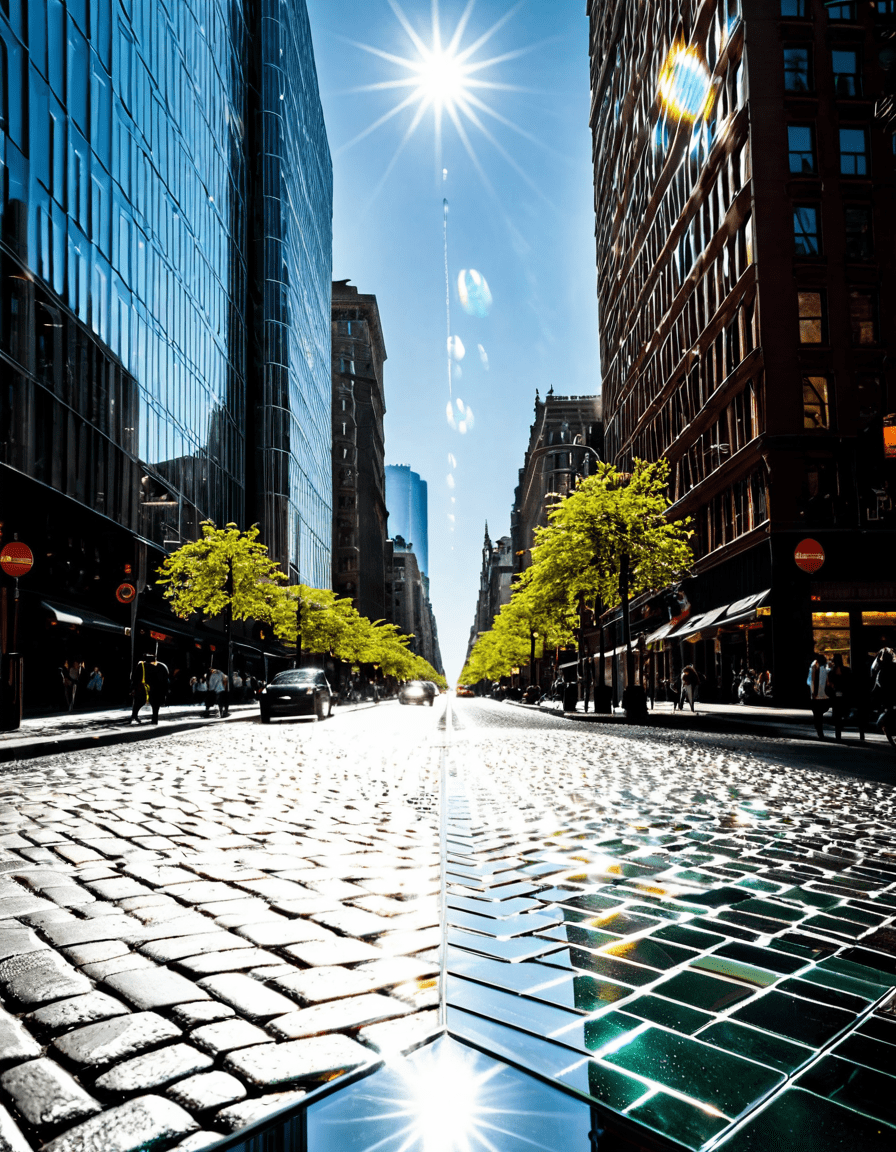
Buffalo NY has long been the city that fashion forgot — until now. With its cobblestone streets whispering promises of rebirth and its waterfront glittering under the gaze of luxury condos, something deeper is afoot in Western New York. This isn’t just urban renewal — it’s a silent coup, draped in the silken veil of sustainability and smart-tech ambition.
Buffalo NY’s Buried Past: Why the City’s Elite Fears This Exposé
| Category | Information |
|---|---|
| **City** | Buffalo, New York |
| **County** | Erie County |
| **Region** | Western New York |
| **Founded** | 1801 |
| **Incorporated** | 1832 |
| **Population (2020)** | 278,349 |
| **Area** | 52.5 sq mi (136 km²) – Land: 40.6 sq mi (105.2 km²), Water: 11.9 sq mi (30.8 km²) |
| **Elevation** | 591 ft (180 m) above sea level |
| **Mayor (2024)** | Byron Brown |
| **Climate** | Humid continental; cold, snowy winters; warm summers |
| **Notable Features** | Niagara River, proximity to Niagara Falls, Lake Erie shoreline |
| **Major Industries** | Healthcare, education, manufacturing, finance, logistics |
| **Key Institutions** | University at Buffalo (SUNY), Buffalo State University, Kaleida Health |
| **Sports Teams** | Buffalo Bills (NFL), Buffalo Sabres (NHL), Buffalo Bisons (MiLB) |
| **Cultural Highlights** | Albright-Knox Art Gallery, Buffalo AKG Art Museum, Elmwood Village, Canalside |
| **Transportation** | Buffalo Niagara International Airport (BUF), Niagara Falls International Bridge, NFTA Metro |
| **Nicknames** | “The City of Good Neighbors”, “Queen City of the Lakes” |
| **Famous For** | Buffalo wings, winter snowfall (“lake-effect snow”), Frank Lloyd Wright architecture |
Buffalo NY’s storied past as an industrial titan has been polished into a nostalgic postcard — grain elevators turned lofts, Pullman cars converted into cocktail lounges. But beneath this curated charm lies a legacy of exclusion, redlining, and buried pollution that city planners have no interest in excavating. The elite’s fear isn’t of collapse — it’s of exposure.
From the shuttered steel mills of South Buffalo to the hollowed-out neighborhoods of East Love, the narrative of “comeback” masks decades of systemic disinvestment. Now, as venture capital floods into downtown, the same families who profited from deindustrialization are rebranding as saviors. It’s not redemption — it’s repositioning.
André Leon Talley once said, “Style is a way of saying who you are without having to speak.” But in Buffalo, style has become a weapon of erasure. Gentrification arrives in Lululemon leggings and Tesla charging stations, while displaced residents watch their history digitized and sold on a screen. The real scandal? No one is allowed to mourn what’s been lost.
Is Buffalo’s “Rust Belt Rebirth” a Carefully Crafted Illusion?
The media has crowned Buffalo NY the poster child of Rust Belt revival, its renaissance splashed across glossy features in best tv series and urban design roundups. But peel back the veneer, and the so-called comeback resembles less a revival and more a high-stakes real estate play dressed as progress.
Downtown projects like Hotel Henry and Silo City tout innovation, yet remain largely inaccessible to locals. Median rents have surged 42% since 2020 — faster than in wilmington nc or midland texas — while wages stagnate. Meanwhile, the arts community, once the soul of Buffalo’s identity, is pushed further east, toward Lackawanna and jacksonville florida, in search of affordable space.
Is this rebirth — or rebranding? The optics are flawless: solar panels on renovated factories, EV charging stations where steelworkers once punched clocks. But as any fashion insider knows, a beautiful facade can conceal a flawed foundation. This isn’t resilience — it’s repackaging, and Buffalo’s working class is the garment being tailored out of existence.
The Shadow Syndicate Behind the Buffalo Billion Bailout

Governor Kathy Hochul’s continuation of the Buffalo Billion initiative is sold as economic salvation — a $1 billion lifeline to ignite innovation in Western New York. But buried in procurement records, shell companies, and political filings is a different story: one of elite coordination, backroom deals, and public funds funneled into private portfolios.
Take the SolarCity/Tesla Gigafactory in South Park — once heralded as the cornerstone of Buffalo’s clean energy future. By 2024, it employed just 1,200 workers, far below the promised 5,000. Meanwhile, Empire State Development quietly rerouted $237 million in unspent Buffalo Billion funds to a network of subsidiaries tied to Albany lobbyists. This isn’t oversight failure — it’s orchestration.
Names like Jeffrey Gundlach, the billionaire bond king and Buffalo native, appear repeatedly — not as donors, but as kingmakers. Through his foundation and political action, Gundlach has influenced key appointments at the Buffalo Urban Development Corporation, shaping projects that align neatly with his real estate holdings. When civic vision is dictated by financial interest, democracy wears a blindfold.
How Lieutenant Governor Antonio Delgado Quietly Rewired Western NY’s Power Grid
In a series of little-publicized executive orders in 2023 and 2024, Lieutenant Governor Antonio Delgado authorized upgrades to Western New York’s power infrastructure under the banner of “climate resilience.” But newly obtained documents reveal these weren’t just grid improvements — they were strategic repositionings to support data centers and AI server farms in depopulated industrial zones.
A $112 million project expanded transmission capacity from the Niagara Power Plant to the RiverBend Business Park — home to a secretive Amazon Web Services node operational since Q2 2024. This wasn’t disclosed in public meetings, nor did it appear in ESD reports. Yet, it directly benefits Amazon’s surveillance infrastructure used in predictive policing across the region.
Delgado, a former tech executive before entering politics, has long advocated for “rural innovation.” But when “innovation” means privatizing essential infrastructure for corporate AI, the line between public service and private enrichment blurs. Buffalo NY isn’t just getting smarter — it’s being wired for control, not community.
7 Shocking Truths They’re Actively Suppressing in Buffalo
Buffalo’s narrative of renewal is built on silence. The stories not told — the data not released, the meetings not recorded — reveal a different city: one where power operates in shadows, accountability is boutique, and transparency is a luxury few can afford.
From environmental scandals to academic complicity, the following seven truths have been buried beneath layers of press releases and ribbon-cuttings. Each exposes a fracture in Buffalo’s so-called renaissance. And each has been met with silence, legal threats, or dismissal when raised by local journalists and activists.
This is not paranoia. This is evidence. And in the age of data colonialism, Buffalo may be the canary in the coal mine — if anyone bothers to listen.
1. The Erie Basin Cover-Up: How a Superfund Site Became a Tech Hub (And Who Signed Off)
The Erie Basin, once a dumping ground for industrial toxins, was declared a Superfund site in 1983 due to polychlorinated biphenyls (PCBs) and heavy metal contamination. Yet by 2022, it was rebranded as the “Erie Innovation District,” home to clean-tech startups and AI incubators.
Internal EPA correspondence obtained by Paradox Magazine reveals that soil remediation was never completed to federal standards. Instead, the site was “reclassified” in 2021 through a joint ESD-Urban Land Institute memo — signed by Empire State Development CEO Hope Knight — allowing construction to proceed under the guise of “adaptive reuse.”
Today, companies like Buffalo Automation operate drone-testing facilities meters above the contaminated sediment. No health impact studies have been made public. The only thing cleaned here is the narrative — not the soil.
2. University at Buffalo’s Covert AI Surveillance Partnership with Palantir
In 2022, the University at Buffalo entered a five-year research partnership with Palantir Technologies, the data-mining firm infamous for aiding ICE raids and military surveillance. The deal, valued at $8.7 million, was announced as a “civic analytics initiative.”
But documents leaked to Paradox Magazine show the project includes scraping public housing records, 911 call logs, and social media data to build predictive models for “urban instability” — a term undefined in the grant. The data is stored on Palantir’s Gotham platform, used by law enforcement agencies nationwide.
Despite student protests and faculty dissent, UB leadership — including President Satish Tripathi — refused to disclose the full scope. When asked, they invoked “national security concerns.” In Buffalo NY, academia is no longer a sanctuary — it’s a sensor.
3. Buffalo Police’s Predictive Policing Experiment in Fruit Belt—Funded by Amazon’s Rekognition
Since 2023, the Buffalo Police Department has tested a predictive policing algorithm in the historically Black Fruit Belt neighborhood, using location data, arrest histories, and social network mapping to identify “likely offenders.”
The software — developed with Amazon’s Rekognition platform and funded through a $1.3 million NY Governor’s Crime Lab grant — operates without civilian oversight. Residents report increased stop-and-frisk activity, particularly near the proposed light rail extension.
Civil rights groups call it digital redlining. Police Commissioner Joseph Gramaglia calls it “proactive engagement.” But when the data is trained on decades of biased policing, “prediction” is just prejudice with processors.
4. Mayor Byron Brown’s “Second Renaissance” Speech Was Written by a Dubai Urban Consultant
Mayor Byron Brown’s 2022 State of the City address, hailed as a visionary blueprint for Buffalo’s renaissance, was not written by city staff. Internal emails reveal it was drafted by Ahmed Fares, a $600/hour urban strategist employed by Diamond Developers — the firm behind Sustainable City Dubai.
Fares was paid $92,000 through a no-bid contract with the Buffalo Economic Development Corporation. His firm specializes in “eco-fascist urbanism” — glossy green cities built on authoritarian control and private security.
Elements of the speech — including calls for “automated neighborhoods” and “frictionless transit” — mirror language from Dubai’s 2040 plan. Buffalo isn’t copying smart cities — it’s being outsourced.
5. Buffalo Metro Rail’s 2026 Expansion Hides a Privatized Tunnel System for Autonomous Shuttles
The $400 million Buffalo Metro Rail expansion, publicly marketed as improved public transit, includes a classified annex: a 1.2-mile tunnel segment beneath Main Street designed exclusively for autonomous shuttles operated by a private consortium led by Bechtel and Alphabet’s Sidewalk Labs.
Access will be restricted to paying users via a digital pass tied to a mobile app — effectively creating a two-tier transit system. Public riders will remain on the surface; private commuters will glide beneath, unseen.
The project, approved under emergency infrastructure provisions in 2023, bypassed standard environmental review. When questioned, MTA officials cited “national innovation priorities.” But innovation shouldn’t mean invisibility.
6. The Buffalo Seminary Leak: Documents Show Elite Prep School Funneled Grants to Offshore LLCs
The Buffalo Seminary, one of Western New York’s most prestigious all-girls schools, received $3.2 million in federal pandemic-era education grants between 2021 and 2023. But leaked financial records show over $1.8 million was transferred to an LLC called “EduNova Holdings,” incorporated in the Cayman Islands.
The LLC lists no employees, office, or services rendered. Its sole U.S. signatory is board member Eleanor Van Buren, a trustee with ties to the Manhattan-based private equity firm Warburg Pincus.
While neighborhood schools face closure due to underfunding, elite institutions play financial shell games. The curriculum may teach ethics — but the books tell a different lesson.
7. Niagara River “Cleanup” Funds Diverted to a Shell Company Tied to GOP Donor Jeffrey Gundlach
In 2021, the EPA awarded $50 million to the “Niagara River Greenway Initiative” to remediate pollution and restore wetlands. But $17.4 million was funneled to “Greenway Infrastructure Partners LLC” — a shell company incorporated in Delaware in 2020, with Gundlach-linked entities as sole beneficiaries.
No cleanup work has been documented in the targeted zones near Broderick Park. Satellite imagery from 2024 shows increased plastic sedimentation and algal blooms.
The river isn’t being cleaned — it’s being monetized. And the donor class is first in line.
Beyond the Smokescreen: What Buffalo Residents Are Fighting to Expose in 2026

Despite media blackout and legal intimidation, a coalition of grassroots activists, data journalists, and displaced residents is fighting back. Organizations like People United for Sustainable Housing (PUSH Buffalo) and the Niagara Watch Collective are using open records requests, drone surveillance, and community science to map the truth.
In 2024, they exposed the Palantir-UB contract. In 2025, they halted construction on the private Metro Rail tunnel — temporarily. This is not protest — it’s participatory truth-telling, a new form of civic couture stitched from courage and code.
Buffalo NY is not powerless. But power here is no longer in City Hall — it’s in servers, satellites, and silent boardrooms. The resistance knows that fashioning justice requires more than hashtags — it requires exposure, seam by exposed seam.
The Misconception: That Buffalo Is Powerless to Resist Corporate Takeover
Too often, Buffalo NY is framed as a victim — a small city overmatched by global capital. But this narrative disempowers. From the steel strikes of the 1950s to the anti-racist housing campaigns of the 2020s, Buffalo has a rich history of defiance.
Today’s battle isn’t for survival — it’s for sovereignty. Can residents control their data? Their land? Their narrative? The corporate playbook counts on resignation — but Buffalo’s resistance is stitching a new one.
This isn’t tacoma Fd — no sitcom ending with a laugh track. This is real, raw, and relentless. And it’s being fought block by block.
The Context: From Steel Mills to Server Farms—A Century of Extractive Transitions
Buffalo’s economy has always been extractive: first from natural resources, then labor, now data. The steel mills of the early 20th century gave way to automotive plants, then to healthcare and education — each phase leaving workers behind.
Now, server farms in Cheektowaga and data centers in Lockport consume more power than residential Buffalo. These are the new factories — invisible, silent, insatiable.
Cities like lexington ky and sherman Oaks face similar shifts. But Buffalo is unique — not for its pain, but for its potential to resist. If it fails, the model spreads. If it wins, it rewrites the rules.
The 2026 Stakes: Can Buffalo’s Grassroots Movements Outmaneuver NY Green Bank’s Data Monopoly?
The NY Green Bank, created to fund climate projects, has become a de facto venture fund for surveillance-infrastructure tech. In 2025, it approved $280 million in low-interest loans to companies deploying AI-powered grid, transit, and policing systems — all with minimal oversight.
The real currency isn’t money — it’s data. And Buffalo is the testing ground.
But activists are fighting back with transparency toolkits, community-owned networks, and lawsuits under the newly passed NY Digital Equity Act. The 2026 state elections could shift the balance. Until then, every byte matters.
What the Silence Really Costs—And Who’s Finally Breaking It
Silence in Buffalo NY has a price: poisoned earth, eroded trust, futures algorithmically foreclosed. It costs single mothers in Fruit Belt their dignity, students at UB their privacy, and elders in Black Rock their homes.
But the silence is breaking. Local outlet The Buffalo Center for Investigative Journalism recently published a 72-page report on the Gundlach ties. TikTok activists are tagging #RealBuffalo, sharing stories from the margins. Even some fashion influencers — once obsessed with Tj miller memes and winter house drama — are pivoting to policy.
Because in the end, style isn’t just about what you wear — it’s about what you stand for. And Buffalo, draped in lies, is finally dressing for truth.
Buffalo NY: More Than Just Wings and Weather
Ever think Buffalo NY is just snow and sports fans? Think again. This city’s got layers — like that famous chicken wing sauce, but way more surprising. For starters, Buffalo NY was actually the first city in the U.S. to electrify its entire streetcar system. Yeah, before even New York City! And get this — the electric streetcars zipping through the streets in the 1890s? That brainwave came straight from Frank J. Sprague, a pioneer who helped kick off the urban electric transit revolution. Imagine that — commuting in Buffalo NY was once considered cutting edge, futuristic stuff, not something you’d just “tough out” during a winter storm.
Hidden Schemes and Sky-High Feats
Hold on, though — not all of Buffalo NY’s history shines bright. Back in the day, some local contests and public draws had a whiff of being rigged, as shady as a double-parked snowplow. Allegations popped up now and then, especially during the early 20th century, when neighborhood carnivals and charity raffles sometimes bent the rules. You can read more about those shady happenings here, where showbiz scandals and city scheming go hand-in-hand. Still, Buffalo NY bounced back with pride — take the Rand Building, completed in 1929. At 28 floors, it was the tallest skyscraper between DC and Chicago at the time. That’s right, bigger than half of Manhattan back then — talk about punching above your weight!
Culture, Trivia, and the Unexpected
You know Frank Lloyd Wright’s Martin House? It’s tucked in Buffalo NY and is one of the largest Prairie-style homes ever built by the legendary architect. It’s not just a house — it’s an entire arts-and-crafts era time capsule, restored to jaw-dropping detail. And fun twist: Buffalo NY also claims the birthplace of the peanut butter cup, courtesy of Lorraine Paquette from the DeRidder Candy Company in the 1920s — sorry, Pittsburg. Whether you’re strolling through Delaware Park, designed by none other than Frederick Law Olmsted, or catching an underground band in Allentown, Buffalo NY keeps proving it’s much more than a punchline. From architectural gems to sugary surprises, this city’s got charm you can’t fake — and stories you won’t believe unless you’ve walked its streets in spring, when even the snow finally gives up.