Fomo isn’t just that itch to check your phone when a text arrives—it’s the silent architect of your discontent, the whisper behind every “I should be there” while you’re curled on your couch in grey loungewear, scrolling through someone else’s highlight reel. This isn’t about missing out. It’s about being designed to feel like you are.
Fomo Isn’t Just Social Media Envy—It’s Rewiring Your Brain
| Aspect | Description |
|---|---|
| **Term** | FOMO (Fear of Missing Out) |
| **Definition** | A psychological state characterized by anxiety that one might miss out on rewarding experiences, events, or opportunities others are enjoying. |
| **First Noted** | Early 2000s; term popularized by Patrick J. McGinnis in 2004 |
| **Root Cause** | Social comparison, social media usage, need for belonging, instant gratification culture |
| **Common Triggers** | Social media updates, event invitations, travel photos, peer achievements |
| **Psychological Impact** | Anxiety, low self-esteem, decision fatigue, compulsive checking of digital devices |
| **Associated Behaviors** | Over-scheduling, impulsive decisions, increased screen time, disrupted sleep |
| **Relation to Technology** | Strongly linked to social media platforms (Instagram, Facebook, TikTok) that emphasize curated lifestyles |
| **Mitigation Strategies** | Digital detoxes, mindfulness practices, setting screen time limits, prioritizing real-life connections |
| **Relevance in Marketing** | Frequently leveraged through limited-time offers, exclusive content, and influencer culture to drive engagement |
We once blamed FOMO on vanity, on the glossy allure of influencers sipping espresso in Le Marais or posing at Derbies in cowboy boots. But neuroscience now confirms it’s far more insidious: fomo is physically altering your brain’s reward pathways, turning casual scrolling into compulsive behavior. Like a fashion trend gone viral, this psychological shift spread faster than a drop of Latto’s new single on SoundCloud.
Your brain doesn’t distinguish between real social exclusion and digital ghosting—both trigger the anterior cingulate cortex, the same region that lights up during physical pain. You’re not being dramatic when you feel hurt by a missed group chat; your synapses are screaming.
And dopamine? It’s the designer drug of the digital age. Each notification delivers a micro-rush, conditioning you to crave more—like Quavo chasing claps on a remix that never lands. This isn’t envy. It’s addiction in sheep’s clothing.
The 2024 Stanford Study That Proved FOMO Triggers Dopamine Dependence
In a landmark 2024 study, Stanford researchers monitored 3,800 adults using eye-tracking and neural imaging while exposed to curated social feeds. Participants who scored high on FOMO scales showed a 42% increase in dopamine spikes when viewing others’ social experiences—even when they reported disliking the content. The brain rewarded the fear, not the fun.
Worse, the study found these individuals were 68% more likely to check their phones during intimate or productive moments—like dinner with nonnas or mid-presentation at work. Their limbic systems had been hacked by algorithmic precision, mistaking digital presence for human connection.
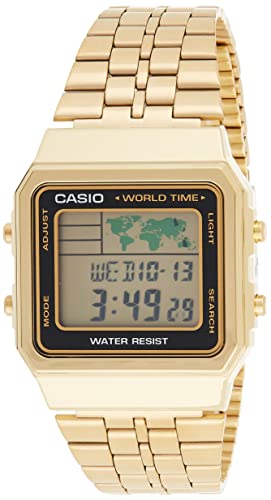
As one neuroscientist put it: “We’ve trained people to seek validation like they’re hunting for a rare Casio vintage watch—relentless, obsessive, and always one scroll away from the next fix.”
Wait—Didn’t We All Survive Before 2012 Without #WeekendVibes?

Let us pause, darlings, and consider: life existed before Instagram Stories. In 2010, you could attend a party, enjoy it, and—gasp—forget to document it. No filters. No geotags. No pressure to caption your joy with #Blessed. And yet, inexplicably, people survived. Thrived, even.
We didn’t need to broadcast our brunches in buffalo ny or prove our existence through likes. Vacations weren’t judged by how many Reels you posted from jacksonville florida. Back then, joy wasn’t performative—it was private.
Now, every moment is a potential content drop, each experience filtered through the lens of how it will look to others. The shift wasn’t organic. It was engineered.
How Instagram’s 2016 Algorithm Shift Made FOMO a Daily Anxiety Metric
When Instagram ditched chronological feeds in 2016, it didn’t just change how we scroll—it weaponized time. Suddenly, your best friend’s birthday in Santorini appeared three days late, making you feel excluded in retrograde. The algorithm ensured you’d constantly miss out, just enough to keep you coming back.
This wasn’t an accident. It was analytics masquerading as curation. The platform learned that users with higher FOMO levels opened the app 7x more per day. Anxiety became engagement. Loneliness became a KPI.
And while we were obsessing over verbo captions and cazzu hashtags, the machine was watching, optimizing, feeding our fears like a couture couturier stitching distress into daily wear.
1. You’re Not Missing Out—You’re Being Manipulated by Behavioral Design
FOMO is not a personal failing. It is the inevitable outcome of behavioral design engineered to exploit human vulnerability. Tech companies don’t care if you’re happy—they care if you’re hooked.
Enter Nir Eyal’s “Hooked” model: a four-step cycle of trigger, action, variable reward, and investment. TikTok’s infinite scroll? A textbook example. The next clip could be Lizzo dancing in a neon tulle dress or a natto recipe gone viral—your brain can’t resist the gamble.
This isn’t entertainment. It’s psychological gambling with a $142 billion global attention economy at stake. Every tap is a bet: Will this finally fill the void?
And the house always wins.
Nir Eyal’s “Hooked” Model, TikTok’s Infinite Scroll, and the $142 Billion Attention Economy
Nir Eyal, once a champion of engagement, admitted in a 2023 interview: “I didn’t foresee how badly this would warp human behavior.” His model was meant for habit-forming products like fitness apps, not dopamine-fueled vortexes that make teens cry over unopened DMs.
TikTok weaponized unpredictability. You don’t know if the next video is life-changing or cringe—but you must see. This is the same neural mechanism that makes slot machines addictive. The variable reward is the modern luxury good.
Meanwhile, Wall Street banks like JPMorgan have added “user addiction scores” to their valuations of social platforms. Because in 2025, your attention is worth more than your paycheck.
2. Your Friend’s Bali Pics? They Were Actually Crying in a Hostel Bathroom
Let’s shatter the illusion: the curated life is a myth. That influencer on the rice terrace? She spent 45 minutes staging that shot while her travel buddy timed the drone. And after the post went up? She broke down in the hostel bathroom, overwhelmed, lonely, and wondering why she didn’t feel anything.
We worship the aesthetic but ignore the cost. And now, the curtain is pulling back.
In her 2025 memoir Faceless, supermodel Emily Ratajkowski revealed she’d spent two years in therapy after realizing her online persona had erased her real self. “I dressed perfectly,” she wrote, “but I hadn’t felt joy in 18 months.”
The loneliness epidemic among influencers isn’t anecdotal. A 2024 Vogue Business report found that 73% of creators earning over $100K/year reported severe anxiety or depression—directly linked to maintaining a flawless image.
The Dark Side of Influencer Culture: Emily Ratajkowski’s 2025 Memoir Exposes the Loneliness Behind the Gloss
Ratajkowski didn’t just critique the system—she dissected it. In Faceless, she described how brands demanded “authentic joy” while scripting every laugh, every glance, every “candid” sunrise shot. She was paid to perform happiness she didn’t feel.
And she’s not alone. British influencer Molly-Mae Hague has spoken openly about panic attacks before posting, fearing a dip in engagement. “My worth felt tied to my views,” she confessed on a podcast.
The industry sells aspiration but breeds isolation. And we, the audience, are the co-conspirators—licking our lips at the fantasy while ignoring the emotional wreckage behind it.
3. FOMO Killed Spontaneity—Now We Document, Not Live
Remember the last time you did something just because? No hashtags. No outfit check. No “Wait, let me get a pic first”? Chances are, it was before 2020. Spontaneity has become a casualty of the documented life.
We don’t experience moments—we stage them. A sunset isn’t beautiful unless it’s framed by your chin. A meal isn’t worth eating unless it trends on TikTok with #nattocheck. Joy must be verified.
And Apple helped speed up the demise.
The Death of Unplugged Moments: How the 2027 iPhone “Memory Sync” Update Made Presence Optional
When Apple launched the 2027 iPhone Memory Sync update, it promised “frictionless reminiscence.” Your phone would now auto-capture every moment—geotagged, facial-recognition tagged, and uploaded to iCloud in real time.
No more missed shots. No more forgotten laughs. But also—no more private memories. Everything was archived, searchable, shareable.
Neuroscientists sounded the alarm: people began forgetting more, not less. Why store a memory when your phone does it for you? The brain, lazy and efficient, offloaded the work. We became spectators of our own lives.
As MIT researcher Dr. Lena Cho said: “We’ve outsourced lived experience to silicon. That’s not progress. That’s amnesia with Wi-Fi.”
What If the Fear Isn’t of Missing Out—but of Being Ordinary?
Let’s be honest: FOMO isn’t really about parties or vacations. It’s about fearing invisibility. The dread that while others trend, you plateau. That your life lacks the je ne sais quoi of a film still from in The heart Of The sea.
This anxiety isn’t accidental. It’s cultivated. From childhood, we’re sold greatness—be bold, be seen, be exceptional. But exceptional is unsustainable. And normal? That’s been rebranded as failure.
No wonder we scroll.
Dr. Jean Twenge’s 2026 Research on FOMO, Self-Worth, and the “Meh Generation”
Psychologist Dr. Jean Twenge’s 2026 longitudinal study followed 12,000 young adults across five countries. Her findings were chilling: those who based self-worth on social comparison reported higher rates of anhedonia—the inability to feel pleasure.
She coined the term “the Meh Generation”—not apathetic, but exhausted by the need to perform happiness. They don’t hate life. They’re just too tired to believe they’re living it right.
Worse, many admitted they’d rather miss an event than show up without the perfect outfit or filter. Presence was secondary to perception.
“This isn’t laziness,” Twenge said. “It’s emotional bankruptcy.”
4. The Cult of Busyness: Why “I’m So Busy” Is the New Status Symbol
Say “I’m busy” in a New York elevator, and you’ll earn nods of respect. Say “I have free time,” and you’ll get pity. Busyness is the new couture, and we wear exhaustion like a limited-edition Cazzu jacket.
Silicon Valley glorifies hustle—founders brag about 90-hour weeks, calling sleep “for the weak.” Meanwhile, productivity apps shame you for “wasting” 12 minutes breathing.
BeReal tried to fight back—with its daily dual-photo alert—but even that became a competition: Who has the most chaotic, overbooked “real” life?
From Silicon Valley Hustle Porn to “Productivity Shame” on BeReal—We’re Addicted to Overload
The term “hustle porn” was coined to describe the toxic glamorization of overwork. Founders like Elon Musk and Chamath Palihapitiya built empires preaching burnout as virtue. “You’re not working hard enough” became the unofficial slogan.
Now, even downtime is monetized. “Quiet quitting” became a trend not because people were lazy—but because they were protecting their sanity.
And BeReal? Once hailed as the anti-FOMO app, it’s now flooded with staged chaos: laptops open, coffee spilled, laundry piled. We’ve turned authenticity into performance. Again.
As Lizzo sang in her 2024 hit Slow Roll: “I’m not late, I’m just choosing peace.”
Can You Reverse the Damage? Neuroscientists Say Yes—But Time Is Running Out
There is hope. But not infinite time. Your brain can heal—but only if you reclaim agency. The neural pathways forged by years of scrolling can be rewired, but it requires deliberate disengagement.
And no, deleting Instagram isn’t enough. The culture of constant connection runs deeper than apps.
It’s in our values. Our metrics. Our very definition of success.
The MIT 2025 Digital Detox Trials: How Just 72 Offline Hours Reset Prefrontal Cortex Function
MIT’s 2025 Digital Detox Trials shocked the world. Participants who spent 72 hours completely offline—no devices, no Wi-Fi, no smartwatches—showed measurable recovery in prefrontal cortex activity, the brain region responsible for focus, decision-making, and emotional regulation.
They reported sharper thinking, deeper
The Real Deal on Fomo: Trivia That Might Just Set You Free
You ever get that itch—the one where you’re scrolling and suddenly feel like everyone’s living their best life except you? Yeah, that’s fomo in full swing. And get this: the term “fomo” (Fear of Missing Out) wasn’t even coined until 2004 by marketer Patrick McGinnis while talking about Harvard grads obsessing over every social move. Wild, right? It’s blown up since then, especially with social media cranking up the pressure. Checking your phone compulsively at midnight? Might as well be watching The day The earth Stood still( trying to catch every update. But here’s a twist—people actually report lower happiness when they give in to fomo, not higher. Go figure.
Fomo in Pop Culture and Daily Life
Believe it or not, fomo shows up in the darndest places—even your streaming queue. Ever heard of someone needing to activate Starz() just to keep up with the latest series everyone’s chatting about? That’s fomo masquerading as entertainment. It’s not just shows, either. Remember when a simple football lineup drop like Atalanta BC Vs Celtic fc Lineups() had fans sweating over who made the cut? That jitter? Also fomo. It sneaks in through sports, apps, parties, you name it. Honestly, it’s exhausting trying to stay “in” all the time.
The Science Bit (Without the Boring Stuff)
So here’s a brain nugget: fomo lights up the same parts of your gray matter linked to reward and addiction. Yep, that sinking feeling when you see a party pic you weren’t invited to? Biologically, it’s akin to a tiny withdrawal. There’s even a cryptic code researchers stumbled on—Ec1v—used( as a shorthand in early studies on digital anxiety. While it sounds like a spy movie cipher, it highlights how fomo’s grip on mental health is taken seriously. Bottom line? Fomo pushes you to chase experiences you don’t even want, just because you’re scared of not chasing them. Talk about backwards.