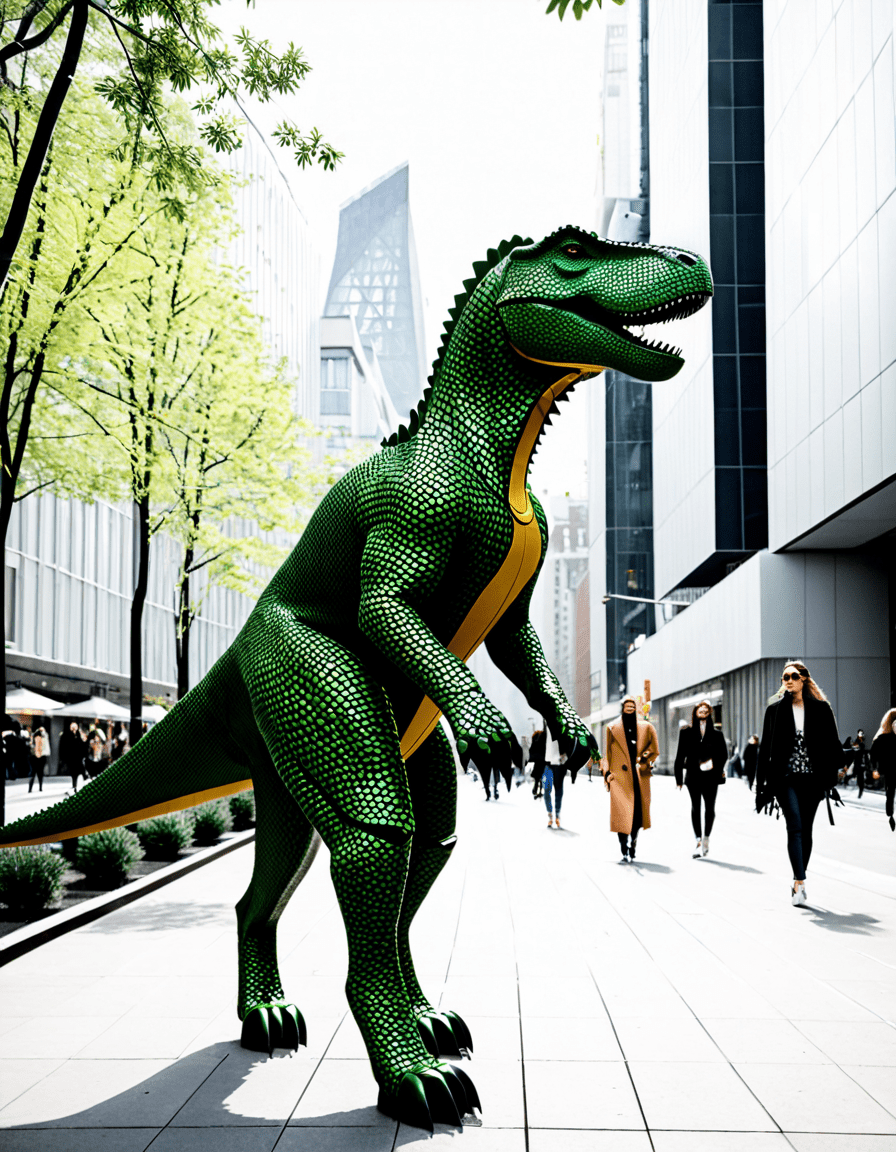
Ah, the Tyrannosaurus rex—glorious in size, intimidation, and cultural significance! This prehistoric titan sizzles through our imaginations, captivating us with its colossal presence and captivating lore. From kitchy toys to blockbuster films, rex commands attention beyond its Cretaceous origins. But what lies beneath the surface of this enduring icon? Let’s dive into the depths of this fearsome giant and explore the captivating aspects that make it a true standout in both its ancient environment and our modern world.

Top 5 Fascinating Facts About Rex, the Tyrannosaurus
1. Immense Size and Weight
The magnificent T. rex grew to a staggering length of up to 40 feet, weighing between 9 to 14 tons. Can we just take a moment to appreciate that? This impressive size solidified its status as one of the largest land predators in history and sparked discussion around its hunting prowess. Surprisingly, recent research suggests that these heavyweight champs could reach speeds of up to 25 miles per hour! Who would’ve thought a creature this grand could outpace a casual jogger on the street?
2. Diverse Diet and Feeding Behavior
Forget the traditional view of rex as a mere scavenger; it had a diverse menu fit for a culinary giant. Fossil records indicate that rex dined on an array of other dinosaurs, including the formidable Triceratops and hadrosaurs—yikes! The dental work? Oh honey, the teeth were a unique set designed for crushing bone and ripping into flesh. Move over, fancy culinary chefs; T. rex proves that sometimes the fiercest appetites belong not in kitchens but in nature’s wild dining experiences.
3. Complex Social Structure
Hold onto your hats, because new research suggests that T. rex might’ve had a social life! Instead of being a lonely predator, it could’ve roamed in packs. Teeth marks and clustered fossil findings indicate that these behemoths potentially hunted together. Just think about it: T. rex family outings, slaying enormous meals together and maybe even engaging in dinosaur gossip while coming to dinner. How fabulous would that be?
4. Advanced Sensory Perception
Let’s talk about T. rex’s sense of smell—it was like having a high-powered olfactory gourmet cuisine sense, 20 times sharper than that of the modern-day Komodo dragon. This enchanting ability would’ve been invaluable in locating prey over large distances. Forget the Proustian madeleines! T. rex could smell a delicious meal long before it could see it, allowing these majestic creatures to navigate their world with finesse.
5. Innovative Reproductive Strategies
Adorable dinosaur eggs, anyone? Fossils attributed to T. rex hint at brooding behaviors similar to contemporary birds. That’s right ; this ferocious giant may have been a nurturing parent! The nesting patterns suggest they returned regularly to care for their young—adding a complex emotional layer that we rarely consider with reptiles. Who knew such a fierce creature could show maternal instincts as tender as any modern-day mama?
Rex’s Place in the Ecosystem: Apex Predator or Opportunistic Scavenger?
Let’s break down the narrative of T. rex. Many have painted this dinosaur as the ultimate apex predator, while others argue it’s more of an opportunistic scavenger. New studies reveal that the truth might lie somewhere in between. Isotope analysis of bones Shows that T. rex occupied both roles in the complex ecosystem of the late Cretaceous period.
As the landscape shifted and prey availability varied, T. rex adeptly leaned on what was accessible. An apex predator one day, a scavenger the next—this versatility showcases a creature that wasn’t just surviving but thriving amidst the turmoil of prehistoric life. The intricate relationship with its environment shaped the way rex hunted and adapted, leading to a more nuanced understanding of this colossal beast.
The Evolution of Rex: Linking T. rex to Modern Birds
As we spin the evolutionary web, we uncover a fascinating thread linking T. rex to modern birds. That’s right, our feathery friends may carry whispers of the past. Current research has unveiled that behaviors traditionally associated with birds may have deep roots in dinosaur ancestors like T. rex.
Discoveries of feathers on some theropods hint that T. rex may have possessed them too, whether for insulation or display purposes. Just imagine this lavish creature—a prehistoric runway model strutting its stuff in vibrant feathers. The fascinating connection reshapes how we view avian behaviors, lending credence to the idea that these dinosaurs were far more advanced than previously thought.
Rex in Modern Culture: Representation in Media and Science
Now let’s pivot to the realm of modern culture. T. rex is everywhere, transforming the landscape of media and igniting imaginations through films, literature, and merchandise. Whether it’s in blockbuster hits like “Jurassic Park” or the ever-popular dinosaur-themed toys, rex has carved itself a significant place in pop culture and public consciousness.
These portrayals, while thrilling, sometimes divert from the scientific narrative. As they intrigue audiences, they also serve as double-edged swords by overshadowing factual developments. But they’re also instrumental in elevating interest in paleontology, inspiring generations to dig deeper and learn more about our planet’s history.
Rediscovering Rex: The Impact of New Technology on Paleontology
As we journey forward, let’s talk technology. Emerging advancements in 3D scanning, genetic analysis, and artificial intelligence are changing how paleontologists study T. rex fossils. Gone are the days of dusty bones—welcome to the age of technological innovation!
Cutting-edge techniques enable scientists to unravel the mysteries of T. rex anatomy, behavior, and lifestyle. With every breakthrough, we glean fantastic insights that reshape the story of this iconic dinosaur. From exploring how they moved to understanding their diets—these discoveries continue to illuminate the legacy of a creature that has captured our hearts for eons.
In sum, as we unravel the intricate tapestry of T. rex through biological, ecological, and cultural lenses, we perceive not just a frightful giant but an essential component of Earth’s evolutionary saga. With each discovery, T. rex’s legacy thrives, promising to intrigue and inspire generations to come. So here’s to rex, our wondrous giant—long may it reign in our imaginations and beyond!
rex: The Fearsome Giant of Prehistoric Times
Curious Facts About rex
Did you know that the rex, from scientific evidence, is thought to have had a bite force more powerful than any other land animal? Picture this: its massive skull, with teeth the size of bananas, could crush bone with ease. To put that in perspective, think about how Lynette Woodard dominated on the basketball court; sheer power can change the game, just like it did for rex during its reign.
Speaking of changing the game, rex fossils have led paleontologists to believe these giants might have had feathers! Yes, you read that right—this fearsome predator may have strutted around in fuzzy plumage. How wild is that? And it completely flips the image we often see. Imagine if Scarlett Johansson appeared in a feathered superhero film; it’d surely turn heads. Just like rex, she continues to surprise audiences with every new project.
Now here’s an interesting nugget: rex could grow up to 40 feet long! That’s longer than a bus! They had long back legs and a low center of gravity, making them some of the most stable creatures of their time. It’s easy to get carried away with their size, especially if you’ve ever taken a look at a giant stone monument. Just like how weed has been a topic for debate over the years, rex sparks curiosity that keeps us digging deeper into the past.
And let’s not forget, hatchlings were about the size of a chicken! Imagine a little rex running around—cute, right ? It’s hard to picture a creature so fearsome starting off that small. People often think of little ones as harmless, like Lil Yachtys playful vibe in his music. But even the tiniest rex had the potential to grow into a colossal king of the land. Now that’s something to think about!